If you have ever watched a bass explode on a lure moving through clear water, there is a good chance a crankbait was involved. Many anglers in the United States use crankbaits because they cover water fast and create a realistic action that attracts hungry fish.
Understanding what is a crankbait helps anglers choose the right lure, control depth, and improve their fishing results. From shallow ponds to deep reservoirs, crankbaits are one of the most useful tools for targeting bass, walleye, pike, and other predatory fish.

What Is a Crankbait and How Does It Work?
A crankbait is a type of hard-bodied fishing lure made to look and move like natural prey. Most crankbaits copy small fish, but some designs imitate insects, frogs, or crawfish. They are usually made from plastic or wood and contain hooks attached to the body.
The key feature of a crankbait is its diving lip. When an angler reels the lure, the lip pushes against the water and forces the bait downward. The body then creates a side-to-side wobble that looks like a struggling or swimming creature.

- ✦ Hard body design
Crankbaits have a solid body that creates vibration and movement when pulled through the water.
- ✦ Diving bill
The bill controls how deep the lure travels and helps anglers reach different parts of the water column.
- ✦ Realistic action
The wobbling motion attracts predator fish by copying the movement of injured prey.
Why Do Fish Attack Crankbaits?
Predatory fish often react to movement before they fully identify food. A crankbait creates vibration, flash, and a natural swimming pattern that can trigger a feeding response.
Many experienced anglers use crankbaits near cover because the lure can make fish react quickly. Rocks, fallen trees, grass edges, and underwater structures are common areas where crankbaits perform well.
Different Types of Crankbaits
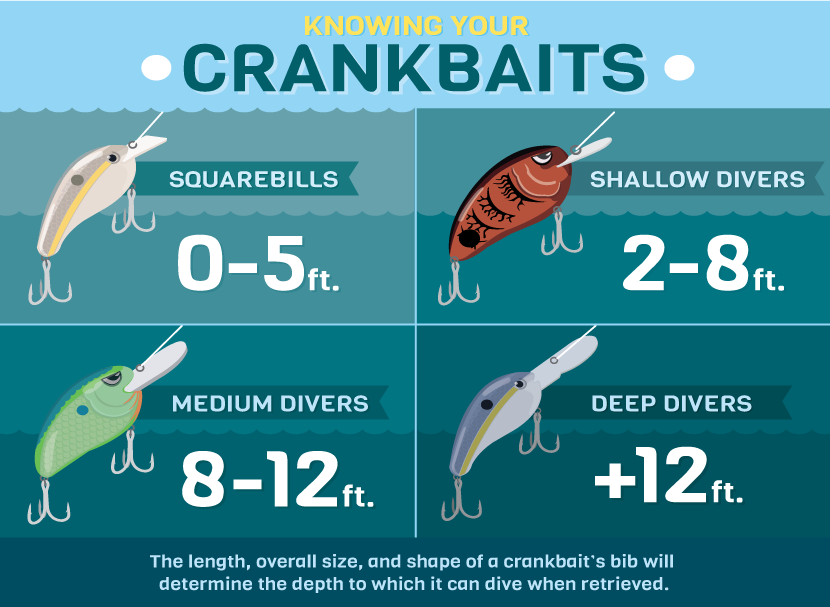
When learning what is a crankbait, it is important to understand that crankbaits come in many styles. Each type is built for a specific depth, speed, and fishing situation.
The most common differences include diving depth, body shape, floating ability, and action. Selecting the right style can make a major difference when fish are holding in certain areas.

- ✦ Shallow diving crankbaits
These lures run close to the surface and work well around grass, shallow rocks, and warm water areas.
- ✦ Medium diving crankbaits
These cover mid-depth zones where many bass and other fish feed during normal conditions.
- ✦ Deep diving crankbaits
These lures reach deeper water and are useful for targeting fish near ledges and offshore structures.
Square Bill and Round Bill Crankbaits
Square bill crankbaits have a wide, square-shaped lip that helps them bounce off cover. They are popular for fishing around shallow wood, rocks, and docks.
Round bill crankbaits usually provide a smoother dive and are often used when anglers want a more consistent path through open water.
Main Parts of a Crankbait
A crankbait looks simple, but each part has a purpose. Understanding these parts helps anglers select better lures and adjust their fishing style.
The body shape, lip angle, hooks, and internal weight system all affect how a crankbait moves underwater.
- ✦ Body
The body creates the overall profile and determines how closely the lure matches local prey.
- ✦ Lip
The lip controls diving depth and creates resistance that produces the swimming action.
- ✦ Hooks
Most crankbaits use two or three treble hooks to increase the chance of catching striking fish.
How to Fish a Crankbait Effectively
Fishing a crankbait is more than simply casting and reeling. The best results come from matching retrieve speed, depth, and lure movement with current conditions.
Many professional anglers use a steady retrieve, but changing speed or adding pauses can make the lure appear injured and encourage strikes.

- ✦ Use contact with cover
Bumping rocks or wood can create sudden movements that trigger reaction bites.
- ✦ Change retrieve speed
A faster retrieve creates more vibration while a slower retrieve keeps the lure in the strike zone longer.
- ✦ Match the hatch
Choose colors and shapes that resemble the baitfish or prey found in the water.
Best Gear for Crankbait Fishing
A medium or medium-heavy rod with a moderate action is often preferred because it allows fish to take the lure without pulling the hooks away.
Many anglers choose fluorocarbon line because it has low visibility and helps crankbaits reach their designed depth.
When Should You Use a Crankbait?
Crankbaits can work throughout the year, but their effectiveness changes with water temperature, fish behavior, and seasonal patterns. In the United States, many bass anglers rely on crankbaits during spring, summer, and fall.
During warmer months, crankbaits can cover large areas quickly. In cooler water, slower retrieves and smaller crankbaits often produce better results.

- ✦ Spring fishing
Fish moving toward shallow areas often respond well to smaller crankbaits near cover.
- ✦ Summer fishing
Deep diving crankbaits can reach fish holding in cooler offshore water.
- ✦ Fall fishing
Crankbaits can imitate baitfish during active feeding periods.
Advantages and Limitations of Crankbaits
Crankbaits are popular because they allow anglers to search large areas and attract aggressive fish. They are especially useful when fish are actively feeding.
However, crankbaits are not perfect for every situation. Heavy vegetation, extremely shallow water, or inactive fish may require different lure choices.
- ✦ Advantages
Crankbaits cover water quickly, create strong movement, and work for many predator species.
- ✦ Limitations
They can get snagged, lose effectiveness in thick weeds, and require practice to control depth.
Frequently Asked Questions about what is a crankbait

fishingscouty
Contributor