Use proper spooling, clean knots, and tidy storage to prevent fishing line tangles every trip.
I’ve spent over 15 years fishing and fixing other anglers’ messes, so I know what makes lines knot and what stops them. This guide on how to avoid fishing line tangles explains causes, gear choices, spooling steps, knot tips, quick fixes, and storage methods. Read on for clear, tested steps you can use on the water today.
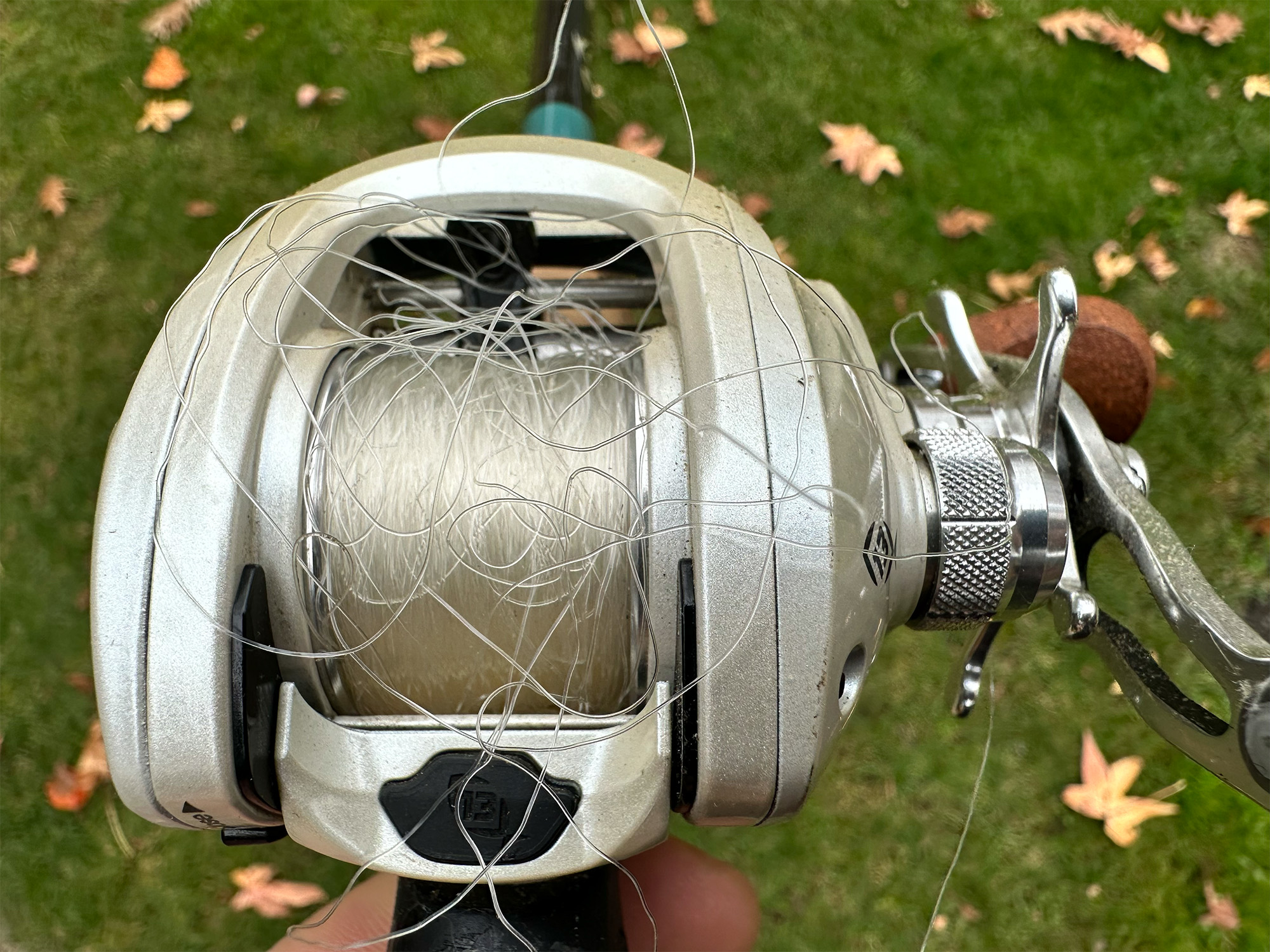
Why fishing line tangles happen
Tangles form when slack, twists, and friction meet. Poor spooling, loose casts, and old line all add to the problem. Understanding the main causes helps you prevent tangles before you cast.
Common causes
- Poorly spooled reels that let line cross and stack.
- Twists from line type, lure spin, or not switching retrieve directions.
- Wind knots from slack line during casting or retrieval.
- Worn or damaged line that flexes and loops more easily.
How to think about tangles
- Treat your line like a rope you must control.
- Keep tension when you work with it.
- Replace old line before it becomes a tangle hazard.
Choose the right line and spool
What you use matters. Monofilament stretches and hides twists more, braid is thin and holds twist, and fluorocarbon sinks and resists abrasion. Picking the right line and spool combo cuts down tangles fast.
Practical choices
- Use braid for long casts, but add a short fluoro leader to reduce twist.
- Size the spool to match line capacity; underfilled spools cause loops.
- Check spool lip design; smooth lips reduce friction and line hang-ups.
How to set up
- Match line weight to rod and reel.
- Wind new line evenly and tight on the spool.
- Consider an inline swivel on long lures to prevent the lure from spinning.

Spooling, casting, and storage techniques
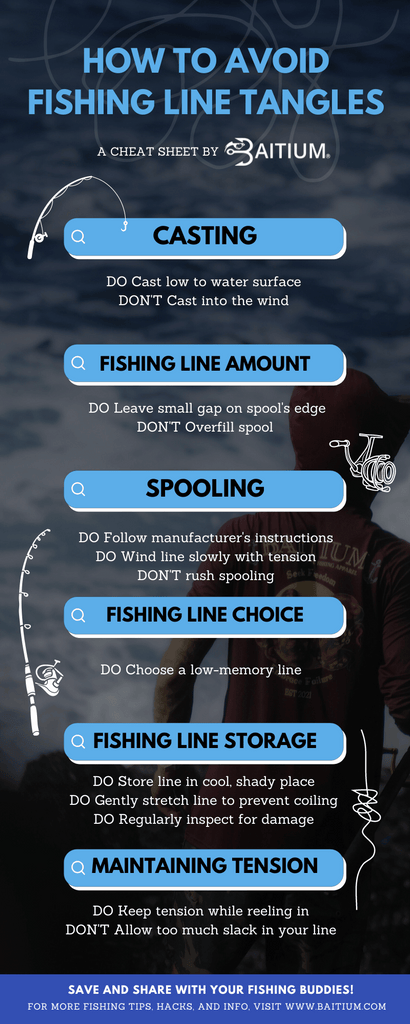
Good habits beat fancy gear. Proper spooling, clean casts, and smart storage are the three pillars of how to avoid fishing line tangles. Follow a consistent routine and you will see fewer knots.
Spooling step-by-step
- Anchor the line to the spool.
- Keep tension with a cloth or a helper while winding.
- Fill the spool to 1–2 mm from the rim; do not overfill.
Casting habits to prevent twists
- Use smooth, controlled casts.
- Open the bail slowly and keep finger tension on the line for a short cast.
- Alternate retrieve direction occasionally to balance twist.
Storage tips
- Loosen drag slightly for stored reels to avoid flat spots.
- Keep reels in a dry case and out of direct sun.
- Store spare spools with line caps or loose loops tamed by ties.
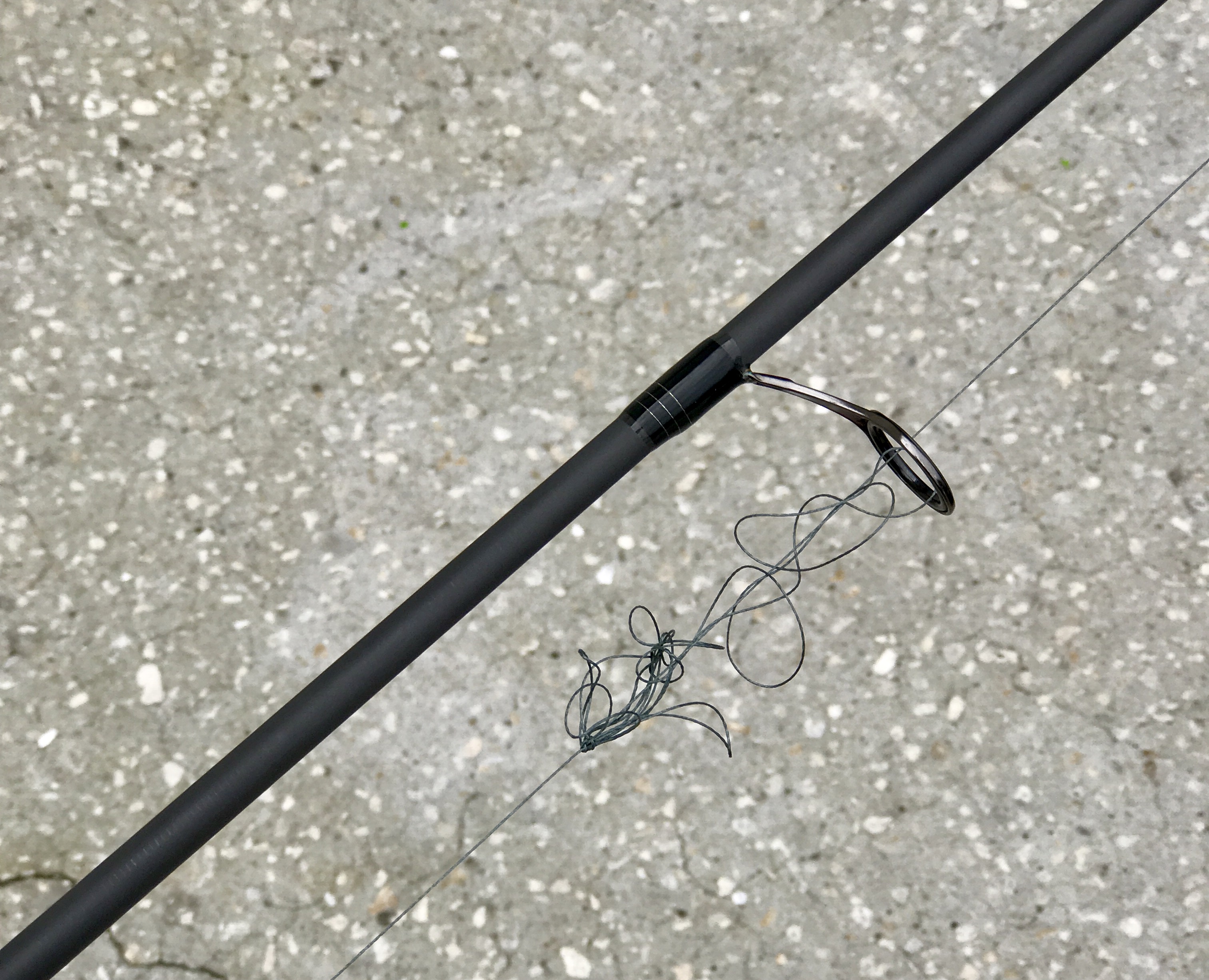
Knots, rigs, and tangle-proof setups
Knots matter as much as line type. Weak knots slip and form loops that lead to birds’ nests. Use knots that suit your line and practice them until you can tie them quickly and cleanly.
Knot recommendations
- Use a Palomar knot for braid to hook connections.
- Use a Uni-to-Uni knot for joining dissimilar lines.
- Use an Improved Clinch knot for monofilament to hook ties.
Rigging tips
- Add a short leader to braid for shock absorption and less twist.
- Use beads and swivels on multi-hook rigs to keep hooks separated.
- Shorten loose tags to 2–3 mm after a knot to reduce snag points.

Maintenance, troubleshooting, and quick fixes
You will still get tangles. Knowing quick fixes keeps your trip productive. Learn to spot wind knots, backlashes, and braid twists and fix them fast.
Quick fixes on the water
- For a soft tangle, pull line slowly while keeping tension and tease knots out with fingers.
- For severe backlashes on baitcasters, unspool the excess line and work the knot from the outside in.
- For twist, run line through a swivel or re-spool using a tensioned method.
Maintenance checklist
- Inspect line for nicks and sun damage every few trips.
- Replace line annually or sooner if you fish heavy cover.
- Clean and lubricate reel bearings to keep line flow smooth.
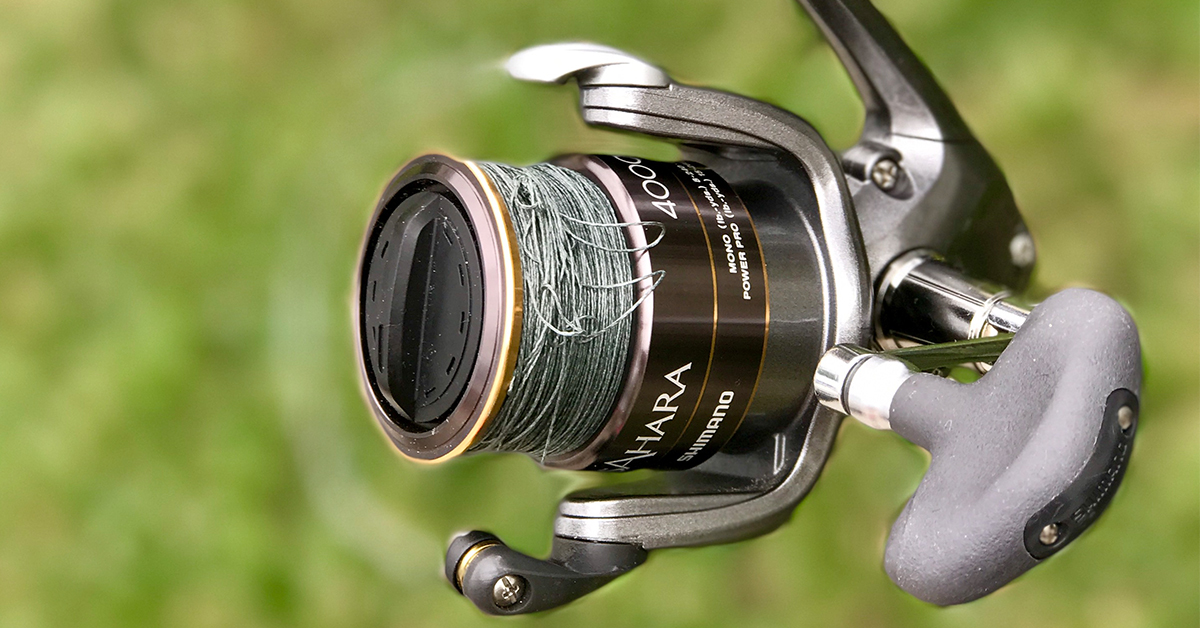
Personal tips from experience
I learned a lot the hard way. Early on, I kept getting nests until I watched how I cast and how I wrapped the spool. Small changes made a big difference.
What helped me
- I started spooling with tension from a damp cloth and never overfilled reels.
- I switched leaders often and carried a small swivel box to stop lure spin.
- I keep a small pair of scissors and a split-shot tin for on-the-spot fixes.
Frequently Asked Questions of how to avoid fishing line tangles
What is the easiest way to stop line twists?
Keep tension while spooling and use a swivel or leader between braid and lure. Practice smooth casts and change retrieve direction occasionally.
How often should I replace my fishing line to avoid tangles?
Replace line yearly or sooner if you fish often or see frays and sun damage. Fresh line is less likely to form knots and weak spots.
Can using a different knot reduce tangles?
Yes. Strong, neat knots lessen tag ends and loops. Learn knots that match your line type and trim tags short.
How do I fix a backlash on a baitcaster quickly?
Put the spool under light tension and unwind the excess line. Work the knots from the outside in and re-tension as you wind back.
Does line type matter for preventing tangles?
Yes. Braided line can hold twist more, monofilament stretches and hides small knots, and fluoro sinks. Match the line to technique and use leaders when needed.
Conclusion
Preventing fishing line tangles comes down to three things: the right gear, consistent technique, and regular care. Use proper spooling, practice neat knots, and store reels correctly to save time and catch more fish. Try one new tip next trip, and leave a comment sharing what worked for you or questions you have — I’ll reply with more ideas.