For many fish species in the United States, rising spring water temperatures mark the start of the spawning season. Fish do not simply spawn because a calendar date arrives. They respond to changes in their environment, and temperature is one of the strongest signals.
Understanding how water temperature triggers spawning helps explain why bass move to shallow areas in spring, why salmon migrate at certain times, and why aquarium breeders carefully control water conditions. From years of observing fish behavior, one lesson stands out: temperature changes often start a chain reaction inside a fish before spawning becomes visible.

Why water temperature is a key spawning signal
Fish are cold-blooded animals, which means their body temperature changes with the surrounding water. Because of this, water temperature affects their metabolism, movement, hormone activity, and ability to reproduce.
When temperatures reach a suitable range, fish bodies begin producing reproductive hormones. This biological response prepares males and females for spawning by developing eggs, producing sperm, and changing behavior.

- ✦ Hormone activation
Warmer or seasonal temperature changes can activate hormones that control egg development and spawning behavior.
- ✦ Metabolism increase
Higher temperatures within a safe range increase fish activity and energy use needed for reproduction.
- ✦ Seasonal timing
Temperature helps fish match spawning with seasons when eggs and young fish have better survival chances.
The connection between temperature and fish hormones
Temperature changes affect the brain and endocrine system of fish. These systems control hormones that tell the body when to begin reproductive processes.
This is why learning how water temperature triggers spawning requires looking beyond surface behavior. A fish moving into shallow water is often responding to internal changes that started days or weeks earlier.
- ✦ Internal preparation
Fish begin preparing for reproduction before they create visible spawning areas.
How seasonal temperature changes start spawning behavior
Many fish species use gradual temperature changes as a seasonal clock. In North America, spring warming after winter often signals that food, shelter, and breeding conditions are improving.
The process is not only about warm water. Fish also respond to the speed of temperature change, daylight length, water quality, and available nesting locations.

- ✦ Spring warming
Many freshwater fish begin spawning when winter temperatures rise into species-specific ranges.
- ✦ Stable conditions
Sudden temperature drops can delay spawning because eggs and young fish need stable environments.
- ✦ Environmental balance
Temperature works together with oxygen levels, habitat, and food availability.
Why sudden temperature changes can delay spawning
A quick cold front can interrupt spawning activity. Fish may leave shallow areas or slow down until temperatures become stable again.
This explains why anglers sometimes see fish preparing to spawn one week and becoming less active the next week.
- ✦ Temperature stability
Consistent temperatures usually create better spawning conditions than rapid changes.
Different fish species need different spawning temperatures
There is no single temperature that causes all fish to spawn. Each species has evolved to reproduce during conditions that give its offspring the best chance of survival.
For example, largemouth bass often spawn during warmer spring water conditions, while some salmon species begin reproduction in cooler waters. This difference shows why how water temperature triggers spawning depends on the fish species.

- ✦ Bass
Bass commonly begin nesting when shallow water reaches their preferred spring temperature range.
- ✦ Salmon
Many salmon species rely on cooler water temperatures during migration and reproduction.
- ✦ Sunfish
Sunfish species often spawn during warm periods when shallow habitats become suitable.
Species adaptation and temperature preference
Fish adapt to the environments where they evolved. A tropical reef fish and a northern freshwater fish may react very differently to the same temperature change.
This adaptation allows each species to choose a spawning period that supports egg development and young fish survival.
- ✦ Natural adaptation
Species-specific temperature needs come from long-term environmental adaptation.
How temperature affects eggs, nests, and young fish survival
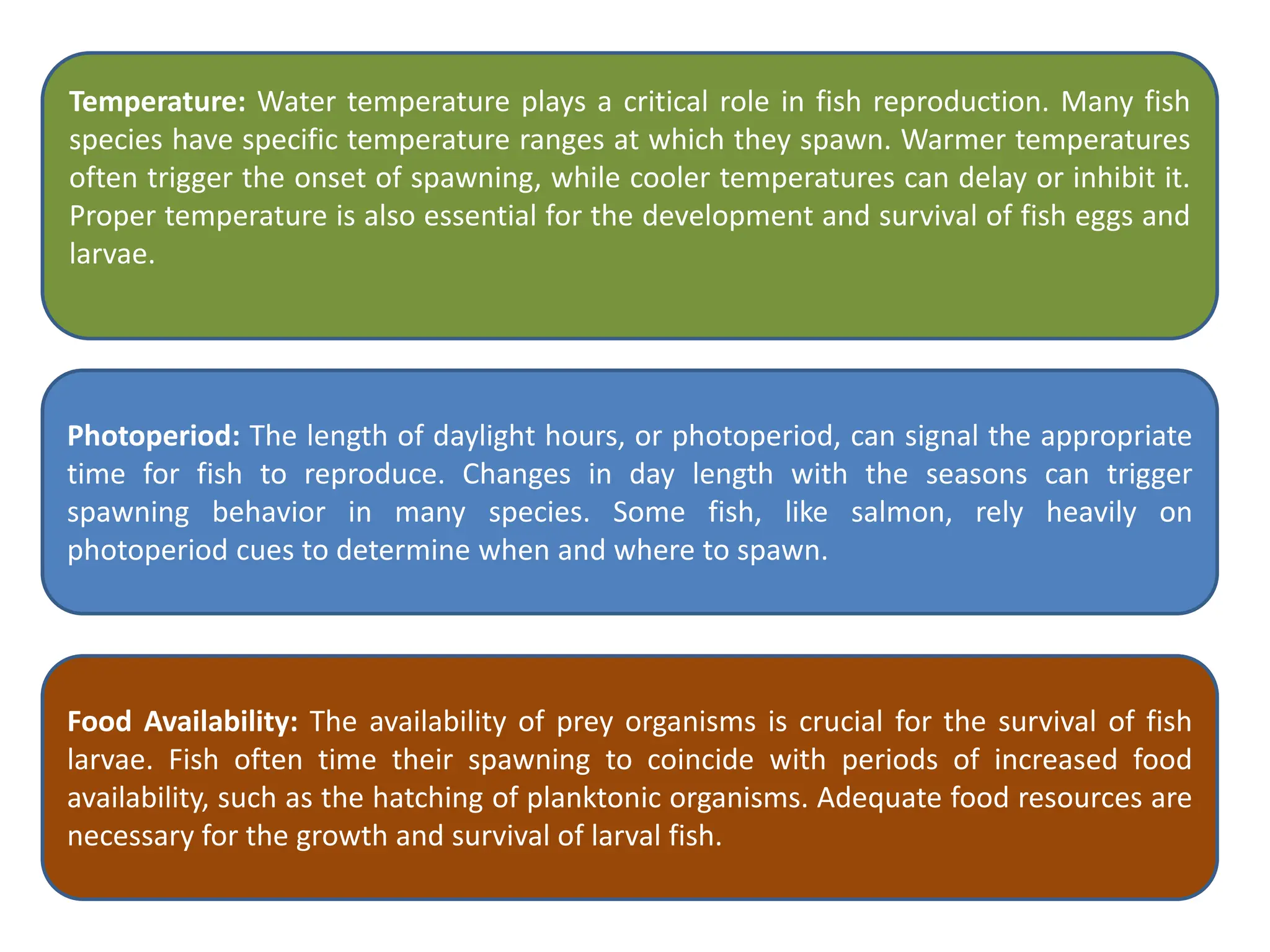
Temperature does more than start spawning. It also affects how quickly eggs develop and how well young fish survive after hatching.
If water is too cold, egg development may slow. If water is too warm, oxygen levels may drop and stress can increase, reducing survival chances.
- ✦ Egg development speed
Warmer suitable water can increase development speed, while colder water slows growth.
- ✦ Oxygen balance
Temperature changes influence how much oxygen water can hold.
- ✦ Young fish survival
Correct temperatures help newly hatched fish grow and find food.
Temperature and spawning success
Successful reproduction depends on timing. Fish need to spawn when water conditions support both eggs and larvae.
This is one reason scientists study how water temperature triggers spawning when managing fisheries and protecting aquatic habitats.
How anglers use temperature to predict spawning activity
Many anglers in the United States watch water temperature because it gives clues about fish movement. A thermometer can reveal when fish may move toward spawning areas.
Experienced anglers combine temperature readings with weather patterns, water depth, and fish behavior. Temperature alone does not guarantee spawning, but it provides an important starting point.
- ✦ Check shallow water
Many spawning fish move into warmer shallow areas first.
- ✦ Track temperature trends
A steady warming trend is often more useful than one isolated temperature reading.
- ✦ Observe fish behavior
Nesting, chasing, and increased movement can confirm spawning preparation.
Using temperature knowledge responsibly
Understanding spawning patterns helps anglers follow local fishing rules and protect breeding populations.
Responsible fishing practices help maintain healthy fish populations for future generations.
How climate changes may influence temperature-based spawning cycles
Changing climate patterns can affect when water reaches spawning temperatures. Earlier warming may shift breeding periods for some fish populations.
Researchers continue studying how water temperature triggers spawning because long-term changes may affect migration, reproduction, and ecosystem balance.
- ✦ Earlier warming
Some waters may reach spawning temperatures earlier than in past decades.
- ✦ Habitat challenges
Temperature shifts can change where and when fish reproduce.
The future of temperature research in fisheries
Scientists use temperature data to understand fish populations and create better conservation plans.
Accurate temperature monitoring helps protect important spawning habitats.
Frequently Asked Questions about how water temperature triggers spawning

fishingscouty
Contributor