Few things ruin a fishing trip faster than watching your lure fly away while your line snaps during a cast. Many anglers in the United States face this problem with spinning reels, baitcasters, and even fly fishing setups. The good news is that most breaks have a clear cause and a simple fix.
After years of handling fishing gear, one lesson stands out: a fishing line rarely breaks for no reason. Small cuts, old line, poor knots, and equipment problems slowly weaken the system. Understanding fishing line breaking during casting causes and fixes helps anglers save money, protect their lures, and cast with more confidence.

Common Causes of Fishing Line Breaking During Casting
The first step in solving fishing line breaking during casting causes and fixes is finding the weak point. The break usually happens because the line already has damage before the cast begins. Casting creates sudden pressure, and a damaged area may fail instantly.
Different fishing styles create different risks. A bass angler using heavy lures may stress the line in one way, while a saltwater angler dealing with rocks and strong fish may face another type of damage.

- ✦ Old or damaged fishing line
Sun exposure, heat, rocks, and repeated use can make fishing line brittle. Old monofilament and fluorocarbon lines often lose strength over time.
- ✦ Weak knots
A poorly tied knot can reduce line strength. A knot that slips or burns from friction may break during the sudden force of a cast.
- ✦ Wrong line strength
Using light line with heavy lures creates too much stress. The line may snap before the lure reaches the target.
How Casting Force Affects Fishing Line
A cast creates a fast transfer of energy from your rod to the lure. If the line has a weak spot, that quick force can cause failure. Smooth casting helps reduce shock, while aggressive snapping motions increase stress.
- ✦ Sudden acceleration
A hard whip-like cast puts extra pressure on knots and damaged sections of line.
Damaged Rod Guides Can Cause Line Breaks During Casting
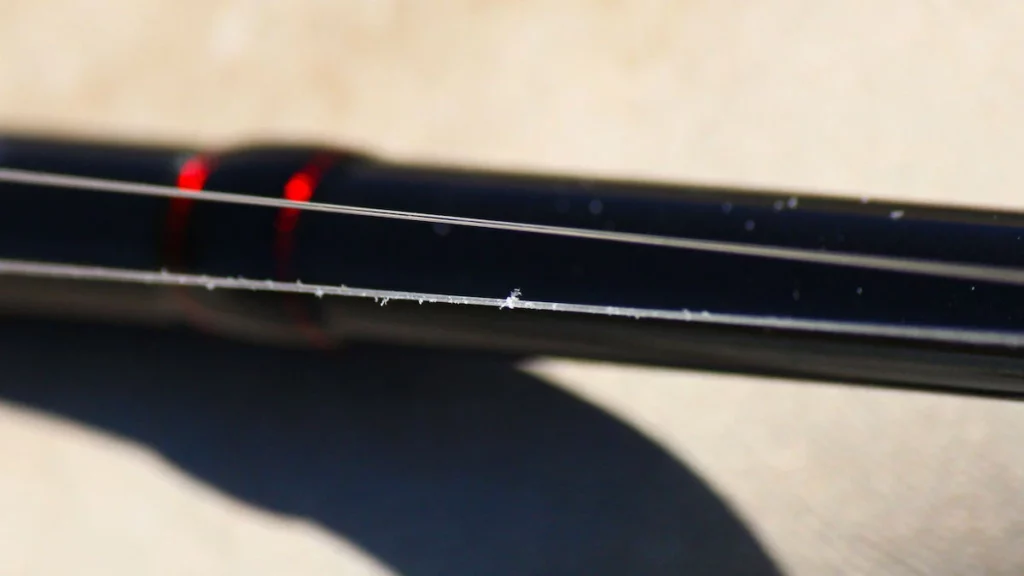
A damaged rod guide is one of the most overlooked reasons for fishing line breaking during casting causes and fixes. Even a tiny crack or rough edge can cut or weaken your line as it passes through the guide.
Many anglers check their reel and line but forget the rod. A quick guide inspection before fishing can prevent losing expensive lures.

- ✦ Check for rough guide edges
Run a cotton swab through each guide. If fibers catch, the guide may have damage.
- ✦ Replace damaged guides
A damaged guide insert can continue cutting line even after you replace the fishing line.
Signs Your Rod Guide Is Damaging Your Line
Repeated breaks in the same area of your line often point to a guide problem. If the break happens near the rod tip after casting, inspect the guides carefully.
- ✦ Repeated snapping
Breaking in the same location suggests equipment damage instead of random line failure.
How Reel Problems Lead to Fishing Line Breakage
Your reel plays a major role in preventing fishing line breaking during casting causes and fixes. A reel that loads line poorly can create friction, tangles, and sudden pressure points.
Spinning reels are especially sensitive to line memory and uneven spool filling. Correct setup improves casting distance and reduces stress on the line.
- ✦ Overfilled spool
Too much line on a spool can create loops and sudden line jumps during casting.
- ✦ Loose drag setting
A locked drag can transfer too much force directly to the line.
- ✦ Line twist
Twisted line creates weak spots and increases the chance of sudden breaks.
Fixing Reel Setup Problems
Remove old damaged line, fill the spool correctly, and make sure the line matches your reel size. Small adjustments often solve repeated casting failures.
- ✦ Fill spool correctly
Leave a small gap below the spool edge to reduce loops and tangles.
How to Fix Fishing Line Breaking During Casting
Once you identify the cause, fixing fishing line breaking during casting causes and fixes becomes much easier. Start with the simplest solutions before replacing expensive equipment.
A good maintenance routine prevents most sudden failures. Before every fishing trip, inspect your line, knots, and rod guides.

- ✦ Replace damaged line sections
Cut away rough or weak sections and reconnect with a strong knot.
- ✦ Retie your knots
Use reliable knots and tighten them carefully to avoid friction damage.
- ✦ Match your setup
Use line strength and lure weight that fit your rod and reel specifications.
Best Prevention Routine Before Casting
A quick inspection takes less than a minute but can save a full day of frustration. Check the first few feet of line because that area receives the most wear.
- ✦ Feel the line
Run your fingers along the line and replace it if you feel rough spots or cracks.
Choosing the Right Fishing Line to Prevent Breaks
Choosing the right line type is an important part of preventing fishing line breaking during casting causes and fixes. Monofilament, fluorocarbon, and braided lines each have different strengths and weaknesses.
The best choice depends on your fishing style, water conditions, target species, and reel setup.
- ✦ Monofilament line
Mono is affordable and flexible but can weaken from sunlight and age.
- ✦ Fluorocarbon line
Fluorocarbon has good abrasion resistance but can become stiff if handled poorly.
- ✦ Braided line
Braid offers high strength but needs proper knots and careful handling around sharp objects.
Match Line Strength to Your Fishing Conditions
A stronger line is not always the answer. The goal is to balance strength, casting performance, and sensitivity for your specific fishing situation.
- ✦ Consider lure weight
Heavy lures need a line that can handle sudden casting pressure.