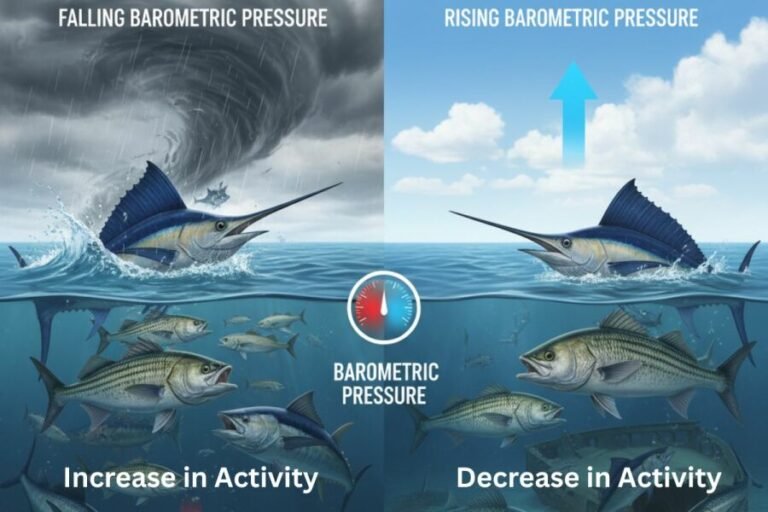
Understanding why baitfish attract predatory fish starts with the simple relationship between hunter and prey. In lakes, rivers, and oceans across the United States, many game fish survive by feeding on smaller fish that provide energy and nutrients.
From my experience studying fishing patterns, I have noticed that successful anglers pay close attention to baitfish activity before choosing a spot. When small fish gather, larger predators often follow because they know food is nearby.
The reason why baitfish attract predatory fish involves several factors, including movement, smell, sound, and natural survival behavior. Learning these signals can help anglers better understand fish habits and improve their approach.
 display: block; margin: 0 auto; border-radius: 12px; box-shadow: 0 8px 25px rgba(0, 0, 0, 0.12);”>
The Natural Relationship Between Baitfish and Predatory Fish
The main reason why baitfish attract predatory fish is because they are a key part of the aquatic food chain. Small fish such as minnows, shad, herring, and anchovies feed many larger species.
Predatory fish like bass, pike, striped bass, tuna, and walleye have evolved to recognize baitfish as a reliable source of food. These predators save energy by hunting prey they already know how to capture.
In many U.S. fisheries, finding baitfish is often the first step in locating larger fish. Anglers commonly search for schools of small fish because predators usually stay close to feeding opportunities.

- ✦ High energy food source
Baitfish contain protein and fats that help predatory fish grow, recover, and maintain energy.
- ✦ Natural prey recognition
Predators are trained by instinct to identify baitfish shapes, movements, and behaviors.
- ✦ Easy hunting targets
Small fish often move in groups, making them easier for predators to locate and attack.
Why Predators Follow Baitfish Schools
Baitfish schools create strong signals underwater. Large groups of small fish produce movement, vibrations, and visual patterns that predators can detect.
When predators find a baitfish school, they often stay nearby because the chance of finding their next meal increases.
- ✦ School movement
Large groups create noticeable activity that attracts nearby hunters.
How Baitfish Movement Triggers Predator Attacks
Movement is one of the biggest reasons why baitfish attract predatory fish. Predators are designed to notice quick movements because injured or escaping prey often provides an easy meal.
A baitfish that swims differently from the group can quickly become a target. Predators watch for weakness because it reduces the effort needed to catch food.
This explains why many fishing lures copy baitfish movement. A lure that looks like a frightened or injured fish can activate a predator’s feeding response.

- ✦ Erratic swimming
Sudden changes in direction can signal vulnerable prey to hunting fish.
- ✦ Escape behavior
Fast movements and panic responses can attract predators from nearby areas.
The Role of Baitfish Behavior
Baitfish use schooling, hiding, and fast movement to survive. However, these same behaviors can reveal their location to predators.
Understanding baitfish behavior helps anglers predict where feeding fish may appear.
- ✦ Survival patterns
The same behaviors that protect baitfish can also expose them to predators.
Why Size and Appearance Matter to Predatory Fish
Another important factor in why baitfish attract predatory fish is their size and appearance. Predators often prefer prey that provides enough nutrition while remaining easy to capture.
Many game fish match their feeding habits with available baitfish. For example, bass may target small shad, while coastal predators may chase schools of smaller marine fish.
Successful anglers often choose lures that match the local baitfish because predators respond to familiar prey shapes and colors.

- ✦ Matching the hatch
Using bait or lures that resemble local forage fish can increase natural appeal.
- ✦ Prey availability
Predators focus on baitfish species that are common in their environment.
Visual Signals Underwater
Predatory fish use sight to identify potential meals. Flashing scales, body shape, and swimming style help them recognize baitfish.
Clear water often makes visual appearance even more important because predators can inspect prey before attacking.
- ✦ Natural flash
Reflective scales can catch the attention of nearby predators.
How Smell and Sound Help Predators Find Baitfish
The answer to why baitfish attract predatory fish is not only about what predators see. Many fish also depend on smell, vibration, and water movement to locate prey.
Baitfish release natural scents into the water. Predators can detect these chemical signals and use them to track feeding opportunities.
Movement also creates vibrations that fish can sense through their lateral line system. This allows predators to find prey even in dark or cloudy water.

- ✦ Chemical signals
Natural scents help predators locate nearby baitfish.
- ✦ Water vibrations
Fish detect movement through specialized sensory systems.
Why Injured Baitfish Are Attractive
Injured baitfish often create stronger signals because they move differently and release more noticeable vibrations.
Predators usually choose easy meals because catching weak prey requires less energy.
- ✦ Energy efficiency
Predators prefer opportunities that provide high rewards with less effort.
How Anglers Use Baitfish Behavior to Catch Predatory Fish
Knowing why baitfish attract predatory fish helps anglers make better decisions on the water. Instead of randomly casting, experienced fishermen look for signs of active bait.
Bird activity, surface movement, sonar marks, and baitfish jumping can all indicate that predators may be nearby.
In my fishing research and content work, one lesson appears often: finding the food source is usually more effective than simply searching for the predator.
- ✦ Watch for surface activity
Jumping baitfish or disturbed water may reveal predator feeding areas.
- ✦ Use matching lures
Choose lure sizes and colors that imitate local baitfish.
- ✦ Study seasons
Baitfish movement changes with temperature, spawning, and available food.
Freshwater and Saltwater Differences
Freshwater predators often follow baitfish around structures like weeds, rocks, and drop-offs. Saltwater predators may chase bait schools across large open areas.
The basic reason why baitfish attract predatory fish remains the same: they provide a valuable food source.
- ✦ Habitat changes
Different environments create different baitfish patterns.
Frequently Asked Questions about why baitfish attract predatory fish

fishingscouty
Contributor