Knowing how to identify common baitfish is one of the most useful skills for any angler. Predatory fish often follow the same baitfish species found in their local waters. When you understand what small fish are present, you can choose better bait and improve your fishing approach.
Over years of fishing research and studying local waters, experienced anglers learn that baitfish identification is not only about appearance. Water type, season, swimming style, and location also reveal important clues. A small silver fish in a lake may be very different from a similar-looking fish near the coast.
This guide explains how to identify common baitfish in the United States. It covers the main features to look for, common species, and practical tips you can use while fishing.
Why learning How to Identify Common Baitfish Matters
Baitfish are the foundation of many aquatic food chains. Bass, trout, salmon, striped bass, tuna, and many other game fish depend on small forage fish for food. Learning how to identify common baitfish helps anglers understand what predators are hunting.
Many fishing mistakes happen because anglers use the wrong bait profile. A predator that feeds on thin minnows may ignore a large baitfish imitation. Matching the size and shape of local baitfish often creates a more natural presentation.
- ✦ Better bait selection
Knowing local baitfish species helps you choose live bait or artificial lures that match what fish already eat.
- ✦ Improved fishing strategy
Baitfish knowledge helps you find feeding areas such as shallow flats, weed edges, and current breaks.
- ✦ Stronger fish behavior understanding
Recognizing bait movements can help predict where larger predator fish may be located.
The connection between baitfish and predator fish
Predatory fish usually stay close to reliable food sources. When baitfish gather near structure or current, larger fish often follow. Identifying these small fish can reveal where the action may happen.
Key Features Used to Identify Common Baitfish
The easiest way to learn how to identify common baitfish is to focus on a few visible traits. You do not always need advanced fish identification tools. Careful observation can reveal most common species.
Start by looking at the overall body shape. Some baitfish have long, narrow bodies, while others are deeper and rounder. These differences often separate minnows from shad, herring, and other forage fish.
- ✦ Body shape
Slim bodies usually belong to fast-moving baitfish like minnows and silversides, while deeper bodies are common in shad and herring.
- ✦ Color and markings
Look for silver sides, dark backs, stripes, spots, or unique patterns that help separate similar species.
- ✦ Size
Length is an important clue because many baitfish species have different size ranges during their life stages.
Check the mouth and fins
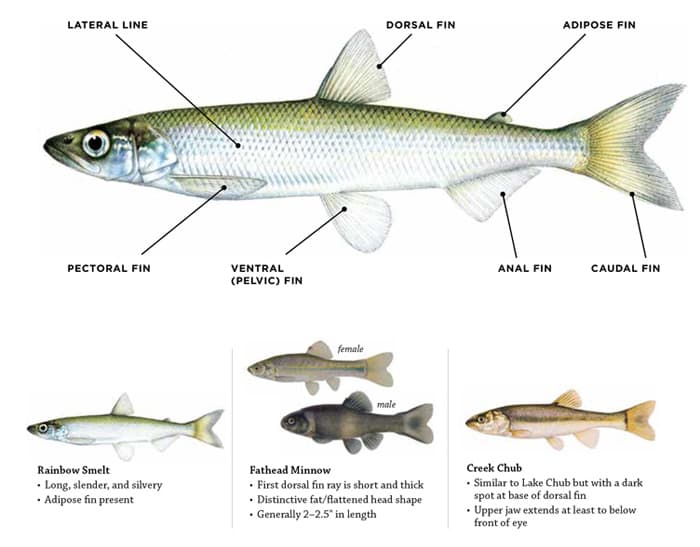
Small differences in mouth position and fin shape can help identify baitfish. Some species have small terminal mouths, while others have larger mouths designed for feeding on plankton or insects.
- ✦ Fin placement
The location and shape of dorsal, tail, and side fins can help distinguish between similar baitfish species.
How to Identify Common Freshwater Baitfish
Freshwater baitfish are common targets for anglers across the United States. Lakes, rivers, and reservoirs contain many forage species that support popular game fish.
When learning how to identify common baitfish in freshwater, focus on local species because the same-looking fish may have different names in different regions.
- ✦ Minnows
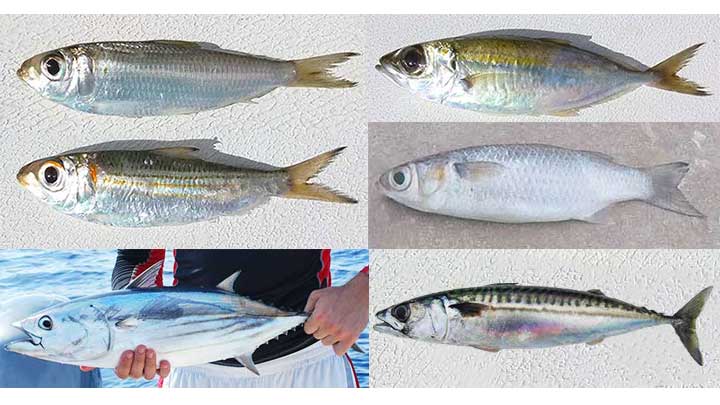
Minnows usually have slender bodies, forked tails, and silver or olive coloring. They are among the most common freshwater baitfish.
- ✦ Shad
Shad have deeper bodies, bright silver sides, and often move in large schools near open water.
- ✦ Shiners
Shiners are small silver baitfish with reflective scales and are widely used as live bait.
Common freshwater identification tips
Watch how baitfish move in the water. Schooling behavior, quick direction changes, and surface activity can provide clues about the species.
How to Identify Common Saltwater Baitfish
Saltwater baitfish vary greatly depending on location. Coastal anglers may encounter species such as menhaden, anchovies, sardines, and silversides.
The best way to identify common baitfish in saltwater is to combine visual clues with knowledge of the local ecosystem. Tide, season, and water temperature often influence which baitfish appear.

- ✦ Menhaden
Menhaden have deep bodies, silver sides, and a distinctive dark shoulder spot behind the gill area.
- ✦ Anchovies
Anchovies are small, slender fish with long bodies and are often found in large coastal schools.
- ✦ Sardines
Sardines usually have shiny silver bodies and move in dense groups to avoid predators.
Observe bait schools near the surface
Saltwater baitfish often reveal themselves through surface activity. Birds diving into water or predators breaking the surface may indicate a bait school nearby.
Common Baitfish Species Every Angler Should Know
Many anglers start by learning a small group of common baitfish species. These fish appear frequently and are important food sources for many sport fish.
Understanding these species makes it easier to match lures, select live bait, and recognize feeding patterns.

- ✦ Alewives
Alewives are small herring relatives with silver bodies and are important forage fish in many northern waters.
- ✦ Smelt
Smelt are slender fish with silver coloring and are commonly found in colder waters.
- ✦ Silversides
Silversides have narrow bodies and bright reflective sides that help them blend into open water.
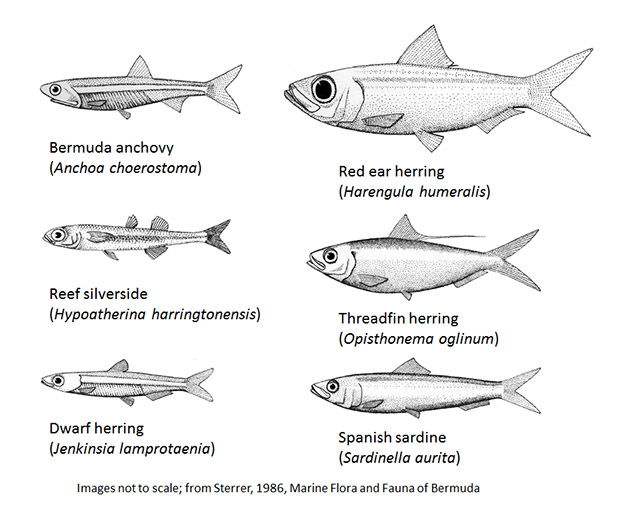
Using a baitfish identification chart
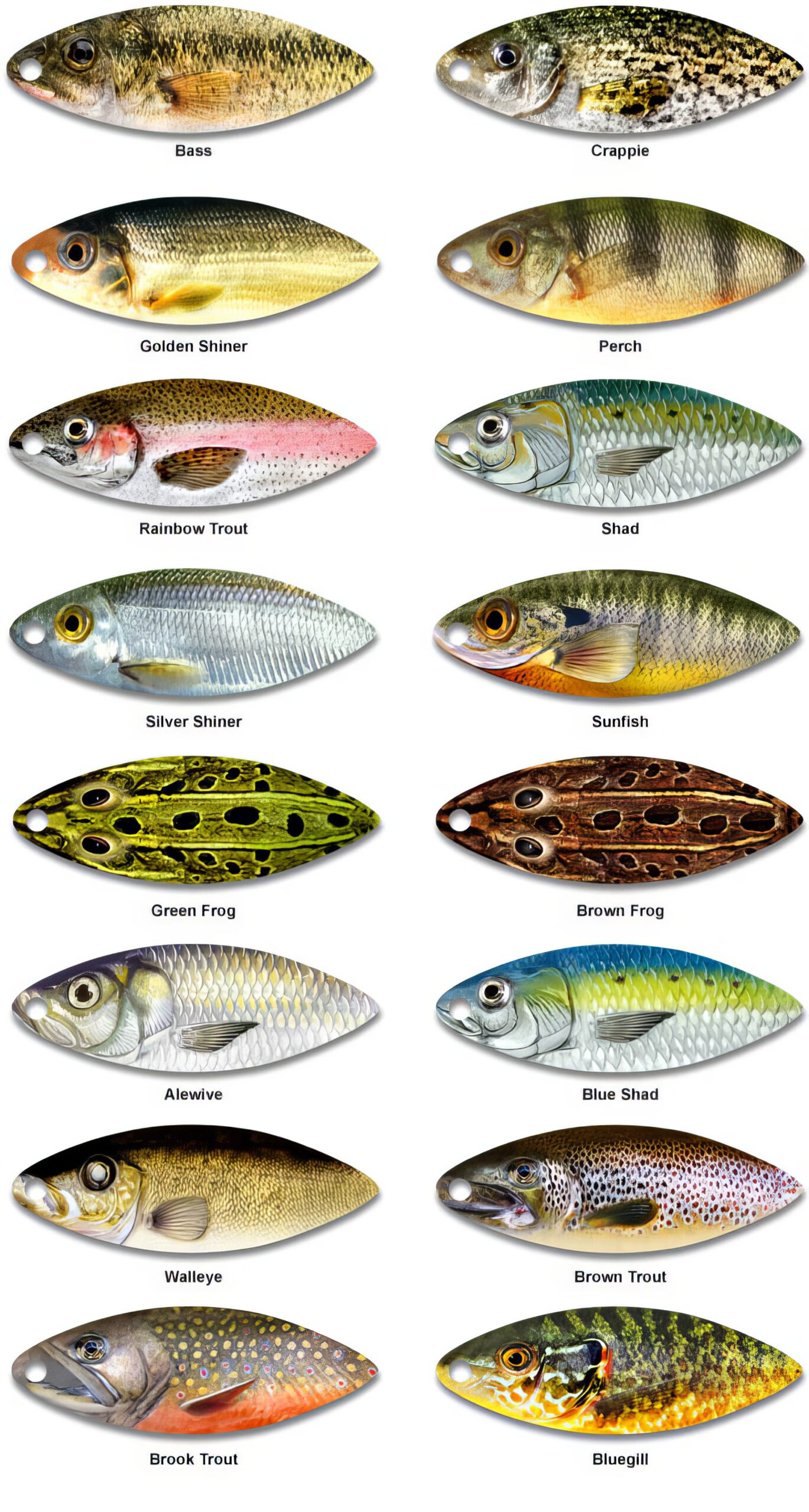
A baitfish identification chart can help compare body shape, markings, and species names. Charts are especially useful when several baitfish look similar.
Practical Tips for Identifying Baitfish While Fishing
The best anglers develop identification skills by observing baitfish in real conditions. Pay attention to what you see near docks, shorelines, vegetation, and currents.
Taking quick notes about baitfish appearance and location can help you build local knowledge over time.
- ✦ Use a small net when allowed
A legal bait net can help you observe local baitfish closely before choosing your fishing method.
- ✦ Take photos
Photos allow you to compare fish features later and improve your identification skills.
- ✦ Learn regional species
Focus on baitfish commonly found in your fishing area instead of trying to memorize every species.
Follow local fishing regulations
Rules for collecting and using live bait vary by state. Always check local regulations before keeping baitfish.
Frequently Asked Questions about how to identify common baitfish

fishingscouty
Contributor