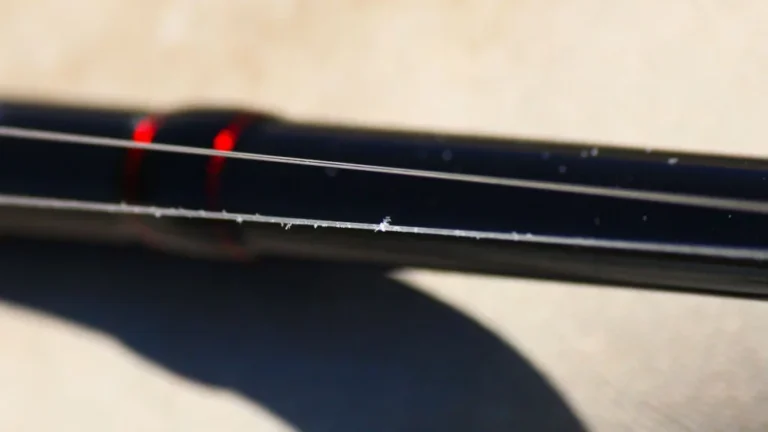
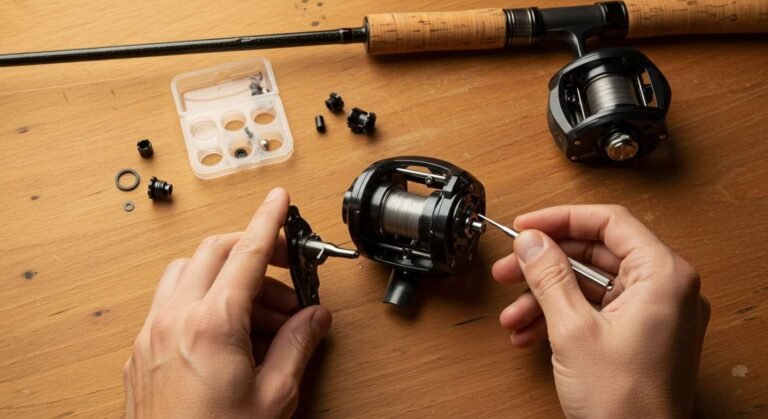
If you are searching for fishing line breaking at rod guides how to troubleshoot, the first thing to check is the rod guide surface. A tiny crack, sharp edge, or rough insert can cut fishing line under pressure. Many anglers miss this because the damage may be too small to see with normal light.
After years of fishing, one lesson becomes clear: line breaks near rod guides usually happen because of small problems that build over time. A quick inspection before a trip can save expensive lures, lost fish, and frustrating moments on the water.
Why Fishing Line Breaks at Rod Guides
Fishing line passes through every guide during casting and fighting fish. This creates constant friction. If a guide becomes damaged, the line may weaken each time it moves through that area.
When learning fishing line breaking at rod guides how to troubleshoot, start by understanding the most common causes. The problem is often not the fishing line itself but the contact point between the line and the rod.
- ✦ Cracked guide insert
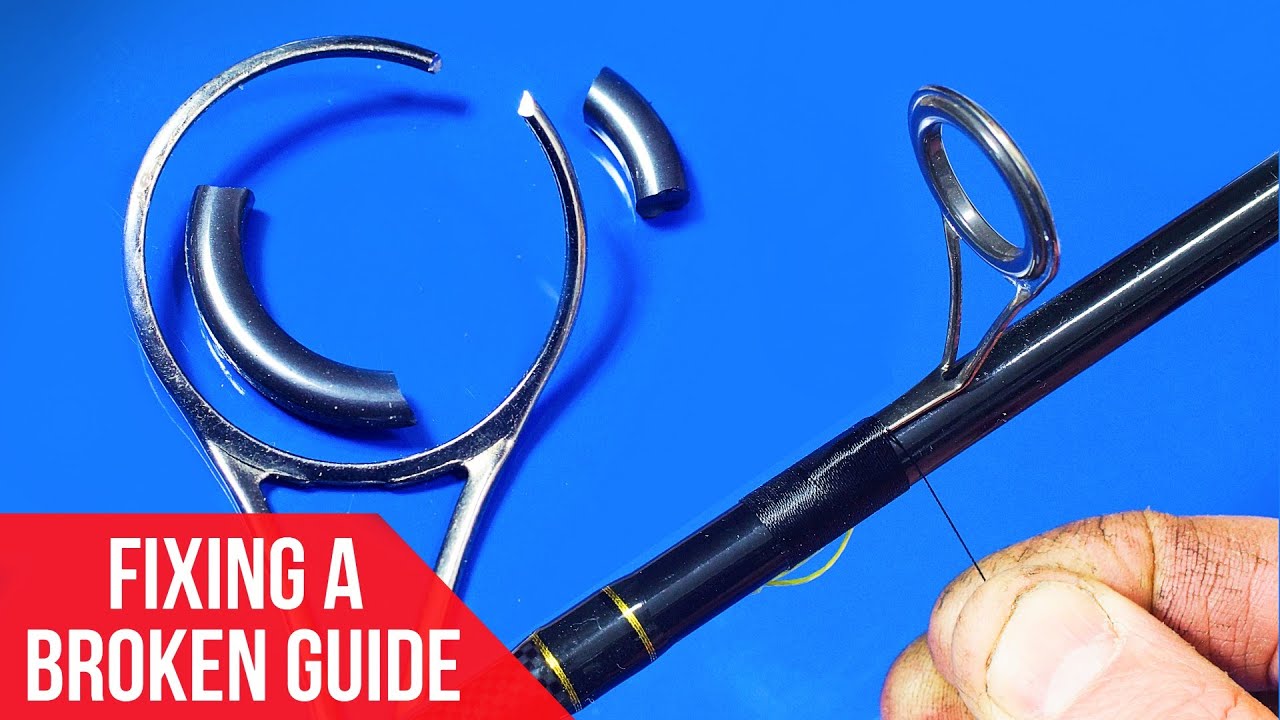
A ceramic or metal insert with a crack can create a sharp edge that cuts line.
- ✦ Rough guide surface
Small scratches can slowly damage monofilament, fluorocarbon, or braided line.
- ✦ Dirty guides
Sand, salt, and dirt can increase friction and weaken the line.
How Guide Damage Causes Line Failure
A damaged guide acts like a small blade against your line. The damage may not break the line immediately, but repeated casting and pressure from fish can cause failure.
- ✦ Line damage signs
Look for flat spots, frayed sections, cuts, or weak areas near the end of your line.
Step-by-Step Guide: Fishing Line Breaking at Rod Guides How to Troubleshoot
A simple inspection process can help identify the exact cause. Start by removing tension from the line and checking every guide from the tip section down to the handle.
Use your fingers or a cotton swab to find rough spots. A damaged guide often catches cotton fibers, which is a clear warning sign.

- ✦ Step 1: Inspect every guide
Look for cracks, missing inserts, bends, rust, or unusual wear.
- ✦ Step 2: Test the guide surface
Run a cotton swab around the inside edge to detect hidden damage.
- ✦ Step 3: Check your line
Replace line that feels rough, brittle, or stretched.
Testing Without Special Tools
Most anglers can troubleshoot this problem with basic items at home. A flashlight, cotton swab, and clean hands are often enough to find guide problems.
- ✦ Flashlight test
Bright light can reveal cracks and damaged guide rings.
Other Reasons Your Fishing Line May Break Near Guides
A rod guide is not always the only cause. Knots, incorrect line size, and poor reel settings can create similar symptoms.
When using braided line, remember that it is strong but can still fail if it rubs against damaged surfaces. Fluorocarbon and monofilament can also weaken from age and sunlight exposure.
- ✦ Old fishing line
Replace old line because UV rays and repeated stress reduce strength.
- ✦ Bad knots
Poorly tied knots create weak points that break under pressure.
- ✦ Heavy drag settings
Too much drag pressure can overload the line during a fish fight.
Matching Line and Rod Setup
Use line strength that matches your rod, reel, and fishing style. An unbalanced setup creates unnecessary stress on guides and line.
- ✦ Balanced setup
Match rod power, reel size, and line rating for smoother performance.
How to Repair or Prevent Damaged Rod Guides
If a guide is cracked or badly worn, replacing it is usually safer than trying temporary fixes. A damaged guide can continue cutting new fishing line.
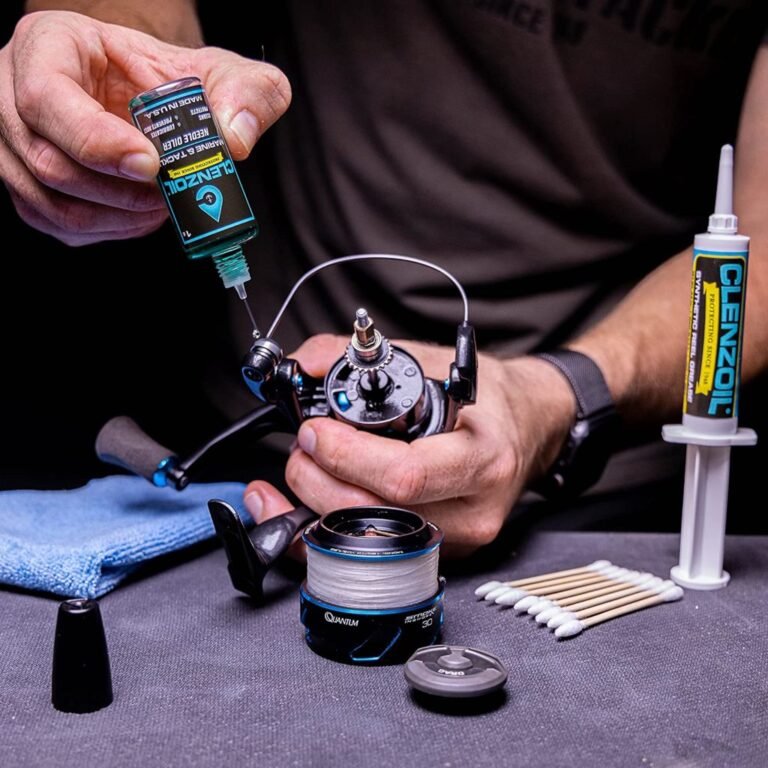
Preventive care is simple. Clean guides after saltwater trips and inspect them before important fishing days.
- ✦ Clean after use
Rinse salt and dirt from guides with fresh water.
- ✦ Replace damaged guides
Professional replacement provides the best long-term solution.
When to Replace Instead of Repair
Small guide issues may be repairable, but cracked inserts and sharp edges should not be ignored. Replacing the guide protects your investment.
- ✦ Replacement warning signs
Frequent line breaks, visible cracks, and rough surfaces mean replacement may be needed.