Learning how to keep worms on a fishing hook is one of the first skills many anglers develop. Whether you fish for bass, trout, catfish, or panfish in U.S. lakes and rivers, a properly secured worm can make a major difference.
After years of watching anglers prepare live bait, one common mistake stands out: they often place the worm too loosely or damage it while hooking. A good worm rig should stay attached during casts while still moving naturally to attract fish.

Choose the Right Hook for Keeping Worms Secure
The hook you choose plays a big role in how to keep worms on a fishing hook. A hook that is too large can tear the worm, while a hook that is too small may not hold the bait properly.
For common freshwater fishing, many anglers use size 6 to size 10 hooks for worms. Larger worms and bigger targets like catfish may need stronger hooks with wider gaps.

- ✦ Match hook size to worm size
Use smaller hooks for thin worms and larger hooks for thick nightcrawlers or bigger fish species.
- ✦ Use bait-holder hooks
Hooks with small barbs along the shank help prevent worms from sliding down.
Prepare the Worm Before Putting It on the Hook
Proper worm preparation makes it easier to keep worms on a fishing hook. Healthy worms are stronger, move better, and stay attached longer.
Keep worms cool and moist before fishing. Avoid leaving them in direct sunlight because heat weakens them and makes them break apart during casting.

- ✦ Keep worms fresh
Store worms in a cool container with proper bedding to maintain strength.
- ✦ Handle gently
Use careful movements because squeezing or pulling too hard can damage the worm.
Why worm condition matters
A lively worm creates more movement underwater. Fish often notice this movement before they find the bait itself.
Best Methods for Putting a Worm on a Fishing Hook
There are several ways to attach worms, but the best method depends on the fish you target. The goal is to keep the worm attached while allowing realistic movement.
A common technique is threading the hook through the worm several times. This creates a stronger hold and reduces the chance of losing bait during a cast.
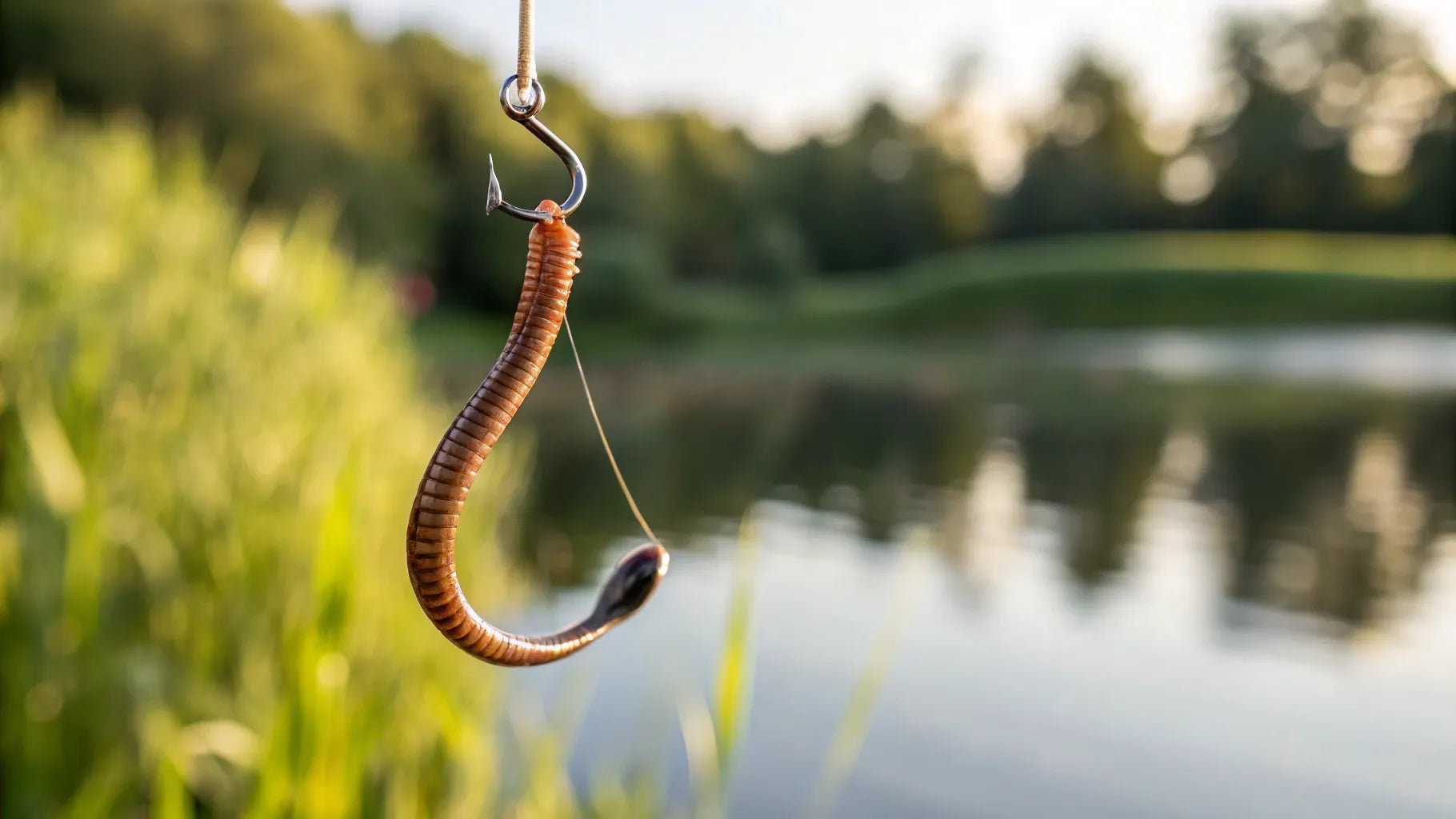
- ✦ Threading method
Push the hook through several sections of the worm while leaving part of the worm hanging for movement.
- ✦ Single hook method
Hook one section of the worm when fish are cautious and you need a more natural presentation.
- ✦ Wacky style method
Place the hook through the middle of the worm for slow-moving presentations.
Avoid common hooking mistakes
Do not place the hook only through the very end of the worm. This causes the bait to slide off easily during casting.
- ✦ Do not cover the hook point
Keep the hook point exposed so fish can be caught when they bite.
Use Worm Holders and Extra Support When Needed
Some fishing situations require extra help to keep worms attached. Strong currents, long casts, and aggressive fish can pull worms away from hooks.
Small bait clips, spring-style holders, and bait-holder hooks can improve durability without changing the natural action too much.

- ✦ Bait-holder hooks
These hooks use small ridges that grip the worm and reduce slipping.
- ✦ Fishing in current
Secure worms more tightly when fishing rivers or areas with strong water movement.
How to Keep Worms on a Fishing Hook During Casting
Casting pressure is one of the biggest reasons worms fall off hooks. A strong throw can damage poorly attached bait before it reaches the water.
The key is balance. Secure the worm enough to survive the cast, but keep enough movement to look natural to fish.

- ✦ Use smooth casts
Avoid extremely powerful casts when using delicate live bait.
- ✦ Check bait after every cast
Replace or adjust worms that become loose or damaged.
Common Reasons Worms Fall Off Fishing Hooks
Understanding why worms fall off helps anglers improve their technique. Most problems come from poor hook placement, weak worms, or incorrect equipment.
Small changes can greatly improve bait performance. Many experienced anglers check their worm after every few casts.
- ✦ Wrong hook size
A hook that is too large can tear the worm and reduce holding power.
- ✦ Damaged worm
Old or overheated worms break apart faster.
- ✦ Poor placement
A worm hooked only at one weak point can slide away easily.
Frequently Asked Questions about how to keep worms on a fishing hook

fishingscouty
Contributor