Baitcaster vs spinning: baitcasters for power and accuracy; spinning reels for ease and light tackle.
I’ve spent over a decade testing reels on lakes, rivers, and saltwater flats. This baitcaster vs spinning guide breaks down how each reel works, when to use which, and practical tips I learned the hard way. Read on to decide the best reel for your fishing style and to avoid common setup mistakes.
Understanding the basics of baitcaster vs spinning
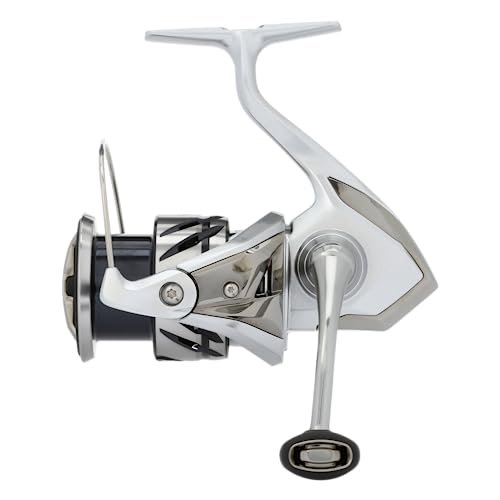
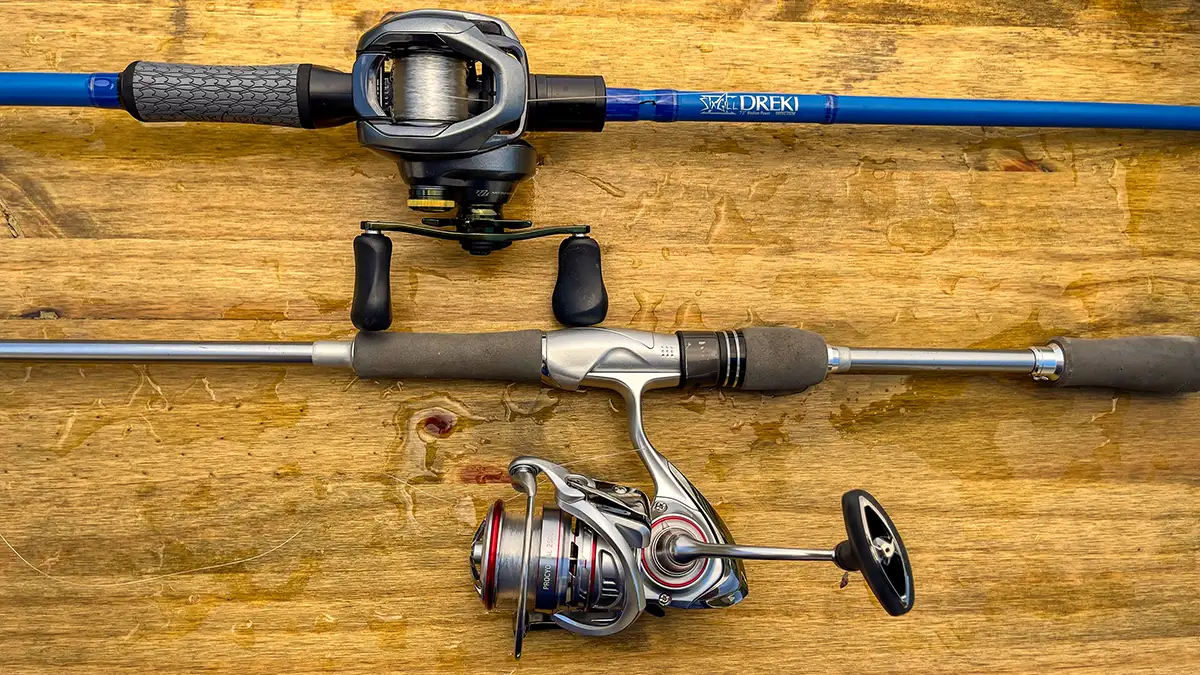
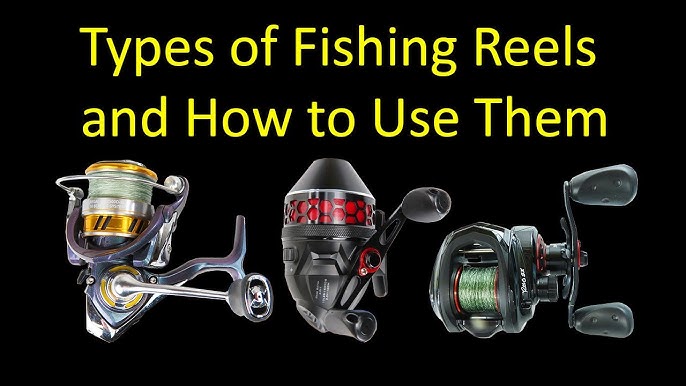
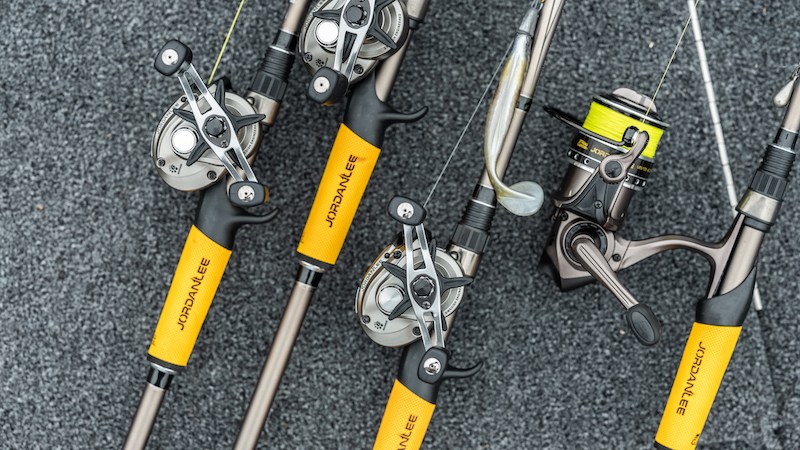
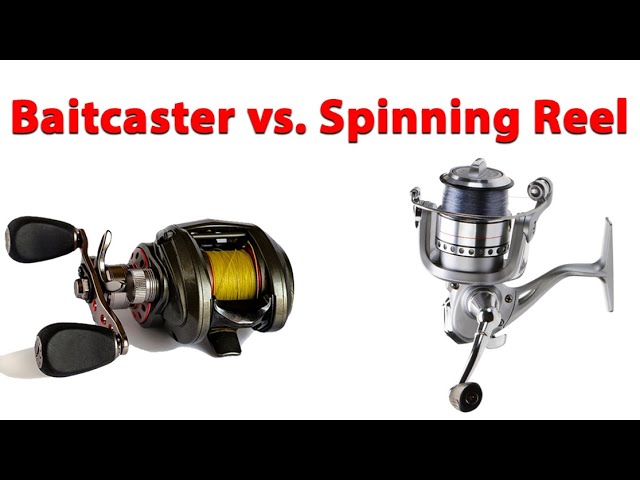
Baitcaster vs spinning describes two main reel types used by anglers. A baitcaster sits on top of the rod and uses a revolving spool. A spinning reel hangs below the rod and has a fixed spool with a bail arm. Both cast lures, but they use different mechanics and fit different situations.
Key mechanical differences
- Spool orientation and line release: Baitcasters let the spool spin during the cast, while spinning reels let line unspool off a fixed spool.
- Drag and retrieve: Baitcasters often offer stronger drag and direct gear engagement. Spinning reels are simpler to thumb through and often handle lighter lines better.
- Line twist and wind knots: Spinning reels can cause line twist with certain lures, while baitcasters are prone to backlash without proper thumb control.
Why understanding this matters
- Choosing between baitcaster vs spinning changes your lure choices, line type, and casting technique.
- The right reel saves time learning and reduces lost fish.
- This guide covers performance, pros and cons, setups, and real tests so you can pick with confidence.
Pros and cons — baitcaster vs spinning
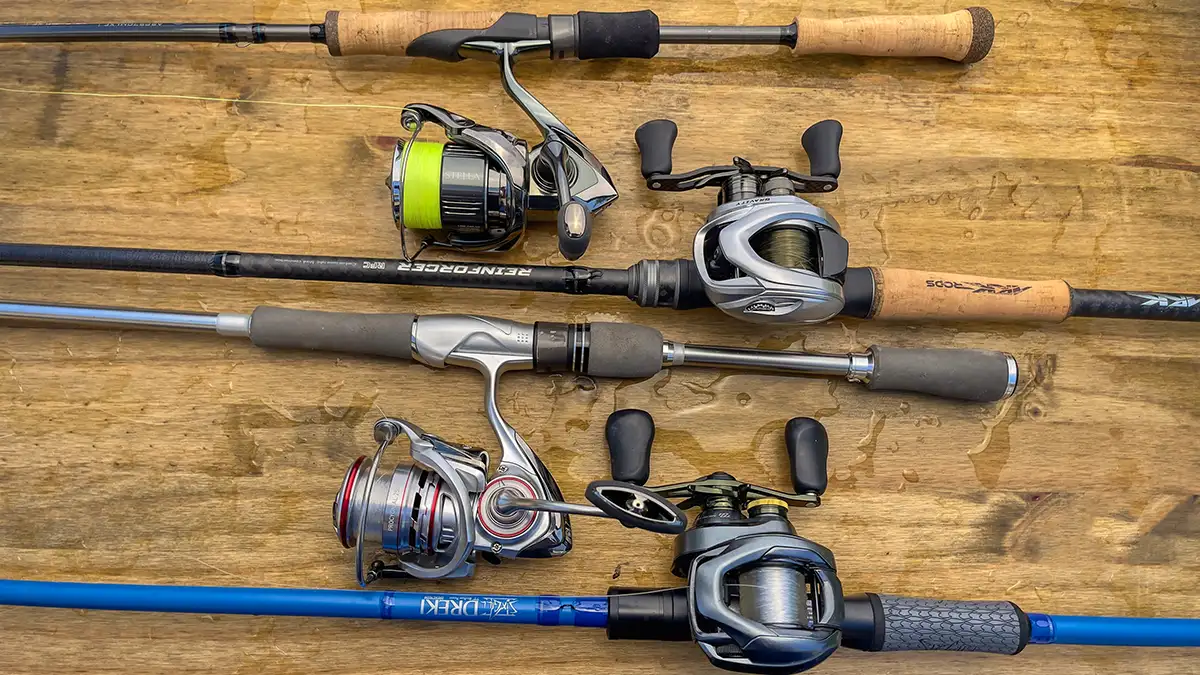
Below are practical trade-offs to help match reel choice to your goals.
Baitcaster advantages
- Power and control: Great for heavy lures, big fish, and tight hooksets.
- Casting accuracy: Easier to place lures near structure with short, precise casts.
- Line capacity and drag: Often holds heavier line and has stronger drag ratios.
Baitcaster limitations
- Learning curve: Backlashes are common for new users.
- Not ideal for very light lures: Difficult to cast small baits far.
- Higher initial cost: Good baitcasters can be pricier than entry spinning reels.
Spinning reel advantages
- Ease of use: Forgiving for beginners and great for light lures.
- Long casts with light line: Often casts small lures farther with monofilament or braid.
- Versatility: Works well for many freshwater and inshore tactics.
Spinning reel limitations
- Less torque for heavy bass or long fights with big fish.
- Line twist can occur with some setups.
- Less precision for certain jigging or flipping techniques.
When to choose a baitcaster (best uses and species)
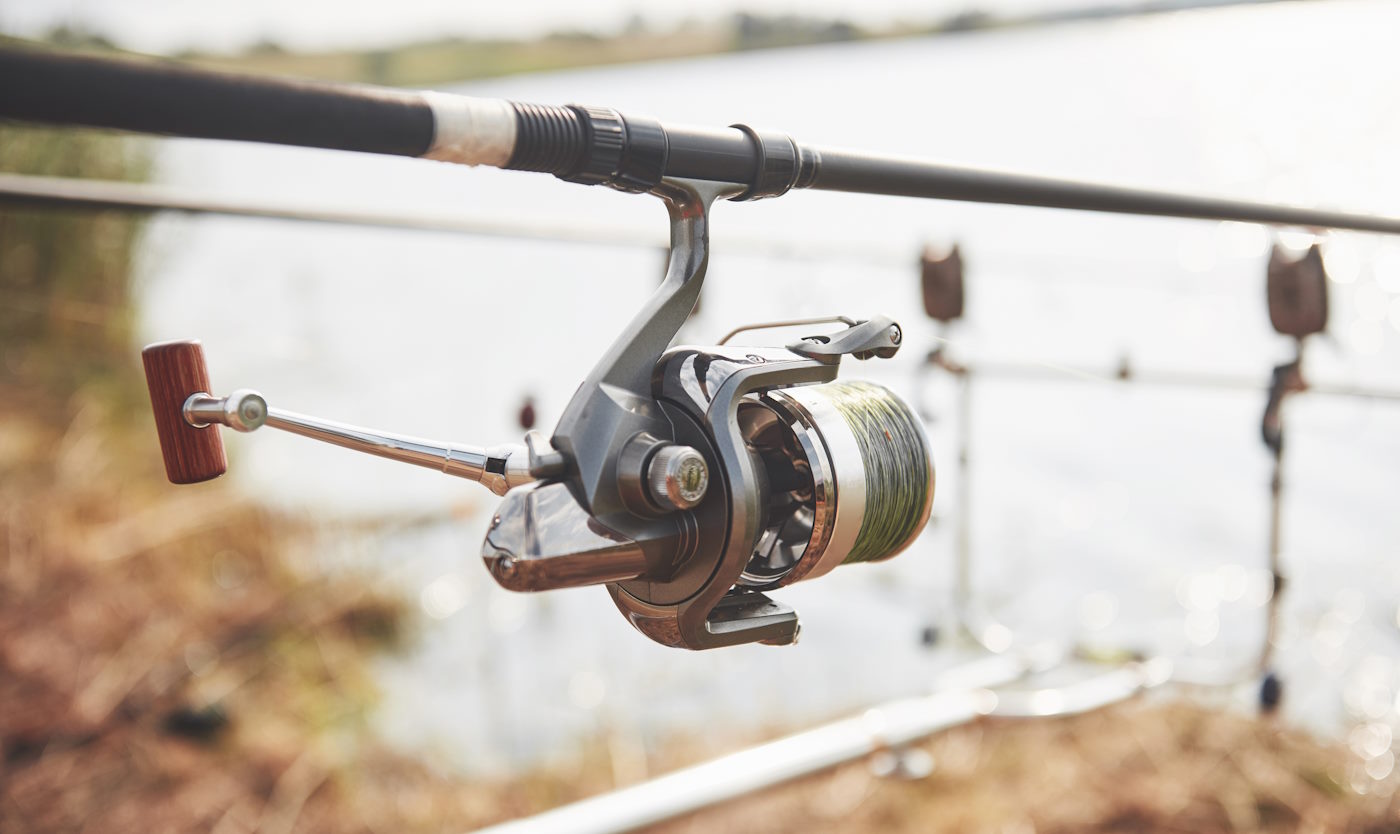
Choose a baitcaster when power and accuracy matter. Use this reel for heavy cover and bigger fish.
Best situations for a baitcaster
- Flipping and pitching into thick cover for bass.
- Casting heavy crankbaits, spinnerbaits, or big swimbaits.
- Casting with braid and heavy fluorocarbon leaders.
- Saltwater inshore tasks that demand torque and line capacity.
Species and lure examples
- Largemouth bass with Texas rigs and heavy jigs.
- Pike with large swimbaits or topwater plugs.
- Larger catfish on heavy baits and long runs.
Practical tip from experience
- I learned to adjust spool tension and practice thumb pressure on the water. That cut backlashes by half during my first season using a baitcaster.

When to choose a spinning reel (best uses and species)
Spinning reels are the go-to for light tackle, finesse, and beginner-friendly fishing.
Best situations for a spinning reel
- Light-line techniques like drop shots, shaky heads, and finesse worms.
- Casting small soft plastics, spoons, or light jigs long distances.
- Fishing from boats or shore where quick, easy casts are more important than raw power.
Species and lure examples
- Trout with light spinners and small spoons.
- Panfish and small bass with finesse baits.
- Inshore species on light tackle like small snook or trout.
Practical tip from experience
- I keep a light spinning outfit rigged for mornings when trout and small bass are active. It saves time and keeps the fight fun.
Setup, tuning, and common mistakes for baitcaster vs spinning
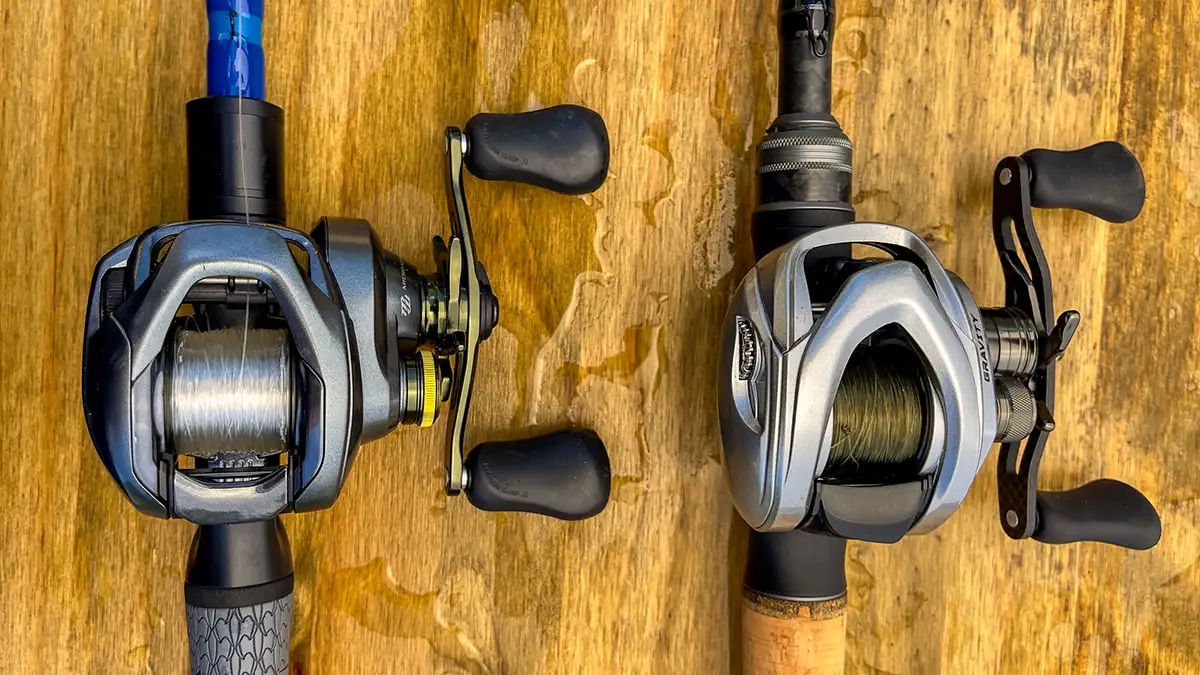
Proper setup matters for both reels. Small adjustments change performance a lot.
Baitcaster setup checklist
- Spool tension: Set with a lure to avoid overspin or a weak cast.
- Brake system: Use magnetic or centrifugal brakes to reduce backlash.
- Line choice: Use braid for heavy cover and smooth casting; add a fluorocarbon leader for abrasion resistance.
Spinning reel setup checklist
- Spool fill: Leave a 1/8-inch gap from the rim to prevent overruns.
- Line lay: Check even lay to avoid line bunching.
- Drag setting: Set drag to about one-third of the line’s tested breaking strength.
Common mistakes and fixes
- Backlash panic: Calmly release spool with thumb, then reel to reset. Practice on open water.
- Wrong line for lure weight: Match line and lure; light lures need lighter line on spinning gear.
- Over-tight braking: Too much brake reduces distance and control.
Maintenance and care for lasting performance
Simple care keeps reels working and saves money.
Routine tasks
- Rinse freshwater after saltwater sessions.
- Loosen drag for storage.
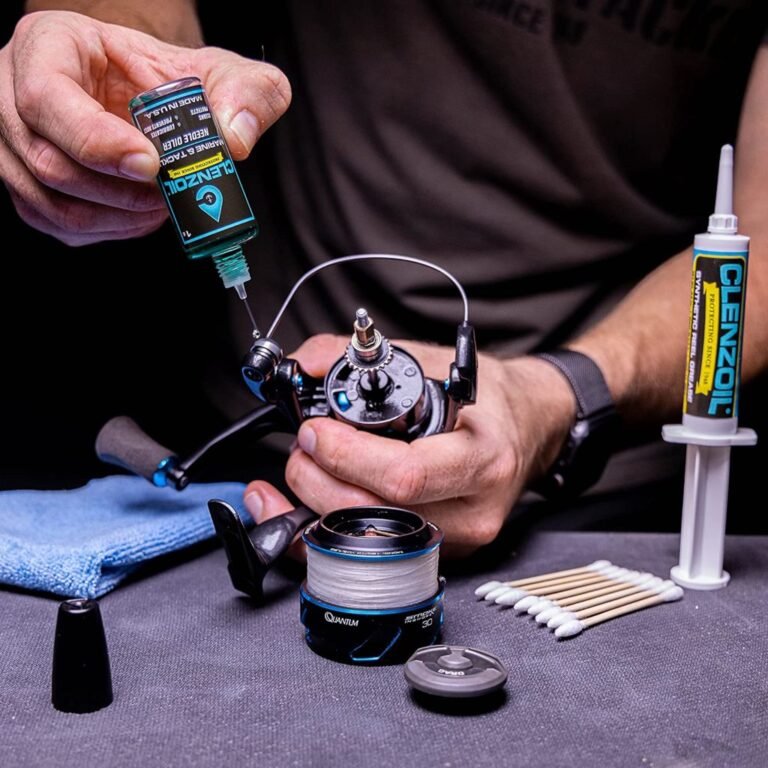
- Lubricate gears and check bearings each season.
When to service
- If retrieves feel rough or noise increases, get a full service.
- Replace line annually or when worn to avoid break-offs.
My personal tests and hard-won lessons
I tested baitcaster vs spinning across seasons and water types. Here are honest takeaways from hands-on use.
What worked for me
- Baitcasters beat spinnings for heavy-cover bass. I landed more hooked fish with baitcasters in thick lily pads.
- Spinning reels put more fish in the boat during light-line trout trips. They cast small baits farther and hooked more timid fish.
Big mistakes I made
- I once used a baitcaster for a light-drop-shot day. I lost lures and fought backlash instead of fish. Lesson: match reel to technique.
- I failed to clean a spinning reel after saltwater and felt corrosion within one season.
Practical tips I pass on
- Rent or borrow both types before you buy. A half-day trial reveals what feels right.
- Practice casting a baitcaster in an open field with different lure sizes to build muscle memory.
Quick questions anglers often ask (PAA-style)
Which reel casts farther: baitcaster or spinning?
Spinning reels usually cast lighter lures farther due to the fixed spool design. Baitcasters can cast heavy baits with high accuracy but may struggle with small lures.
Is a baitcaster harder to learn than a spinning reel?
Yes. Baitcasters require thumb control to prevent backlash. Spinning reels are more forgiving for beginners.
Can I use braid on a spinning reel instead of a baitcaster?
Yes, but use a fluorocarbon leader to reduce line twist and improve presentation. Spinning reels can handle braid for many light-to-medium tasks.
Frequently Asked Questions of baitcaster vs spinning
Are baitcasters better for bass than spinning reels?
Baitcasters excel for heavy cover bass work and big lures, while spinning reels are better for finesse and light presentations. Choose based on the technique you use most.
Can beginners use a baitcaster?
Beginners can learn a baitcaster, but expect a learning curve and initial backlashes. Start with practice casts, light lure weights, and proper brake settings.
Which reel type is better for saltwater?
Both work in saltwater when designed for it. Baitcasters handle big inshore species and heavy lines, while spinning reels are good for light inshore tactics and easier handling.
How do I stop line twist on a spinning reel?
Use proper spool-to-lure matching, avoid overfilling the spool, and occasionally let line out behind a moving boat to untwist. Also consider using a swivel for some setups.
Should I buy one good reel or several cheaper reels?
One quality reel per technique is usually better than many cheap reels. A well-built baitcaster and a reliable spinning reel will cover most situations and last longer.
Conclusion
Choosing between baitcaster vs spinning comes down to your goals: power and accuracy with a baitcaster, or ease and finesse with a spinning reel. Match your reel to the lures, fish, and cover you face. Try both types, practice setup and casting, and invest in quality gear that fits your style. Leave a comment about your favorite reel or a lesson you learned, and consider subscribing for more hands-on fishing gear advice.