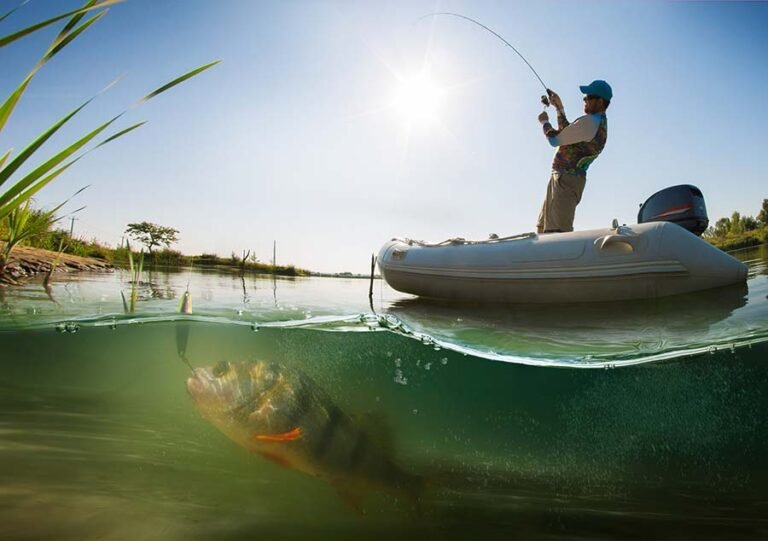
Use a 1000–2500 size spinning reel for most trout fishing—lightweight, balanced, and very versatile.
I’ve spent decades fishing streams, rivers, and stocked ponds, and I know how much the right reel size matters. This guide explains what size reel for trout fishing works best, why those sizes fit most setups, and how to match reel size to rod, line, and water. Read on for clear, experience-backed advice, practical examples, and simple rules you can use the next time you tie on a fly, cast a spinner, or bait a hook.
How to pick the right reel size for trout fishing
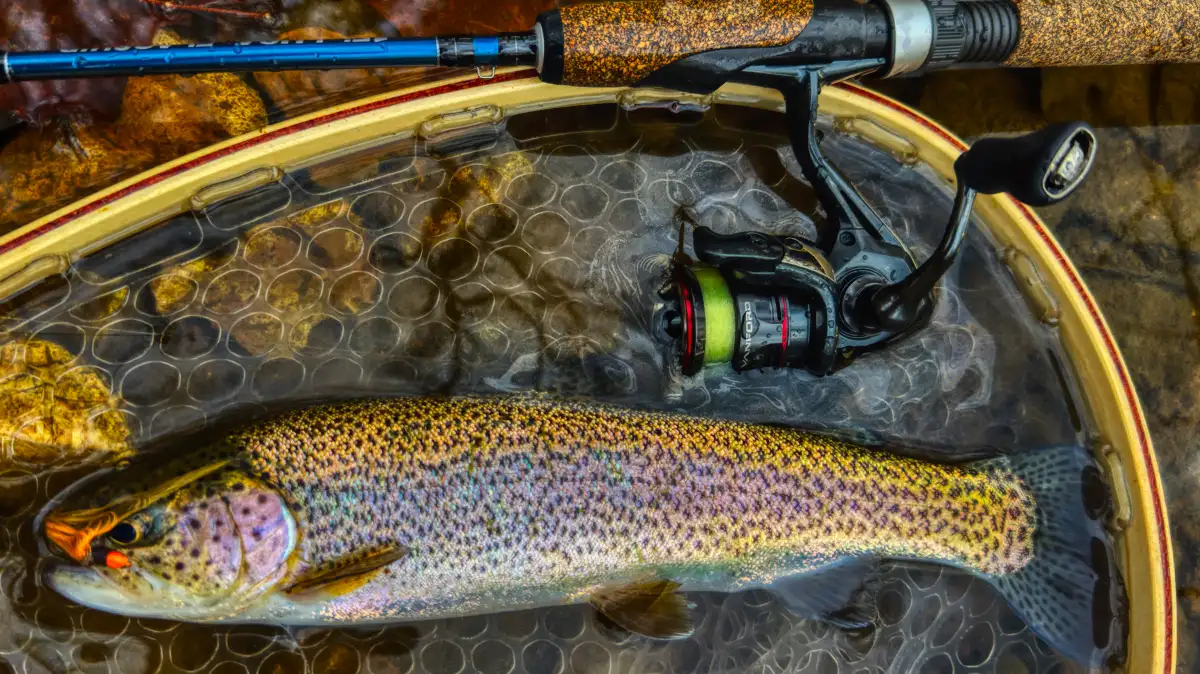
Choosing what size reel for trout fishing starts with understanding the fish, the water, and your gear. For most trout anglers a 1000–2500 size spinning reel or a similarly light baitcasting or fly reel is ideal. These sizes give enough line capacity and drag power for trout up to several pounds while keeping the setup light and responsive.
Things to consider when choosing what size reel for trout fishing:
- Target trout size and fight intensity
- Water type: small stream, large river, lake, or stocked pond
- Preferred line weight: 2–10 lb test for spin; 2–6 wt for fly
- Rod power and balance
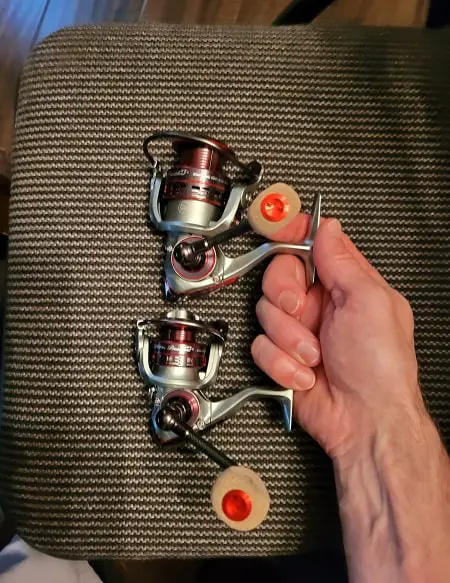
A 1000–2000 size reel pairs well with ultralight rods and 2–6 lb test line. A 2500 size gives more capacity and slightly stronger drag for larger trout or snaggy water. If you plan to fish for big browns or steelhead-like fighters, bump up to 3000–4000. Overall, knowing what size reel for trout fishing you need will make casting easier and landing trout more fun.
Reel types and how size affects trout fishing
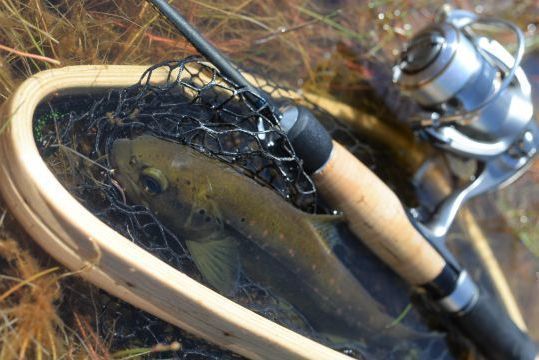
Reel choice goes beyond a number. Spinning, baitcasting, and fly reels behave differently. Knowing the differences helps you pick the best size for trout.
Spinning reels
- Best for beginners and ultralight setups.
- Use 1000–2500 sizes for trout.
- Easy to cast light lures and small baits.
Baitcasting reels
- Good for heavier lures and accuracy.
- Use low-profile models designed for light lines.
- Match to rod and spool capacity; compact models replicate a 2000–2500 spin size.
Fly reels
- Sized by line weight, not a number.
- 2–6 weight reels cover most trout work.
- Choose sealed drags for lake and streamer fishing.
Remember the phrase what size reel for trout fishing when you shop. The same size label can vary by brand, so check spool capacity and drag specs. Light reels are often best because trout strikes are subtle and you want balance.
Match reel size to line, rod, and technique
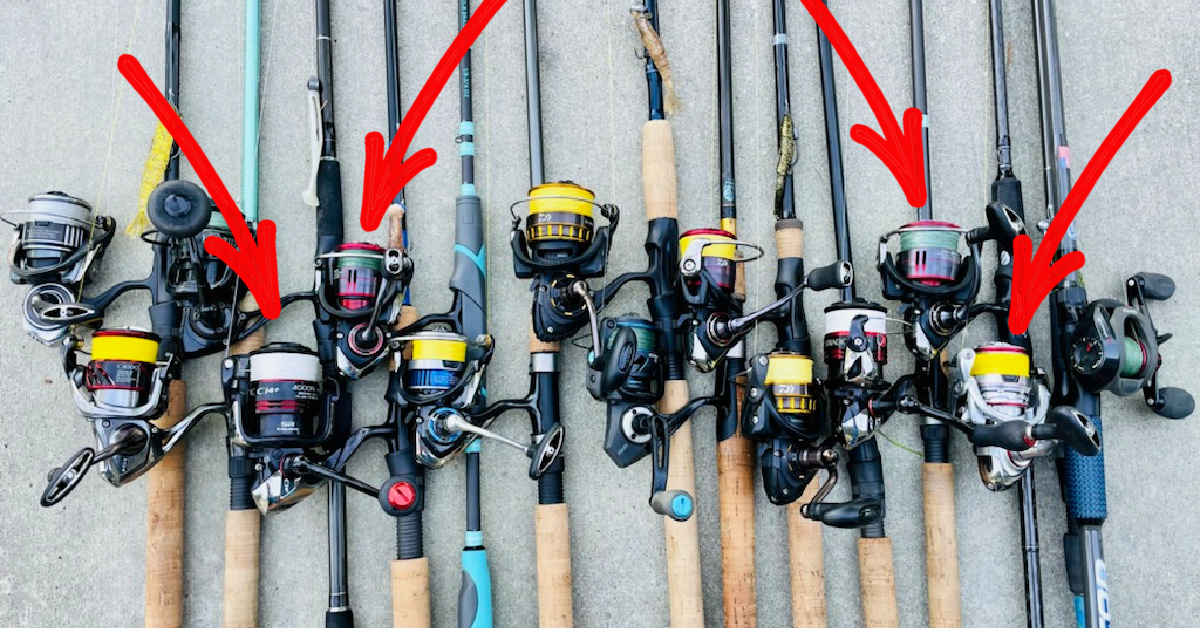
Good balance between rod and reel improves casting and reduces fatigue. Match reel size to the line weight and rod action.
Basic matches for what size reel for trout fishing:
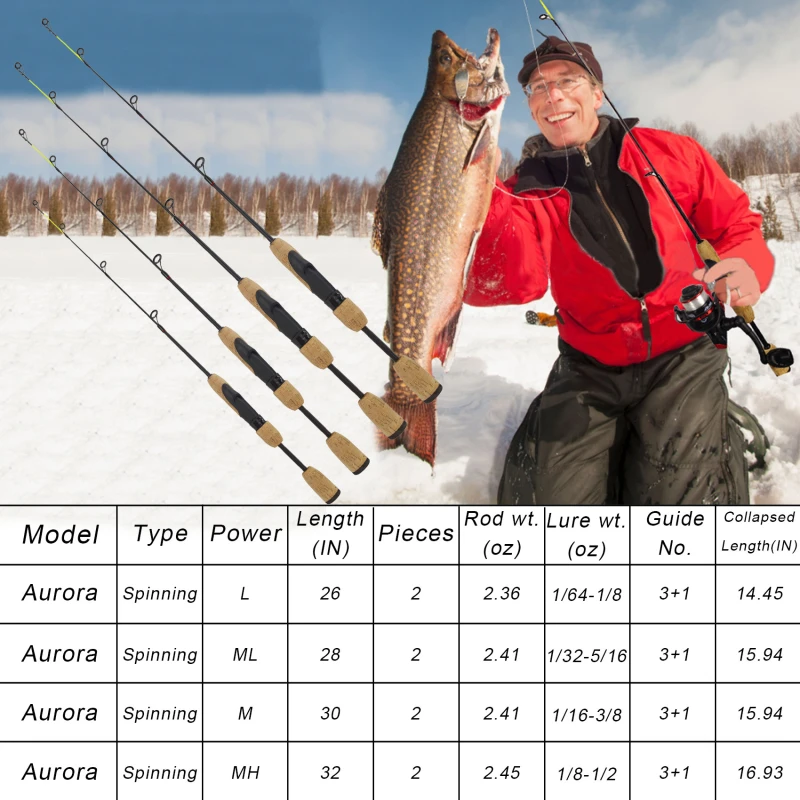
- Ultralight spin: 1000 reel with 2–6 lb test line on a fast 5–6 ft rod.
- Light spin: 2000 reel with 4–8 lb test line on a 6–7 ft rod.
- Bigger water or larger trout: 2500 reel with 6–10 lb test line.
- Fly fishing: 3–5 wt reel for stream trout, 6 wt for lake and windy conditions.
Technique matters too. For ultralight spinning, light reels let you cast smaller lures farther. For trolling or long casts, a 2500 gives extra line and smoother drag. When you decide what size reel for trout fishing, check how the reel feels on your rod. It should sit balanced and not tip the rod forward or back.
Sizing by trout species and water conditions
Different trout species and water types push reel needs in different directions. Use the water and species as your guide for what size reel for trout fishing.
Small streams and creeks
- Fish are usually smaller and close to cover.
- Choose 1000–1500 spinning reels or 2–4 wt fly reels.
- Light gear helps detect gentle takes and reduces spooking fish.
Rivers and larger streams
- Trout can be bigger and make longer runs.
- 2000–2500 spinning reels or 4–6 wt fly reels work well.
- Stronger drag helps when fighting trout in current.
Lakes and reservoirs
- Fish sizes vary and wind adds pressure.
- 2500–3000 spinning reels or 6 wt fly reels are useful.
- Extra line capacity and sealed drags help for long fights and abrasion.
Stocked ponds
- Fish are often smaller, but they fight hard in shallow water.
- 1000–2000 reels are fine.
- Keep setups simple and light for easy casts.

Practical tips, gear checks, and my field experience
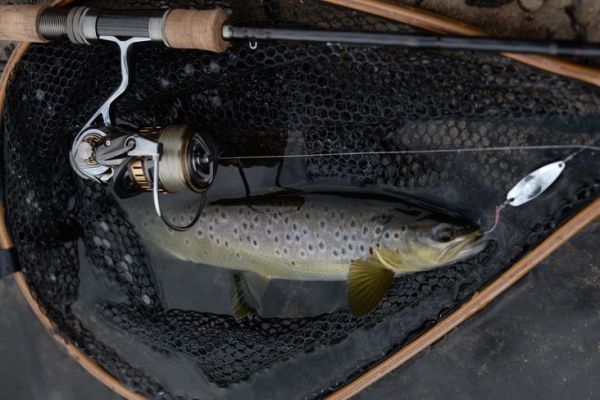
I learned what size reel for trout fishing by trial and error. On a spring morning I fought a surprise 4-pound brown on a 1000 reel. It worked, but the fight was long and the spool heated. After that I switched to a 2500 for larger rivers. Here are tested tips.
Simple checks before fishing:
- Check reel drag smoothness by pulling the line by hand.
- Match line capacity to the water you fish.
- Use braided line with a light leader for long casts; use mono for stealth.
My lessons and mistakes:
- Mistake: using a too-heavy reel on a small stream. Result: missed strikes and fatigue.
- Lesson: prioritize balance and sensitivity over raw capacity.
- Tip: carry a spare reel spool with a different line weight. It makes adapting to conditions fast.
If you’re unsure what size reel for trout fishing, start with a 2000. It covers most situations and lets you tune up from there.

Common mistakes and how to avoid them
New anglers often focus on flashy lures and miss basic gear matching. Avoid these common errors when picking what size reel for trout fishing.
Common pitfalls:
- Choosing too large a reel for small streams. This reduces sensitivity.
- Ignoring drag quality. A weak drag means lost fish.
- Over-spooling without checking capacity. You need enough backup line for runs, not extra bulk.
How to avoid them:
- Test the reel on the rod before buying.
- Read spool specs and match to your target line test.
- Practice adjusting drag at home so you can set it quickly on the water.
People also ask — short practical answers
Q: What size spinning reel for trout fishing is best?
A: For most trout, a 1000–2500 spinning reel is ideal. Choose 1000–1500 for tiny streams and 2500 for bigger rivers or lakes.
Q: Can I use a 3000 reel for trout?
A: Yes, a 3000 works for bigger trout and lake fishing. It can be heavy on small streams, so consider balance.
Q: Does reel size matter for fly fishing trout?
A: Fly reels are sized by line weight. Use 2–6 wt reels for typical trout work. Heavier lines require larger reels.
Q: What line weight pairs with a 2000 reel for trout?
A: A 2000 reel pairs well with 4–8 lb test line. It balances well with 6–7 foot light rods.
Q: Should I use braid or mono on a trout reel?
A: Use braid for long casts and thin diameter; add a mono leader for stealth. Mono is quieter and stretches, helping absorb shocks.
People Also Ask (PAA) style mini-questions
Are larger reels better for big trout?
Larger reels give more capacity and stronger drags, which help with big trout. But size can hurt balance on light rods, so match reel power to the rod and line.
How much line capacity do I need on a trout reel?
For most trout, 100–150 yards of 6–8 lb test is more than enough. For braided setups, spool with 150–200 yards of thin braid and a 6–10 ft leader.
Is a sealed drag necessary for trout reels?
Sealed drags add protection in lake and salt-adjacent conditions. For inland trout fishing it’s a nice feature but not essential if the drag is smooth and strong.
Frequently Asked Questions of what size reel for trout fishing
What size reel should I use for small stream trout?
Use a 1000–1500 spinning reel or a 2–4 wt fly reel. These sizes keep the setup light and sensitive for small water.
Is a 2500 reel too big for trout?
A 2500 reel is not too big for many trout situations. It is ideal for larger rivers and lakes but may feel heavy on ultralight rods.
How do I match reel size to rod length?
Balance the reel so the rod’s sweet spot is maintained. A 6–7 ft light rod pairs well with a 2000–2500 reel for trout.
Can I use the same reel for all trout fishing?
One versatile reel like a 2000–2500 can cover many trout scenarios. But specialized situations benefit from a smaller or larger reel.
What drag rating do I need for trout reels?
Aim for a smooth drag that can deliver 6–12+ pounds of stopping power depending on trout size. Smoothness matters more than peak numbers.
Conclusion
Picking what size reel for trout fishing comes down to matching trout size, water type, rod, and line. For most anglers a 1000–2500 spinning reel or 2–6 wt fly reel covers the bases. Start with a balanced setup, practice drag adjustments, and carry a spare spool if you fish mixed waters. Try a 2000 as a starting point, then fine-tune for your favorite streams, rivers, or lakes. Ready to improve your setup? Grab a reel, test it on your rod, and head to the water—then share your experience or questions below.