Understanding how fish finders measure water depth helps anglers get more value from their electronics. Whether you fish a bass lake in the United States, explore coastal waters, or use a small kayak setup, your fish finder depends on sonar technology to estimate the distance between your boat and the bottom.
The process is simple but highly precise. A transducer sends sound waves into the water, listens for returning echoes, and uses the travel time to calculate depth. After years of studying sonar displays, one lesson stands out: knowing how depth is measured makes it much easier to read underwater features and find productive fishing areas.

The Basic Science Behind How Fish Finders Measure Water Depth
Fish finders use sonar, which stands for sound navigation and ranging. The device sends a short sound pulse through the water and measures the returning echo. Because sound travels through water at a known speed, the unit can calculate the distance to the object that reflected the signal.
When the sonar pulse reaches the lake or ocean floor, part of the energy bounces back to the transducer. The fish finder measures the time between sending the pulse and receiving the echo. This timing allows the screen to show a depth number almost instantly.
- ✦ Sound pulse transmission
The transducer creates a sonar signal that travels downward through the water column.
- ✦ Echo return
The bottom reflects the signal back toward the transducer for measurement.
- ✦ Depth calculation
The fish finder converts echo travel time into a displayed water depth.
Why Sound Waves Are Used Instead of Light
Light does not travel far or work well in dark, muddy, or deep water. Sound waves move through water much better, which makes sonar the ideal tool for measuring underwater distance.
This is why fish finders can measure depth in lakes, rivers, and oceans even when visibility is almost zero.
- ✦ Better underwater travel
Sound waves can move through water over long distances with reliable results.
The Role of the Transducer in Depth Measurement
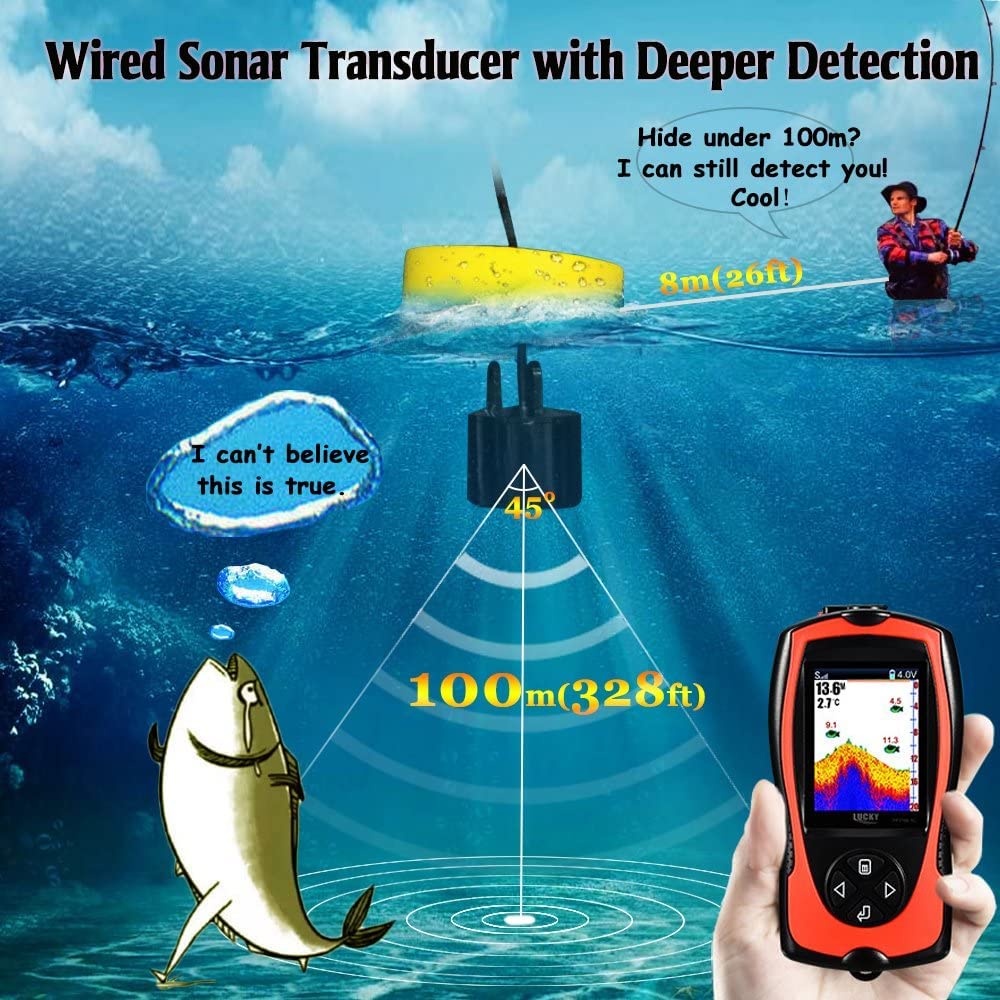
The transducer is the heart of any fish finder system. It sits in the water and performs two jobs: sending sonar signals and receiving the returning echoes.
A quality transducer improves depth accuracy because it can create cleaner signals and detect weaker echoes. Many boat owners upgrade transducers when they want better performance in deep water or at higher speeds.
- ✦ Sending sonar waves
The transducer creates electrical energy that becomes sound energy in the water.
- ✦ Receiving reflected signals
The transducer detects returning echoes and sends information back to the display unit.
How Transducer Placement Affects Accuracy
Placement matters when learning how fish finders measure water depth. A transducer that sits in disturbed water or behind a propeller may receive weaker signals.
For the best readings, anglers usually install transducers where water flow remains smooth and clear.
- ✦ Clean water flow
Smooth water movement helps the transducer send and receive clearer sonar signals.
How a Fish Finder Converts Echoes Into Depth Numbers
Inside the fish finder, a processor calculates the distance from the transducer to the bottom. The basic formula uses the speed of sound in water and the time needed for the echo to return.
The device measures the round trip of the sonar signal, so it divides the travel distance by two to find the actual depth. Modern units perform this calculation thousands of times during a fishing trip.
- ✦ Signal timing
The unit tracks the exact time between transmission and echo reception.
- ✦ Computer processing
A built-in processor turns raw sonar information into an easy-to-read depth display.
Why Depth Readings Update Continuously
Fish finders constantly send and receive sonar pulses while running. This allows the screen to update as your boat moves across changing depths.
The result is a moving picture of the underwater area below your boat.
- ✦ Real-time scanning
Continuous sonar pulses help anglers track depth changes while traveling.
Factors That Can Change Fish Finder Depth Accuracy
Although sonar technology is reliable, several conditions can affect how fish finders measure water depth. The displayed number may change because of water movement, installation issues, or incorrect settings.
Experienced anglers learn to treat depth readings as valuable information while also understanding the conditions that influence them.
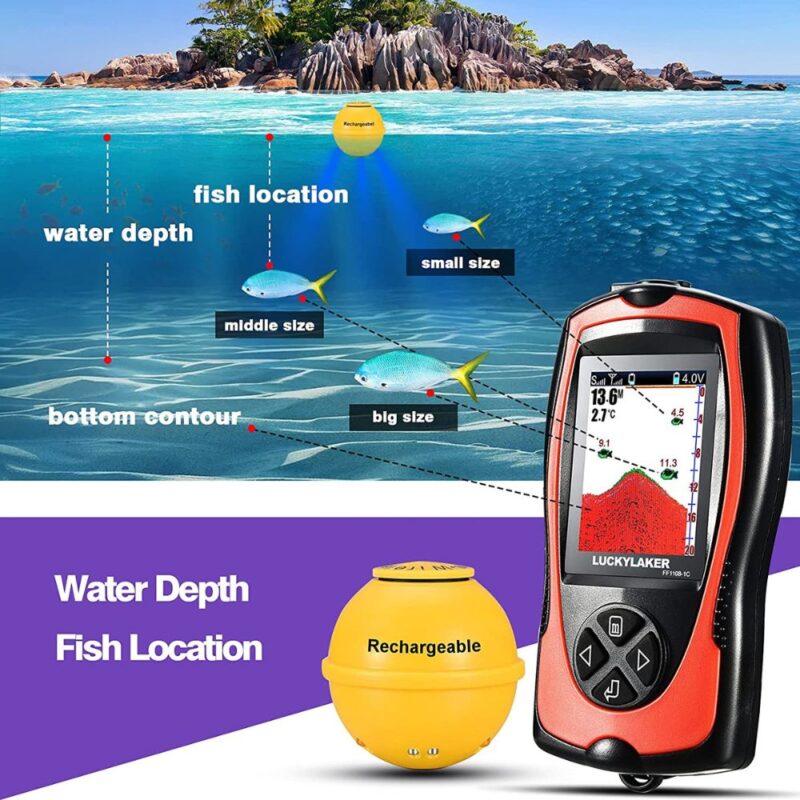
- ✦ Water temperature
Temperature differences can slightly affect how sound moves through water.
- ✦ Bottom material
Rock, mud, sand, and vegetation can reflect sonar signals differently.
- ✦ Boat movement
High speeds or rough water can create weaker or inconsistent readings.
Common Depth Reading Problems
A fish finder may show incorrect depth if the transducer is dirty, poorly mounted, or blocked by air bubbles. Checking installation and settings often solves these problems.
Regular maintenance helps keep sonar readings accurate during every season.
- ✦ Transducer cleaning
Removing dirt and growth helps maintain strong sonar signals.
How Different Sonar Types Measure Depth
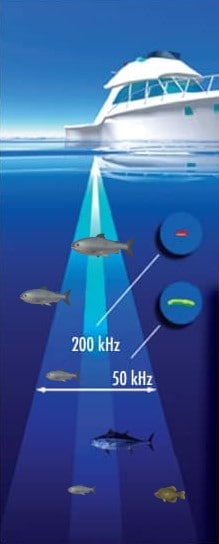
Different fish finder technologies use sonar in different ways. Traditional 2D sonar, CHIRP sonar, and imaging technologies all measure depth, but they provide different levels of detail.
CHIRP sonar sends a range of frequencies instead of one single frequency. This can create clearer separation between fish, structure, and the bottom.
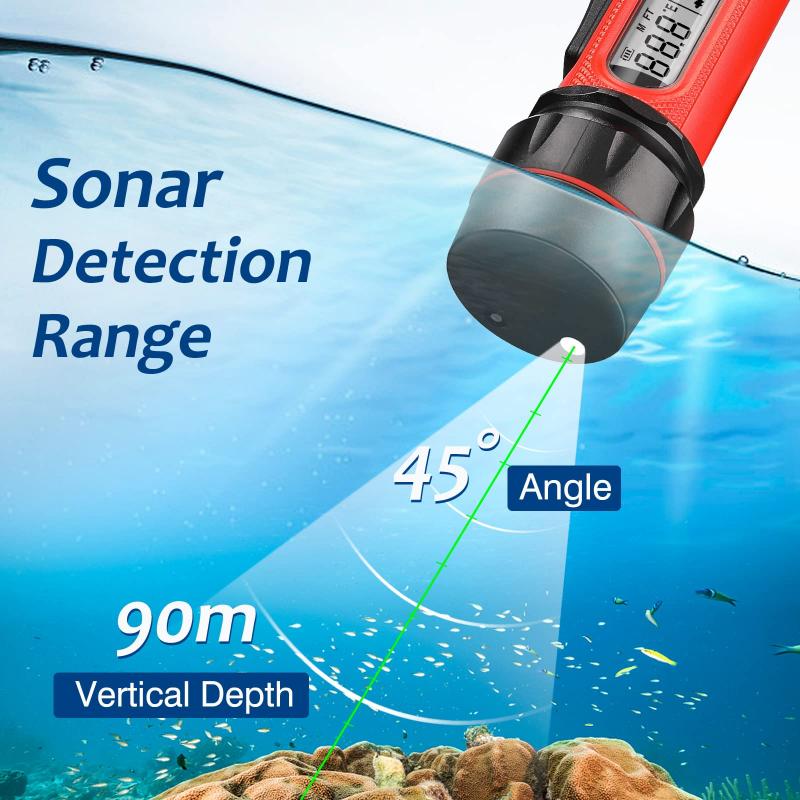
- ✦ Traditional sonar
Provides basic depth readings and underwater information using standard sonar pulses.
- ✦ CHIRP sonar
Uses multiple frequencies to create more detailed sonar returns.
- ✦ Imaging sonar
Creates detailed views of underwater areas while still using depth measurements.
Choosing the Right Sonar for Your Fishing Style
A weekend lake angler may only need reliable depth numbers, while offshore fishermen often need advanced sonar features. The best choice depends on the type of water and fishing methods used.
Understanding the technology behind depth readings helps buyers choose equipment with confidence.
- ✦ Match technology to use
Select sonar features based on fishing location, depth range, and goals.