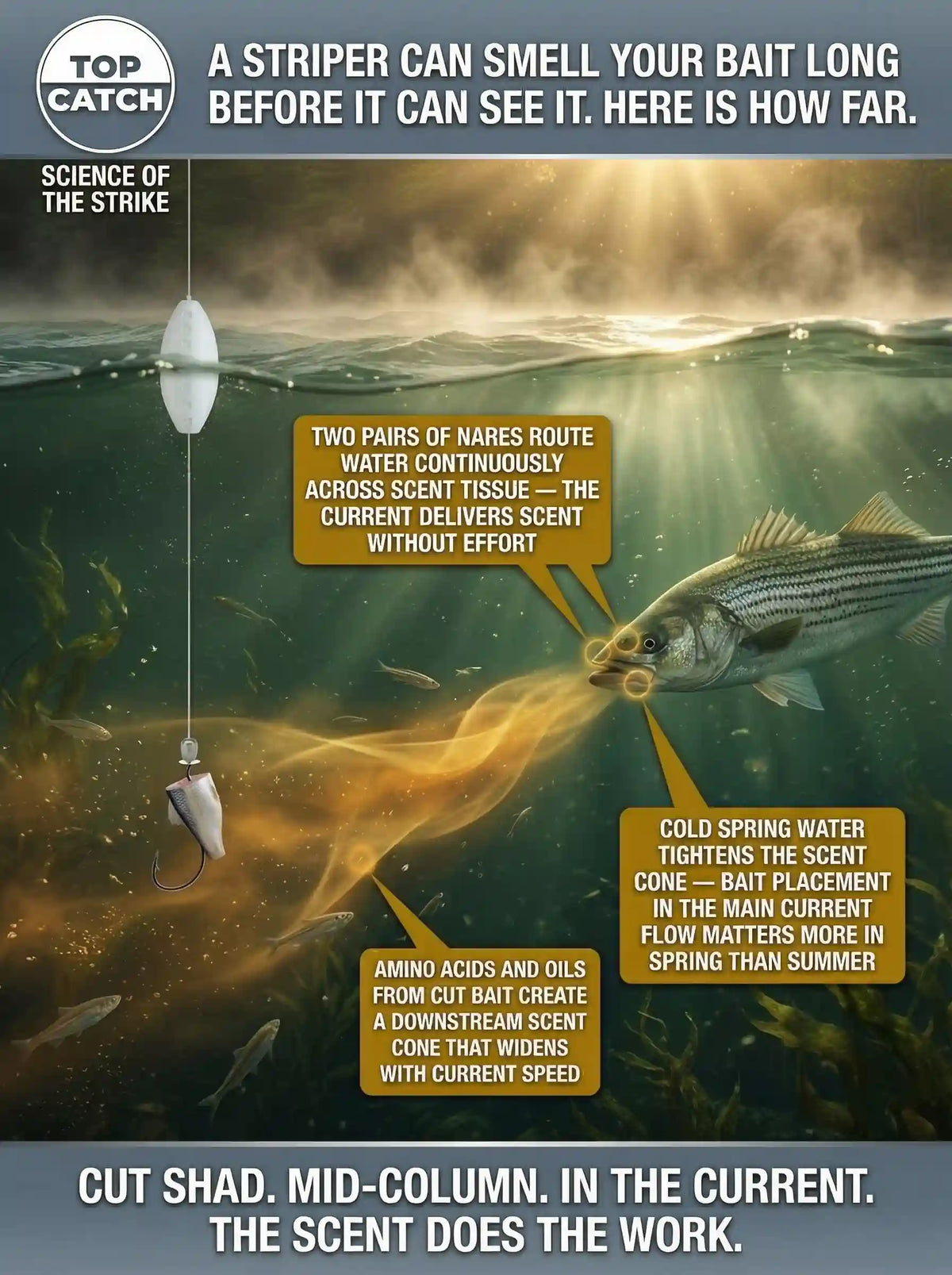
When anglers ask how do fish smell bait underwater, the answer comes down to chemistry and biology. Fish do not smell the same way humans do. Instead of breathing air through a nose, they use small openings called nares to sample water and detect chemical clues.
A fish swimming in a lake, river, or ocean can follow tiny scent trails released by bait. This ability helps species such as bass, catfish, trout, and saltwater fish locate food in dark or cloudy water. Understanding this process can help U.S. anglers choose better bait and improve their fishing approach.
How Do Fish Smell Bait Underwater Through Their Senses?
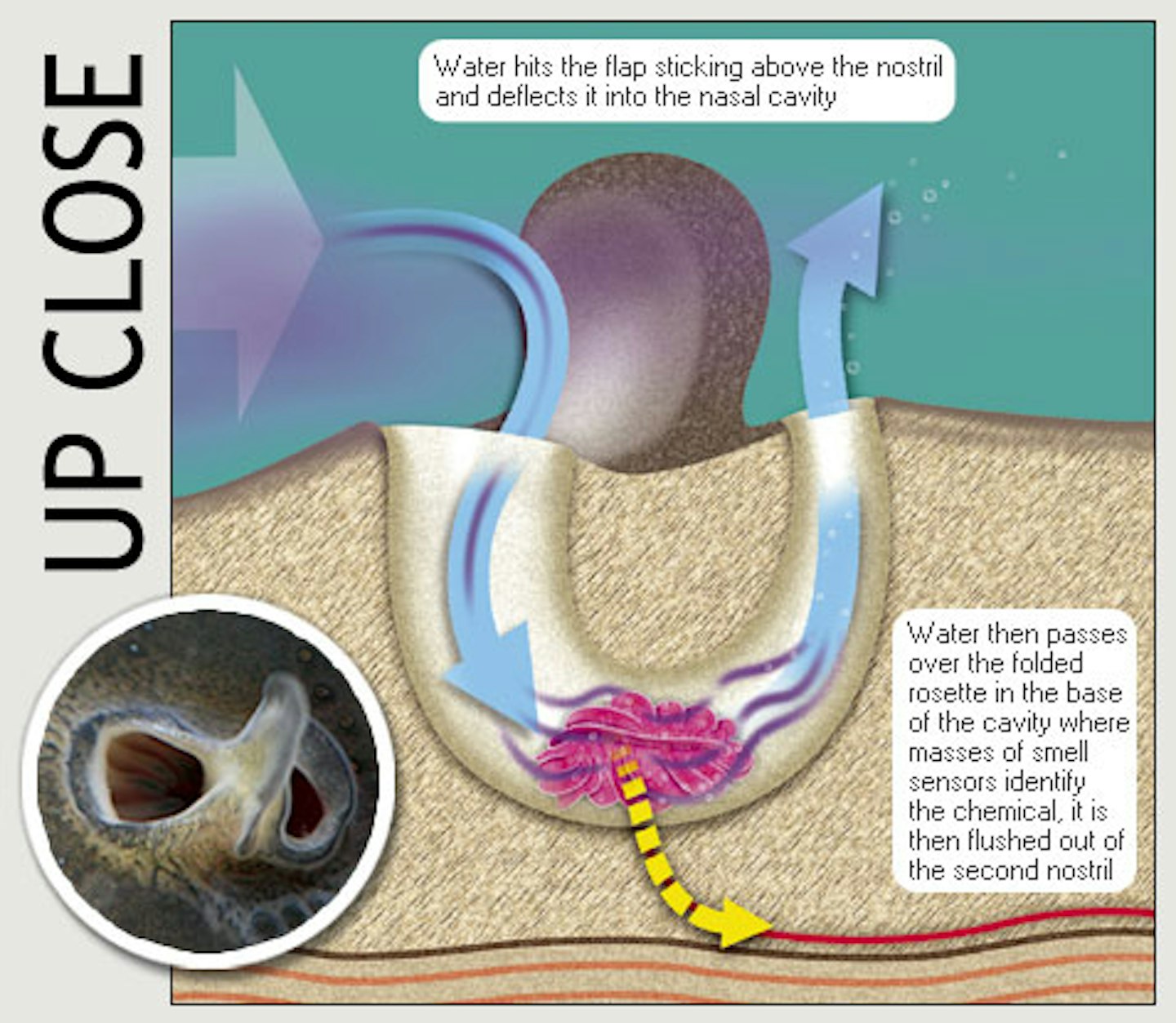
To understand how do fish smell bait underwater, it helps to look at the fish olfactory system. Fish have two small openings on their snout called nares. Water enters one opening, passes over sensory cells, and leaves through another opening.
These sensory cells detect chemicals dissolved in water. The fish brain then processes these signals and helps the fish decide if the smell means food, danger, or another fish nearby.
- ✦ Chemical detection
Fish detect molecules released by prey, bait, plants, and other animals in the water.
- ✦ Water movement
Currents carry scent particles away from bait and create a trail that fish can follow.
- ✦ Species differences
Some fish, such as catfish and salmon, have especially strong smell abilities.
Fish Do Not Smell Through Their Mouths
A common mistake is thinking fish smell through their mouths because they take in water while feeding. Their main smell system is located near the eyes and works separately from eating.
- ✦ Nares function
Nares collect water samples and expose sensory cells to chemical signals.
How Scent Travels From Bait Through Water
The reason fish can find bait underwater is that water acts as a carrier for scent molecules. A piece of cut bait, live bait, or scented lure releases chemicals that spread with currents.
The scent trail is not a straight line. It moves and changes based on water speed, temperature, depth, and underwater structure. Fish often move into the current and search for stronger scent signals.
- ✦ Current direction
Fish often position themselves where flowing water brings food smells toward them.
- ✦ Water temperature
Temperature can affect how chemicals move and how active fish become.
- ✦ Distance limits
Smell range changes with conditions, species, and the amount of scent released.
Why Fish Follow Scent Trails
Fish use smell because vision is limited underwater. Murky water, deep areas, and nighttime conditions make scent an important way to locate food.
- ✦ Food search
Scent helps fish locate injured prey and natural food sources.
Which Fish Have the Best Sense of Smell?
Different fish species rely on smell in different ways. Some hunters use sight first, while others depend heavily on scent to locate meals.
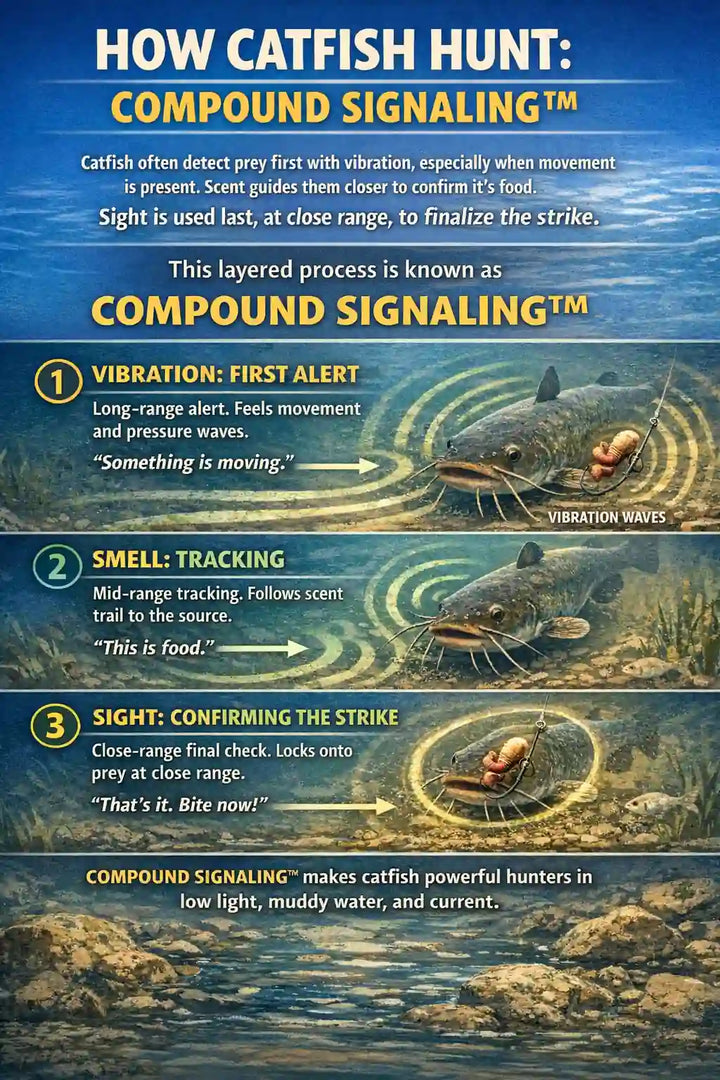
When exploring how do fish smell bait underwater, species behavior matters. A catfish searching along a muddy bottom may rely more on smell than a clear-water bass hunting by sight.
- ✦ Catfish
Catfish use smell and taste receptors to find food in low-visibility water.
- ✦ Salmon
Salmon are known for using chemical signals to navigate and recognize environments.
- ✦ Bass
Bass can detect scents but often combine smell with sight and vibration detection.
Why Catfish Depend on Smell
Catfish often feed in dark or muddy water where visibility is poor. Their strong chemical senses help them locate natural prey and bait.
- ✦ Bottom feeding
Smell helps catfish find food hidden near rocks, plants, and sediment.
Do Fish Smell Artificial Lures and Fishing Scents?
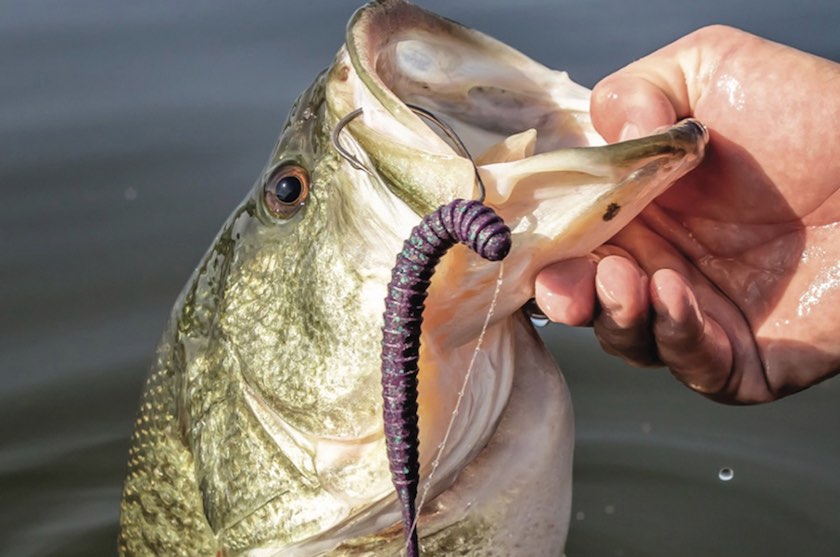
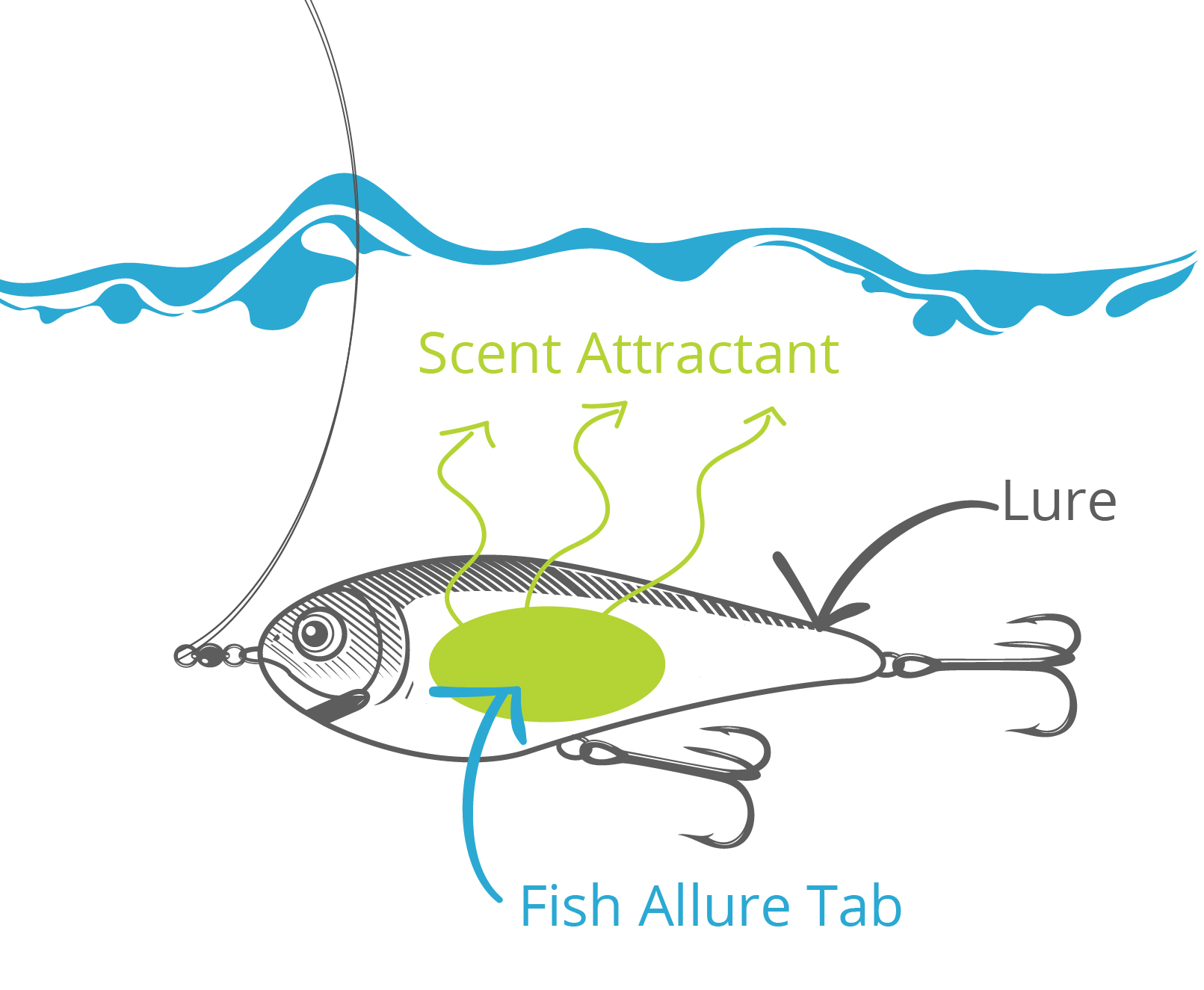
Many anglers use scented soft plastics, sprays, and attractants because fish can detect added chemicals in the water. These products aim to make lures seem more like natural food.
However, scent is only one part of fishing success. Fish also react to movement, vibration, shape, and presentation.
- ✦ Natural bait smell
Fresh bait releases natural chemicals that can attract feeding fish.
- ✦ Artificial scent
Added scents may increase interest by creating stronger chemical signals.
- ✦ Complete presentation
A realistic movement pattern often works together with scent.
How Anglers Use Scent Effectively
Successful anglers usually match scent choices to local conditions. They consider water clarity, target species, and natural food sources in the area.
- ✦ Match local prey
Use scents that resemble foods commonly eaten by the target fish.
How Anglers Can Use Fish Smell Behavior to Catch More Fish
Knowing how do fish smell bait underwater can improve bait placement and fishing strategy. Anglers can use current direction and natural feeding habits to place bait where fish are likely to find it.
For example, river anglers often place bait downstream from likely fish holding areas because scent can travel with moving water.
- ✦ Fish with the current
Place bait where scent can move naturally through feeding zones.
- ✦ Keep bait fresh
Fresh bait usually produces stronger natural chemical signals.
- ✦ Avoid strong human odors
Handling bait with clean hands can reduce unwanted smells.
Combining Smell With Other Fish Senses
Fish rarely depend on smell alone. They combine scent with vision, vibration, and their lateral line system to understand what is happening around them.
- ✦ Multiple signals
A bait that looks, moves, and smells natural can create a stronger attraction.