Fishing line slipping on reel spool how to prevent is a common problem for anglers in the USA. It can happen with spinning reels, baitcasters, and even some specialty reels. When the line moves around the spool instead of gripping it, casting becomes harder and hook sets may feel weak.
After years of handling fishing gear, one thing becomes clear: most spool slipping problems start during the first few minutes of loading the reel. A loose connection, wrong knot, or smooth braid on a bare spool can create problems later on the water. A careful setup saves time and protects your fishing experience.
Why Does Fishing Line Slip on a Reel Spool?
Understanding why fishing line slips is the first step in learning fishing line slipping on reel spool how to prevent. The spool needs a strong grip between the line and the reel surface. Without enough friction, the line can spin around the spool instead of pulling against it.
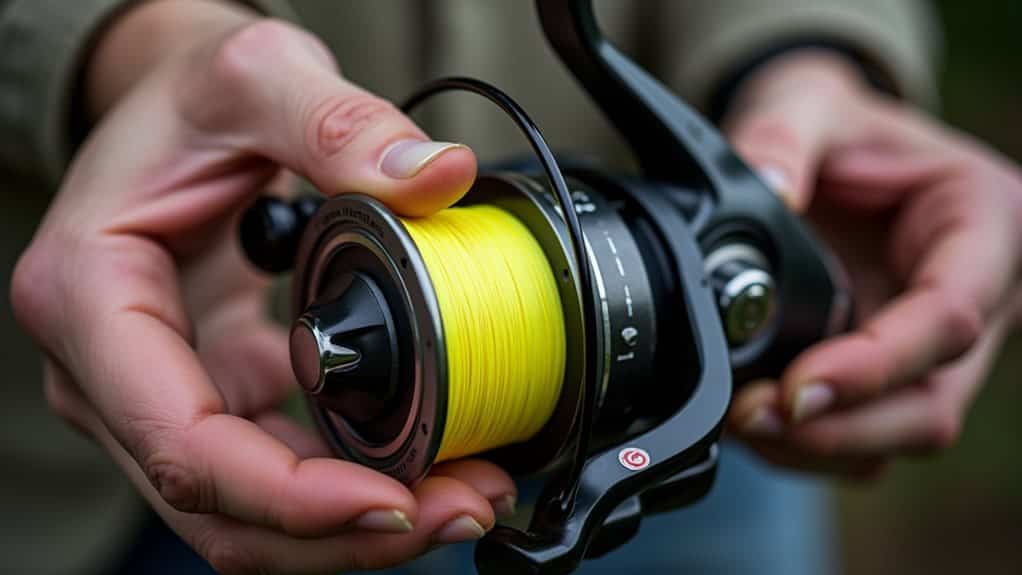
Braided fishing line is the most common type that causes this issue. Braid is strong and thin, but it is also very smooth. On a metal spool with no backing, braid may rotate freely under pressure.
- ✦ Smooth braided line
Braided line has low stretch and high strength, but its smooth texture can make it slide on a bare spool.
- ✦ Loose line tension
Line added without steady pressure can create gaps that allow movement during fishing.
- ✦ Poor knot connection
A weak knot between the line and spool can loosen and cause the entire line layer to shift.
How Spool Material Affects Line Grip
Many modern reels use aluminum or graphite spools. These materials are durable, but they do not always provide enough friction for slippery braided line. Adding a small amount of backing creates a surface that grips the main line better.
- ✦ Metal spool surfaces
Smooth metal surfaces often need backing before braided line is added.
Use Backing Line to Prevent Spool Slipping
Using backing is one of the most reliable answers to fishing line slipping on reel spool how to prevent. Backing means adding a small amount of monofilament or fluorocarbon line before installing braided line.
The backing creates friction and helps the braid stay locked in place. Many anglers use this method because it is simple, affordable, and works with most spinning reels and baitcasting reels.

- ✦ Choose monofilament backing
A short layer of monofilament creates grip between the spool and braided main line.
- ✦ Avoid excessive backing
Too much backing reduces the space available for your main fishing line.
How Much Backing Should You Add?
The amount depends on your reel size and the thickness of your main line. Most anglers only need enough backing to cover the spool base. The goal is grip, not filling the entire spool.
- ✦ Small spinning reels
Use a thin backing layer because these reels have limited spool capacity.
Tie the Fishing Line Correctly to the Reel Spool
A secure knot is a key part of fishing line slipping on reel spool how to prevent. The knot does not need to be complicated, but it must hold firm under pressure.
Many anglers use an arbor knot because it is simple and designed for attaching line directly to a spool. After tying the knot, pull it tight before adding more line.

- ✦ Use an arbor knot
This knot wraps around the spool arbor and creates a reliable starting point.
- ✦ Trim loose tag ends
Extra line ends can catch and create uneven layers while spooling.
Check Your Knot Before Fishing
Before making your first cast, hold the spool and pull the line with steady force. If the line moves around the spool, remove it and fix the connection before heading out.
- ✦ Test under pressure
A quick hand test can reveal problems before they happen on the water.
Spool Fishing Line With Proper Tension
Correct tension during installation is another important part of fishing line slipping on reel spool how to prevent. Loose wraps create empty spaces between layers, allowing the line to move when you fight a strong fish.
Keep steady pressure on the line while filling the spool. This creates tight, even layers that improve casting distance and reduce future problems.

- ✦ Apply steady pressure
Hold the line firmly between your fingers or use a spooler tool.
- ✦ Avoid uneven layers
Crossed or loose wraps increase the chance of tangles and slipping.
Do Not Overfill the Reel Spool
Overfilled reels often create loose coils and poor line control. Leave a small gap near the spool edge to allow smooth casting.
- ✦ Leave space
A small gap helps prevent loops from jumping off the spool.
Special Tips for Braided Line and Spinning Reels
Braided line requires extra care because it behaves differently from monofilament. Learning fishing line slipping on reel spool how to prevent is especially important when switching from traditional nylon line to braid.
Many anglers use electrical tape under braid instead of backing. This can work, but backing usually provides better long-term grip and stability.

- ✦ Use quality braid
Higher-quality braid often has better coating and handling characteristics.
- ✦ Match line size to reel
Very thin braid on a large spool may create management issues.
Common Braided Line Mistakes
The biggest mistake is installing braid directly onto a clean spool without any grip layer. Another common mistake is winding braid loosely, which causes problems during hard casts or fights with large fish.
- ✦ Bare spool setup
Direct braid on smooth spools can rotate under heavy pressure.