Knowing fishing rod blank damaged how to inspect is important for every angler. A damaged blank can fail suddenly when fighting a strong fish, casting a heavy lure, or pulling a snag loose. Many blank problems start small and become worse over time.
In my experience with fishing equipment care, the best inspections happen before and after every major trip. A few minutes of checking the blank can protect an expensive rod and help you decide if it needs repair or replacement.

What a fishing rod blank is and why damage matters
The blank is the main body of a fishing rod. It creates the rod’s power, sensitivity, and bending action. Most modern blanks use graphite, fiberglass, or a mix of materials.
When learning fishing rod blank damaged how to inspect, remember that damage is not always obvious. A small crack in a graphite blank may reduce strength even if the rod still looks normal.
- ✦ Graphite blank damage
Graphite rods are light and sensitive but can develop hidden cracks from impact, pressure, or improper storage.
- ✦ Fiberglass blank damage
Fiberglass is tougher but can still suffer from deep scratches, crushing force, and structural weakness.
Common causes of fishing rod blank damage
Rod blanks often get damaged from car doors, boat storage, hard drops, high sticking fish, and accidental impacts. Heat and long-term sun exposure can also weaken materials.
- ✦ Impact damage
A sharp hit can create cracks that are difficult to see without close inspection.
How to inspect a fishing rod blank for visible damage
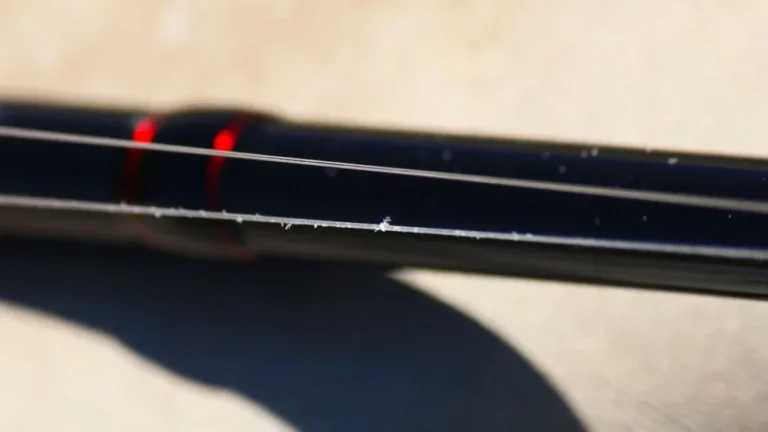
The first step in fishing rod blank damaged how to inspect is a full visual check. Clean the rod and examine every section under bright natural light or a strong flashlight.
Rotate the blank slowly while looking for changes in the surface. A damaged area may show unusual lines, cloudy spots, dents, or crushed fibers.

- ✦ Look for cracks
Small cracks, especially around guides and connection points, can signal serious blank problems.
- ✦ Check for dents
Dents can weaken the blank because they change how force moves through the rod.
- ✦ Feel the surface
Run your fingers along the blank to find rough areas or changes in shape.
Using light and magnification during inspection
A flashlight held at an angle can reveal scratches and stress marks that normal room lighting hides. A small magnifying glass can help inspect suspicious areas.
- ✦ Check reflection patterns
Uneven reflections can indicate surface damage or changes in the blank structure.
How to test a rod blank for hidden weak spots
After checking the outside, carefully test how the rod bends. The goal is to find unusual movement, not to force the rod into a dangerous position.
Fishing rod blank damaged how to inspect also includes listening for cracking sounds and watching for uneven bends. A healthy rod should load smoothly across its designed action.
- ✦ Slow flex test
Apply gentle pressure and check whether the blank bends evenly from tip to lower section.
- ✦ Listen for sounds
Stop immediately if you hear popping, cracking, or unusual snapping noises.
What abnormal bending can mean
A sharp bend point may show that one area has lost strength. This can happen after impact damage or repeated stress.
- ✦ Uneven load
A sudden change in bend shape can indicate internal damage.
Signs that a fishing rod blank needs repair or replacement
Fishing rod blank damaged how to inspect also means knowing when damage is too serious to ignore. Some problems can be repaired, while others require a new rod.
A professional rod builder can inspect deep structural damage. For expensive rods, expert evaluation may save money compared with replacing the wrong part.
- ✦ Deep cracks
Large cracks that open during flexing usually mean the blank is unsafe.
- ✦ Crushed sections
Flattened areas can permanently reduce rod strength.
- ✦ Repeated failure
A rod that keeps developing problems may have internal damage.
When not to repair a damaged blank
A temporary repair may not restore the original strength of a badly damaged blank. Safety and reliability should come first, especially when targeting large fish.
- ✦ High-value fishing situations
Avoid using questionable rods during offshore trips or heavy fishing conditions.
How to prevent fishing rod blank damage
Prevention is easier than repair. Store rods in safe locations, avoid leaning them against hard surfaces, and use protective sleeves during transport.
Regular maintenance also makes fishing rod blank damaged how to inspect faster because you become familiar with your rod’s normal condition.
- ✦ Use rod sleeves
Protective sleeves reduce scratches and impact damage during storage and travel.
- ✦ Avoid high sticking
Keep the rod at safe angles when fighting fish to prevent excessive blank stress.
Frequently Asked Questions about fishing rod blank damaged how to inspect

fishingscouty
Contributor