Learning how to prepare cut bait is one of the most useful skills for anglers in the United States. Many fishermen use cut bait because it creates a strong scent trail that attracts fish from a distance. Catfish, striped bass, salmon, and other predators often respond well to natural fish pieces.
Good cut bait preparation is simple, but small details matter. Fresh bait, sharp knives, correct cuts, and proper storage can improve your chances on the water. From my experience studying fishing methods, many beginners focus only on the hook but forget that bait quality often decides the result.
What Is Cut Bait and Why Does It Work?
Cut bait is a piece of fish that has been cut into smaller sections and used as fishing bait. Anglers use parts such as fillets, chunks, heads, or sections with skin because they release scent into the water.
The main reason cut bait works is the natural smell and oils released by the fish. Predatory fish use their sense of smell and movement detection to find food, especially in rivers, lakes, and coastal waters.

- ✦ Strong scent trail
Fresh fish releases natural oils and odors that help attract nearby predators.
- ✦ Natural appearance
Fish pieces look and smell like real prey, making them appealing to many species.
- ✦ Versatile use
Cut bait can be used in freshwater and saltwater fishing situations.
Common Fish Used for Cut Bait
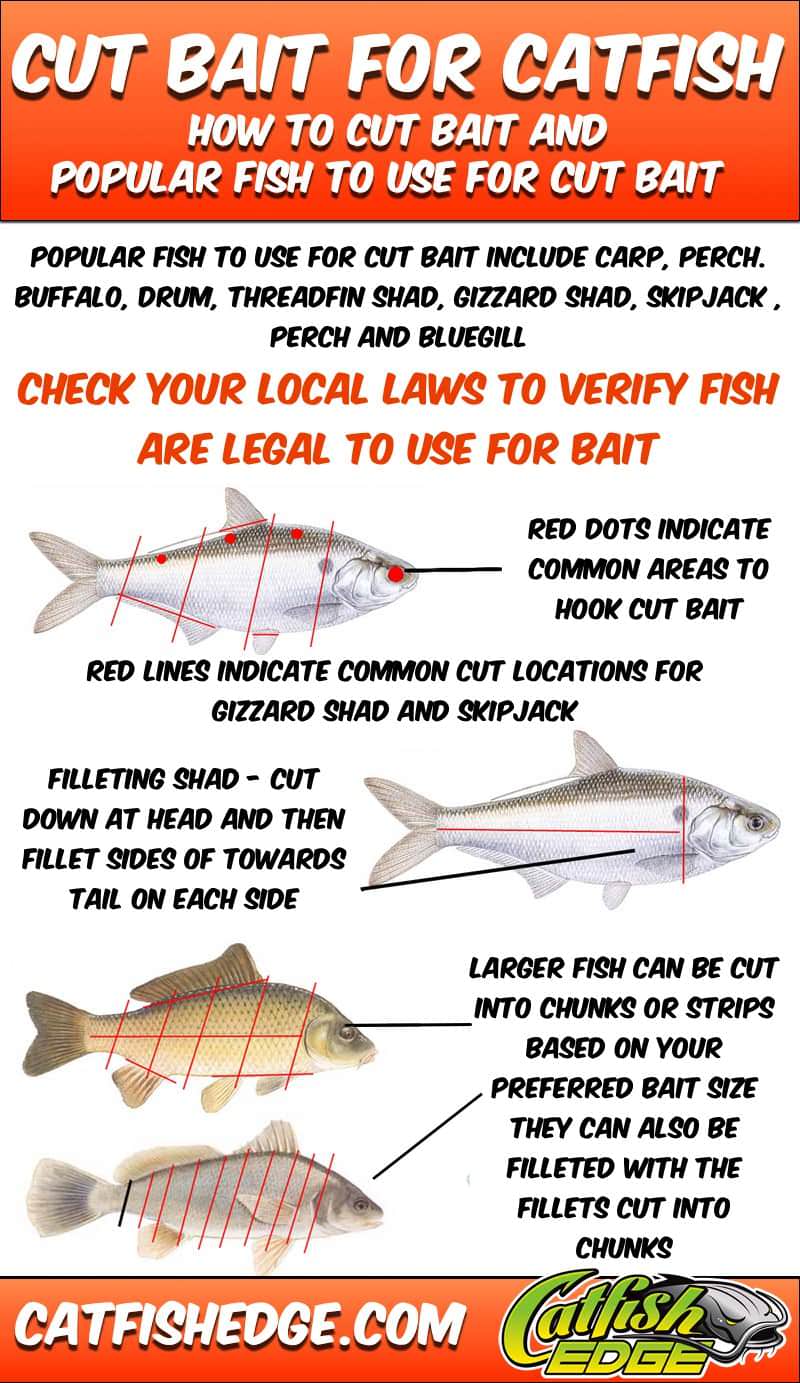
Popular choices include shad, herring, mullet, bluegill, perch, and other oily fish. The best option depends on local fishing rules and the species you want to catch.
- ✦ Oily fish
Fish with more oil often create a stronger scent trail.
- ✦ Legal bait fish
Always check local regulations before using any fish as bait.
How to Prepare Cut Bait Step by Step
To understand how to prepare cut bait, start with fresh fish and clean equipment. A sharp knife helps you make smooth cuts that keep the bait firm on the hook.
Wash the fish, remove unwanted parts if needed, and cut it into sizes that match your target fish. Larger predators usually need bigger bait pieces, while smaller fish respond better to smaller chunks.

- ✦ Step 1: Choose fresh fish
Use fresh or properly frozen bait with good color, firm flesh, and natural smell.
- ✦ Step 2: Clean the fish
Remove dirt and excess parts before cutting the bait.
- ✦ Step 3: Make proper cuts
Cut pieces that stay attached to the hook and release scent.
- ✦ Step 4: Store correctly
Keep unused bait cold until you are ready to fish.
Choosing the Right Cut Size
The right cut size depends on your target species. A large catfish may prefer a thick chunk, while smaller fish may need a small strip. Matching bait size to fish size is a simple way to improve results.
- ✦ Large chunks
Good for bigger predators that can handle larger meals.
- ✦ Thin strips
Useful when you need more scent spread in the water.
Best Tools and Techniques for Preparing Cut Bait
Having the right tools makes cut bait preparation faster and cleaner. A strong fillet knife, cutting board, gloves, and a cooler are useful for most fishing trips.
Many experienced anglers prepare bait before reaching the water. This saves time and allows them to focus on finding fish instead of cutting bait at the fishing spot.

- ✦ Sharp knife
Creates cleaner cuts and protects the bait texture.
- ✦ Cutting board
Provides a stable and clean surface for bait preparation.
- ✦ Cool storage
Helps maintain freshness and scent quality.
Avoiding Common Cut Bait Mistakes
One common mistake is using old bait that has lost its natural scent. Another mistake is cutting pieces too small, causing them to fall off the hook quickly.
- ✦ Do not use spoiled bait
Old bait may lose effectiveness and create handling problems.
- ✦ Do not over-handle bait
Too much handling can damage the texture.
How to Store and Keep Cut Bait Fresh
Proper storage is an important part of how to prepare cut bait. Fresh bait produces a stronger scent and stays on the hook better than poorly stored bait.
Many anglers keep prepared bait in sealed bags or containers inside a cooler with ice. Frozen bait can also work, but fresh bait often has better texture.

- ✦ Short-term storage
Keep bait cold and protected from heat during the fishing trip.
- ✦ Freezing bait
Freeze extra bait in small portions for future trips.
- ✦ Avoid contamination
Use clean tools and separate bait from food items.
Fresh Versus Frozen Cut Bait
Both fresh and frozen cut bait can catch fish. Fresh bait usually has better texture, while frozen bait offers convenience and longer storage.
- ✦ Fresh bait benefit
Provides natural texture and strong scent.
- ✦ Frozen bait benefit
Allows anglers to prepare bait ahead of time.
How to Use Prepared Cut Bait for Different Fish Species
Knowing how to prepare cut bait is only part of successful fishing. The way you use the bait depends on the fish species, water conditions, and fishing method.
For catfish, anglers often use larger chunks on strong hooks. For striped bass and salmon, smaller pieces may work better when matched with local conditions.
- ✦ Catfish fishing
Use strong-smelling chunks with durable hooks and rigs.
- ✦ Saltwater fishing
Use fresh bait pieces that match local predator diets.
- ✦ River fishing
Adjust bait size based on current speed and fish activity.
Rigging Tips for Cut Bait
Secure the bait firmly so it stays attached while releasing scent. Circle hooks, strong leaders, and suitable weights are common choices for many cut bait setups.
- ✦ Hook placement
Place the hook through firm flesh or skin for better hold.
- ✦ Match equipment
Use tackle strong enough for your target fish.
Frequently Asked Questions about how to prepare cut bait

fishingscouty
Contributor