Learning how to fish with minnows is one of the most effective ways to catch freshwater fish in the United States. Anglers use minnows for bass, crappie, walleye, trout, perch, and many other species because a live baitfish looks and moves like natural prey.
Over the years, many experienced anglers have learned that success with minnows is not only about putting a baitfish on a hook. The way you hook the minnow, control its movement, choose your location, and care for your bait can make a major difference.

What Are Minnows and Why Do They Work as Fishing Bait?
Minnows are small freshwater fish often used as live bait because they are common food for many predator fish. Species such as shiners, fathead minnows, and creek chubs are popular choices among anglers.
The reason minnows work so well is simple. They create natural movement, smell, and vibration in the water. Predatory fish often react faster to real movement than artificial bait because it matches what they already hunt.
- ✦ Natural movement
A live minnow swims, struggles, and changes direction, creating signals that attract nearby fish.
- ✦ Wide species appeal
Many freshwater game fish including bass, crappie, walleye, and trout respond well to minnows.
- ✦ Flexible use
Minnows can be fished from shore, boats, docks, rivers, and lakes.
How to Choose the Right Minnows for Fishing
Choosing the right minnow can improve your results. The best bait depends on the fish you want to catch and the waters you are fishing.
In many U.S. lakes and rivers, shiners are popular for bass and walleye, while fathead minnows are commonly used for crappie and panfish. Always check local fishing rules because some areas limit the use or movement of live bait.
- ✦ Shiners
Active swimmers that work well for larger predator fish like bass and walleye.
- ✦ Fathead minnows
Hardy baitfish often used for crappie, perch, and smaller freshwater species.
- ✦ Creek chubs
Larger minnows that can attract bigger fish in rivers and streams.
How to Hook a Minnow Correctly
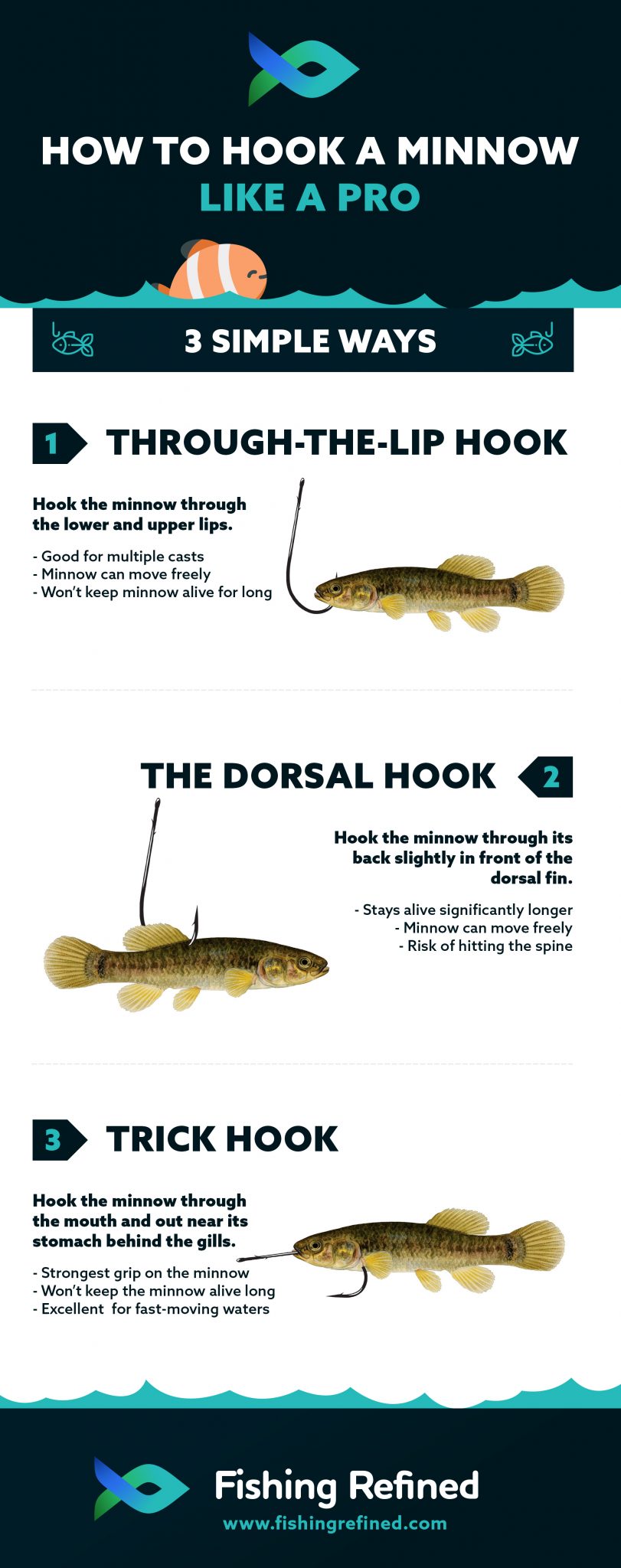
One of the most important parts of learning how to fish with minnows is understanding how to hook them properly. A poorly hooked minnow can die quickly or lose its natural swimming action.
The best hooking method depends on your fishing style. For slow presentations, many anglers hook minnows through the back. For drifting or moving water, hooking through the lips can help the bait stay secure.
- ✦ Hook through the lips
Insert the hook through the lower and upper lips to create a natural forward swimming action.
- ✦ Hook behind the dorsal fin
Place the hook lightly under the skin behind the fin to keep the minnow swimming freely.
- ✦ Avoid damaging the bait
Do not crush the minnow or place the hook too deeply because a healthy baitfish attracts more bites.
Common Mistakes When Hooking Minnows
Many beginners hook minnows too aggressively. A damaged baitfish creates less movement and may stop attracting fish quickly.
- ✦ Using the wrong hook size
A large hook can restrict movement and make the bait look unnatural.
Best Rigs for Fishing With Minnows
The right rig helps you place the minnow where fish are feeding. Different situations call for different setups.
A simple hook and split shot works well for beginners. More advanced anglers often use bobber rigs, jig heads, or specialized setups for species like crappie and walleye.

- ✦ Bobber rig
A great choice for suspended fish because it lets you control depth easily.
- ✦ Jig head rig
Useful when fishing deeper water or targeting species near structure.
- ✦ Bottom rig
Works well when fish feed close to the lake or river bottom.
How to Fish With Minnows for Different Species
The best way to fish with minnows changes based on the target species. Each fish has different feeding habits and preferred areas.
Understanding fish behavior helps you decide where to place your bait and how much movement to add.

- ✦ Bass
Fish minnows near weeds, docks, rocks, and underwater structures where bass hunt.
- ✦ Crappie
Use small minnows under a bobber near brush piles, trees, and deeper cover.
- ✦ Walleye
Try minnows near rocky areas, drop-offs, and during low-light periods.
- ✦ Trout
Use smaller minnows in streams and lakes where trout feed on baitfish.
How to Keep Minnows Alive While Fishing
Healthy minnows catch more fish because they move naturally. Keeping them alive requires clean water, proper temperature, and careful handling.
Many anglers carry a bait bucket with an aerator to keep oxygen levels high. Avoid overcrowding the container because too many minnows can quickly reduce water quality.
- ✦ Use cool water
Minnows stay active longer in water that matches their natural environment.
- ✦ Add oxygen
An aerated bait container helps keep minnows lively throughout the fishing trip.
- ✦ Handle gently
Wet your hands before touching minnows to protect their natural slime coating.
Common Mistakes When Fishing With Minnows
Even experienced anglers can make mistakes when using live bait. Small changes in technique often create better results.
The biggest mistake is treating a minnow like a piece of dead bait. A live minnow should move naturally and look like an easy meal.
- ✦ Fishing the wrong depth
Fish may ignore your bait if it is above or below their feeding zone.
- ✦ Using unhealthy minnows
Weak bait moves less and often attracts fewer strikes.
- ✦ Moving the bait too much
Too much action can make the bait look unnatural.
Frequently Asked Questions about how to fish with minnows

fishingscouty
Contributor