Many anglers ask, how does a spinnerbait work, because this lure looks very different from natural bait. Unlike a simple jig or soft plastic, a spinnerbait uses moving parts to send signals through the water. The spinning blades reflect light, push water, and create vibrations that fish can detect from a distance.
In my experience studying and using bass fishing lures, spinnerbaits are among the most reliable choices for covering water quickly. They work well in lakes, rivers, and ponds across the United States because they can imitate baitfish while also triggering aggressive strikes from predatory fish.
The Basic Science Behind How a Spinnerbait Works
To understand how does a spinnerbait work, think about how fish hunt. Predatory fish use sight, vibration, and pressure changes to find prey. A spinnerbait combines all three signals in one compact lure.
When an angler pulls the lure through the water, the blades rotate around the wire frame. This movement creates flashes of light and vibrations that mimic the behavior of small fish moving through the water.

- ✦ Blade Flash
The rotating metal blades reflect sunlight and imitate the shine of baitfish scales.
- ✦ Water Vibration
Moving blades create pressure waves that fish can feel through their lateral line.
- ✦ Natural Movement
The skirt and hook combination creates a lifelike profile that looks like a small swimming creature.
Why Fish React to Spinnerbait Movement
Fish do not always attack because they are hungry. Sometimes they strike because a fast-moving object enters their territory. A spinnerbait can trigger this reaction by creating movement that looks like escaping prey.
- ✦ Reaction Strikes
The sudden flash and vibration can make fish attack without carefully examining the lure.
Understanding Spinnerbait Parts and Their Purpose
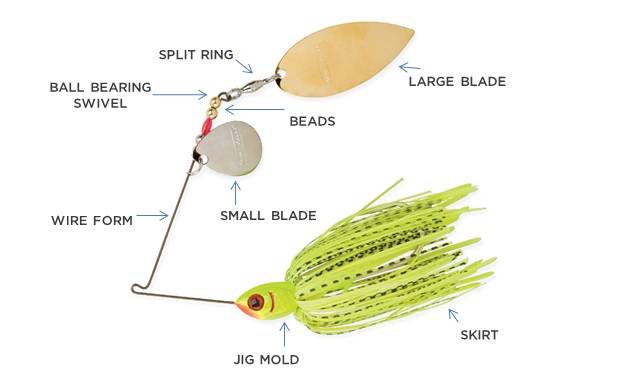
A spinnerbait has several parts that work together. Each part affects how the lure moves, how much vibration it creates, and how fish respond to it.
Knowing these parts helps anglers choose the right spinnerbait for different fishing situations.

- ✦ Blades
Blades create flash and vibration. Common types include Colorado, Willow Leaf, and Indiana blades.
- ✦ Wire Frame
The frame connects the blade system to the hook and helps the lure move smoothly.
- ✦ Skirt
The skirt adds bulk and movement while creating the appearance of a baitfish or small animal.
- ✦ Hook and Head
The weighted head controls depth while the hook catches fish during strikes.
How Blade Types Change Spinnerbait Action
Blade design changes how a spinnerbait feels underwater. A Colorado blade creates strong vibration and works well in muddy water. A Willow Leaf blade creates more flash and works well when fish rely on sight.
- ✦ Colorado Blade
Best for slower retrieves and strong vibration.
- ✦ Willow Leaf Blade
Best for faster retrieves and increased flash.
How Spinnerbait Blades Create Attraction Underwater
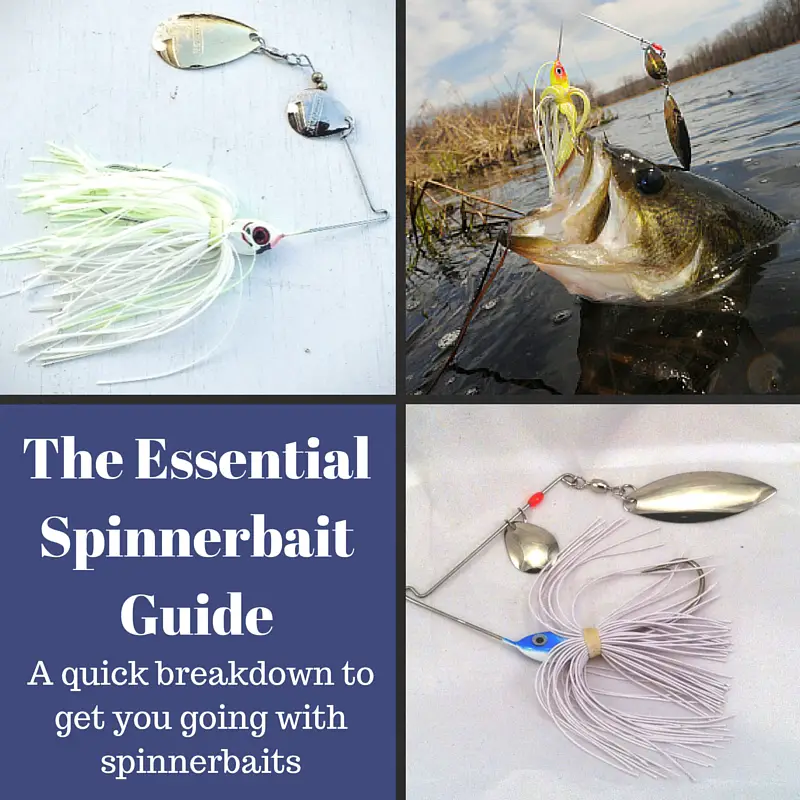
The blades are the main reason spinnerbaits work so well. As they spin, they create a combination of light reflection and vibration that attracts fish from nearby areas.
The blade rotation also helps the lure stay stable during the retrieve. This makes it easier for anglers to control depth and movement.
- ✦ Flash Signal
Bright flashes can resemble small baitfish swimming through open water.
- ✦ Vibration Signal
The blade movement sends vibrations that fish detect even when visibility is poor.
How Water Conditions Affect Blade Performance
Clear water often favors flashy blades because fish can see the lure better. In stained or muddy water, stronger vibration helps fish locate the lure.
- ✦ Clear Water
Use natural colors and blades with more visual flash.
- ✦ Dirty Water
Use darker colors and blades that create stronger vibration.
How to Retrieve a Spinnerbait for Better Results
Learning how does a spinnerbait work is only part of becoming successful. The way you retrieve the lure controls its depth, speed, and action.
A steady retrieve is the most common method. However, small changes in speed and movement can make a big difference when fish are pressured.

- ✦ Slow Rolling
Keep the lure near the bottom with a slow retrieve to target deeper fish.
- ✦ Burning
Retrieve quickly to imitate fleeing baitfish and trigger reaction bites.
- ✦ Stop and Go
Pause the lure occasionally to create an unpredictable movement.
Best Places to Fish a Spinnerbait
Spinnerbaits are effective around cover where predator fish wait for prey. Anglers commonly use them near grass, wood, rocks, docks, and shallow flats.
- ✦ Vegetation
The wire frame helps reduce snagging around grass.
- ✦ Wood Cover
Spinnerbaits can move through branches while attracting hidden fish.
Why Spinnerbaits Are Popular for Bass Fishing
Bass anglers in the United States often rely on spinnerbaits because they are easy to use and work in many conditions. They allow fishermen to search large areas quickly.
A spinnerbait can catch fish in spring, summer, fall, and even colder months when adjusted correctly.
- ✦ Covers Water Fast
Anglers can cast and retrieve spinnerbaits across large areas efficiently.
- ✦ Works in Many Conditions
Different blade styles and colors allow adjustments for weather and water clarity.
Frequently Asked Questions about how does a spinnerbait work

fishingscouty
Contributor