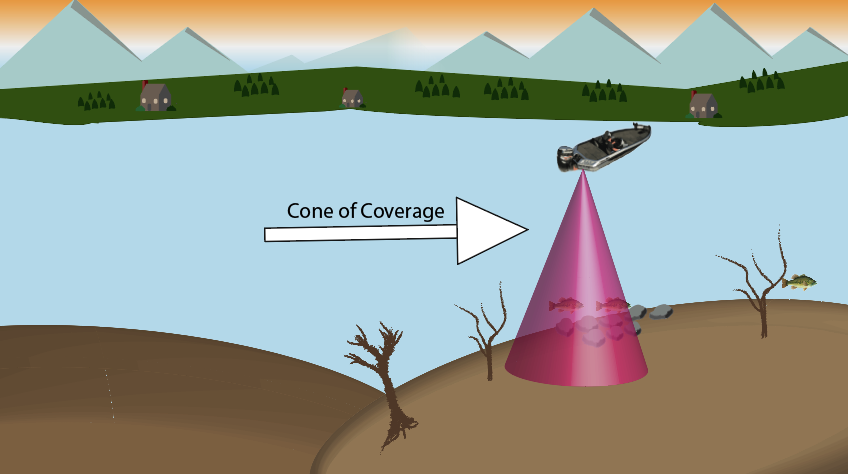
If you have ever wondered what is sonar cone angle, it is the measurement that explains how much water your fish finder can see below your boat. The transducer sends sound waves downward in a cone shape, and the angle shows how wide that cone becomes as it travels deeper.
For anglers across the United States, understanding cone angle can make a major difference when choosing or using a fish finder. A bass fisherman searching shallow cover may need a different beam than an offshore angler looking for deep structure.
In my experience studying sonar systems, many beginners focus only on screen size or depth ratings. However, the sonar cone angle often decides how clearly you can find fish, identify structure, and understand what is below your boat.
How Sonar Cone Angle Works
A sonar transducer creates sound pulses that travel through water. When these waves hit objects like fish, rocks, plants, or the bottom, some energy returns to the transducer. The fish finder turns these echoes into images and depth readings.
The sonar cone angle describes the spread of this sound beam. A 20-degree cone, for example, covers a smaller area than a 60-degree cone at the same depth. The deeper the beam travels, the larger the covered area becomes.
- ✦ Narrow sonar cone
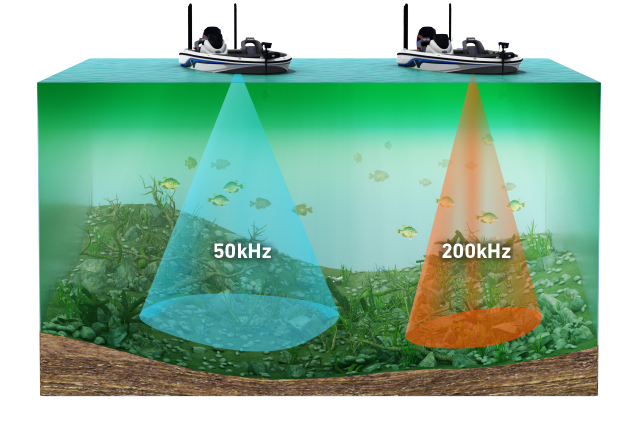
A narrow cone focuses energy into a smaller area and can provide better detail on deep targets.
- ✦ Wide sonar cone
A wide cone scans more water and helps anglers find fish and structure faster.
Why Sound Beam Shape Matters
The shape of the sonar beam affects what appears on your display. A wide beam may show more fish, but targets can appear less precise because the sonar covers a larger space.
- ✦ Coverage area
Cone angle determines how much underwater space your transducer examines.
Why Sonar Cone Angle Matters for Fishing
Knowing what is sonar cone angle helps anglers understand why two fish finders can show different results in the same location. The cone angle changes how much information reaches the screen.
A wider cone can be useful when searching large areas, especially in shallow lakes and rivers. A narrow cone can help when you need precise information around deep drop-offs, reefs, or isolated targets.
- ✦ Finding fish faster
A wider scanning area helps cover more water during searches.
- ✦ Improving target accuracy
A focused beam can make fish and structures easier to separate.
Cone Angle and Depth Relationship
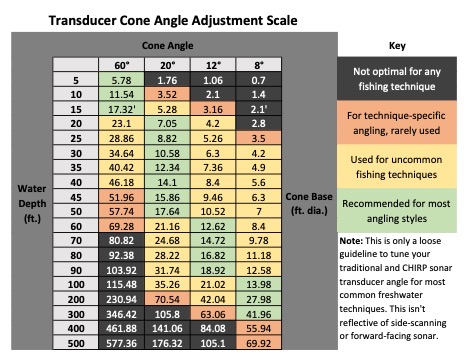
A sonar cone becomes wider as it moves deeper into the water. This means a 20-foot-wide area near the surface may become a much larger circle at greater depths.
- ✦ Shallow water
Wide beams cover useful areas without losing too much detail.
- ✦ Deep water
Narrow beams often provide clearer target separation.
Common Sonar Cone Angles Explained
Most traditional fish finders use cone angles between about 8 and 60 degrees. The best choice depends on the type of fishing you do and the conditions you face.
When learning what is sonar cone angle, it helps to compare common beam sizes instead of looking for one perfect angle. Each option has advantages.
- ✦ 8 to 20 degree cones
These narrow beams work well for deep water and precise target location.
- ✦ 30 to 45 degree cones
These balanced beams provide a mix of coverage and detail for many anglers.
- ✦ 50 to 60 degree cones
These wide beams are useful for searching larger areas in shallow water.
How Different Sonar Technologies Use Cone Angles
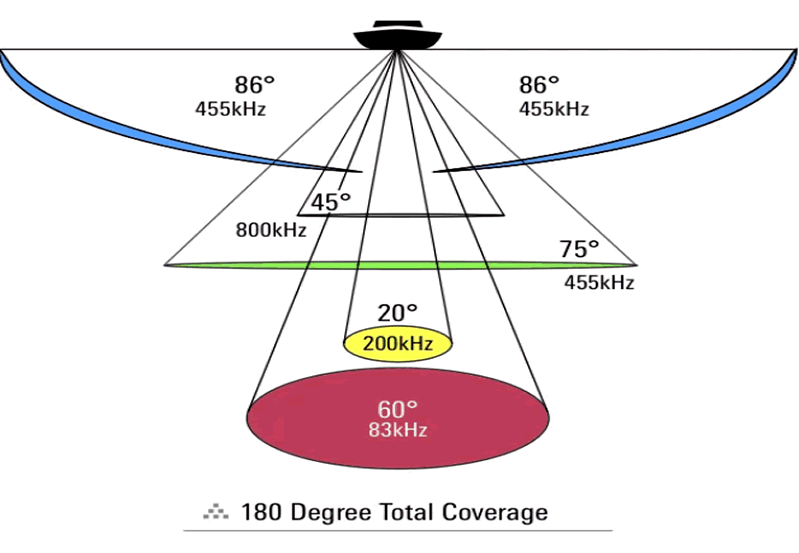
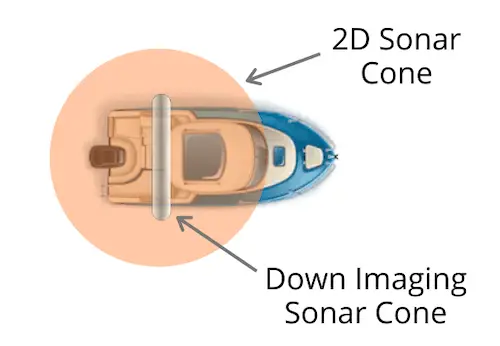
Modern fish finders use different sonar technologies, and each one uses beams in different ways. Traditional 2D sonar, Down Imaging, and Side Imaging all create different views of underwater areas.
Understanding what is sonar cone angle becomes easier when you compare these technologies. The beam design controls whether you see a simple depth picture or a detailed underwater view.
- ✦ Traditional 2D sonar
Uses a cone-shaped beam to show fish arches, bottom depth, and basic structure.
- ✦ Down Imaging
Uses a narrower beam style to create detailed images directly below the boat.
- ✦ Side Imaging
Uses side-focused beams to scan large areas beside the boat.
How to Choose the Right Sonar Cone Angle
The right sonar cone angle depends on your fishing goals. There is no single best angle for every angler because lakes, rivers, oceans, and fishing methods vary.
Bass anglers fishing shallow cover may prefer wider coverage. Offshore anglers targeting deep water often benefit from a more focused beam.

- ✦ Consider fishing depth
Choose wider beams for shallow searches and narrower beams for deeper precision.
- ✦ Match your fishing style
Active searching and precise targeting require different beam characteristics.
- ✦ Check transducer specifications
Manufacturers list cone angles and frequency ranges for each transducer model.
Mistakes Beginners Make
Many new anglers assume a wider cone always means a better fish finder. A wider beam can show more water, but it may reduce detail when targeting small objects.
- ✦ Ignoring water depth
The same cone angle behaves differently in shallow and deep water.