A fishing hook point becoming dull how to fix is a common question among anglers in the United States. A sharp hook is one of the smallest parts of your tackle, but it has a major effect on landing fish. Bass anglers, saltwater fishermen, and weekend lake anglers all face this issue after hooks contact rocks, wood, sand, or fish teeth.
Over years of fishing, many anglers learn that a hook does not need to look damaged to perform poorly. A tiny flat spot on the point can stop a clean hook set. Checking and maintaining hooks before each trip saves missed bites and lost fish.

Why a Fishing Hook Point Becomes Dull
A fishing hook point becomes dull how to fix problems often start with normal use. Every time a hook touches hard surfaces, the sharp edge can wear down. Even strong hooks lose their fine point after repeated contact with underwater cover.
Saltwater creates another challenge. Salt crystals and corrosion can weaken the hook surface and reduce sharpness. Proper cleaning after ocean trips helps protect hook points.
- ✦ Rock and structure contact
Dragging hooks across rocks, docks, and submerged trees can flatten the tip.
- ✦ Fish strikes and fights
Hard mouths, teeth, and repeated pressure can damage the point over time.
- ✦ Poor storage
Loose hooks rubbing together in tackle boxes can slowly damage sharp edges.
Signs Your Hook Point Needs Attention
A sharp hook should catch your fingernail with light pressure. If it slides instead of grabbing, the point may need sharpening or replacement.
- ✦ Visible flat spot
A shiny or rounded tip often shows that metal has worn away.
How to Test If a Fishing Hook Point Is Dull
Before learning fishing hook point becoming dull how to fix methods, confirm that the hook is actually dull. A quick test helps prevent unnecessary replacement of good hooks.
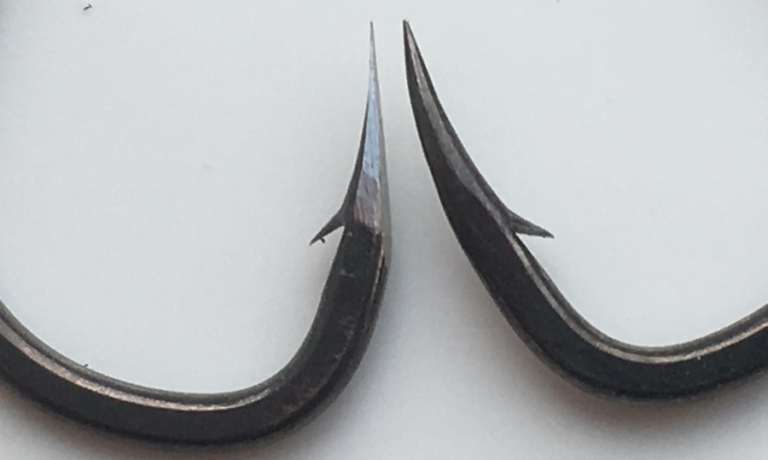
Use your fingernail test by gently placing the hook point against your nail. A sharp point grabs immediately, while a dull point slides.
- ✦ Fingernail test
The hook should grip your nail without needing strong pressure.
- ✦ Visual inspection
Look for rust, bends, chips, or a rounded tip under bright light.
How to Fix a Dull Fishing Hook Point Step by Step
The best answer to fishing hook point becoming dull how to fix is simple: restore the point carefully without removing too much metal. A hook file is the most common tool because it gives control.
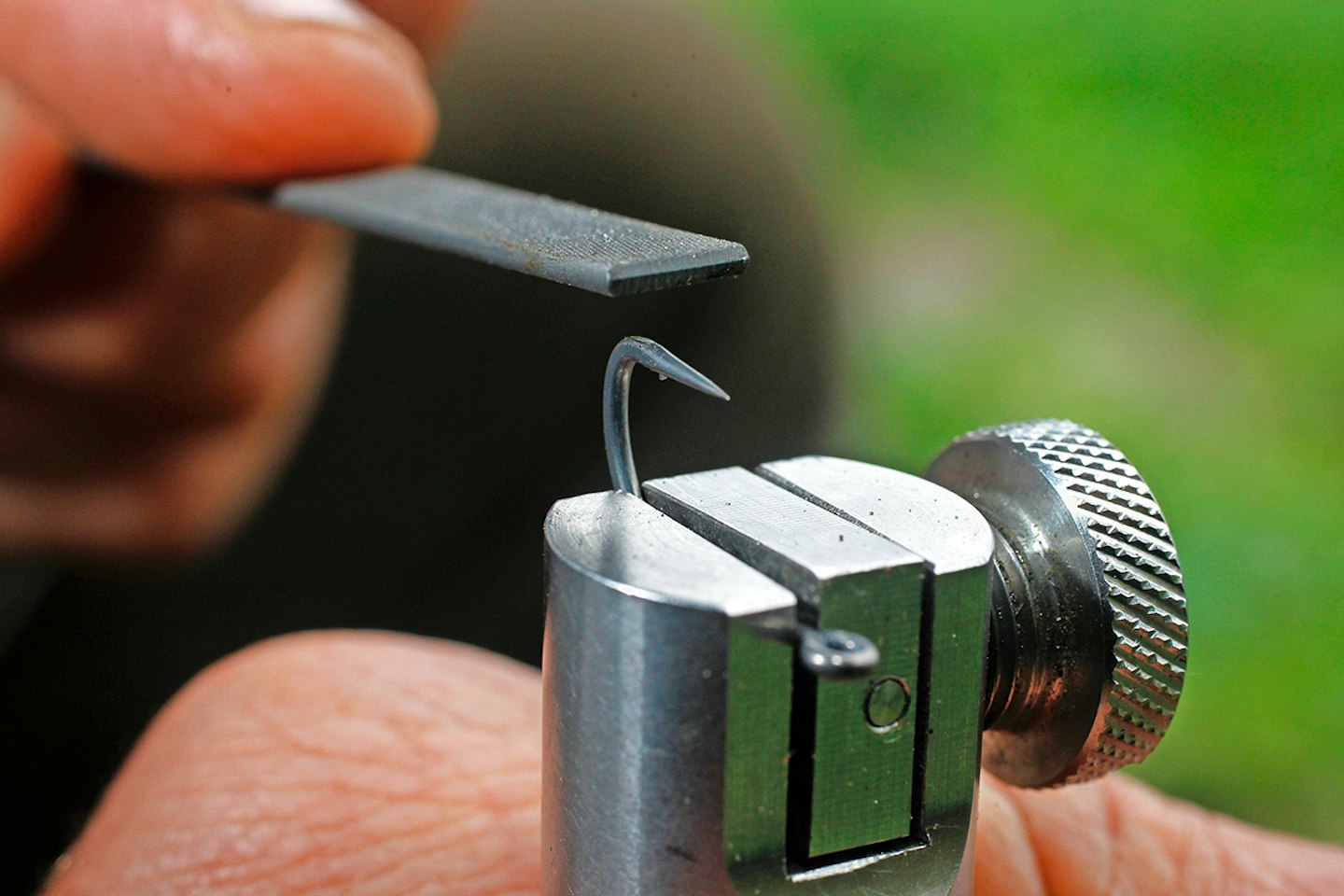
Hold the hook firmly and move the file from the hook point toward the bend. Avoid random back-and-forth motion because it can create a weak or uneven point.

- ✦ Clean the hook first
Remove dirt, salt, and rust before sharpening.
- ✦ Use light strokes
Small controlled movements preserve the hook shape.
- ✦ Check often
Stop once the point grips your nail again.
Tools Used for Hook Sharpening
Most anglers use a small hook file, diamond file, or sharpening stone. These tools are inexpensive and fit easily inside a tackle box.
- ✦ Diamond file
Provides smooth sharpening and works well for many hook sizes.
When You Should Replace Instead of Sharpen a Hook
Sharpening works for minor wear, but it cannot repair major damage. If too much metal is missing, the hook may become weak even if the point feels sharp.
Replacing damaged hooks is often the safer choice for large fish, offshore trips, and heavy cover fishing.

- ✦ Deep rust
Rust can weaken the hook and cause failure under pressure.
- ✦ Bent hook point
A badly bent point changes how the hook enters a fish.
- ✦ Broken barb or missing metal
These problems usually require a new hook.
How to Prevent Hook Points From Becoming Dull Again
After fixing a fishing hook point becoming dull how to fix issue, prevention keeps hooks ready for future trips. Good storage and regular checks make a noticeable difference.
Many experienced anglers inspect hooks before every trip and after catching fish. This small habit prevents losing a quality catch because of a neglected hook.
- ✦ Use hook covers
Covers prevent hooks from rubbing against other tackle.
- ✦ Dry hooks after use
Dry storage reduces corrosion and damage.
- ✦ Carry a file
A small sharpening tool allows quick repairs on the water.
Common Hook Sharpening Mistakes to Avoid
Many anglers search fishing hook point becoming dull how to fix because they want a fast solution. However, sharpening too aggressively can make a hook worse.
The goal is not to create a needle-thin point. The goal is to restore the original hook shape while keeping strength.
- ✦ Removing too much metal
Over-sharpening can weaken the hook point.
- ✦ Ignoring rust
A sharp but rusty hook may still fail.