Understanding how fish respond to changing water levels is important for anglers, lake managers, and anyone who studies aquatic life. Water depth changes naturally because of rain, drought, seasonal cycles, and human water control. These changes can quickly alter where fish live and how they survive.
From years of observing freshwater systems, one clear lesson stands out: fish are not passive when their environment changes. They sense shifts in depth, current, temperature, oxygen, and food sources. Then they adjust their movement and habits to find better conditions.

Why water level changes affect fish behavior
Water level controls the amount of space fish have to feed, hide, and reproduce. When water rises or falls, the underwater landscape changes. Areas that once provided shelter may disappear, while new feeding zones may appear.
How fish respond to changing water levels depends on the species, season, and location. A bass in a U.S. reservoir may react differently from a trout in a mountain stream because each fish has different habitat needs.
- ✦ Habitat changes
Changing water levels can expose rocks, plants, and shallow areas while creating new underwater spaces.
- ✦ Food supply changes
Fish often follow insects, small fish, and other food sources that move with changing water conditions.
- ✦ Safety changes
Fish may move to deeper or protected areas when water levels create risks from predators or temperature shifts.
How fish sense environmental changes
Fish use their senses to detect changes around them. Their lateral line system helps them feel movement and pressure changes in water.
They also respond to changes in light, temperature, oxygen, and water flow. These signals help fish decide when to move, feed, or hide.
- ✦ Pressure detection
Fish can sense water movement and vibrations caused by changing conditions.
How fish respond to rising water levels
Rising water often creates new opportunities for fish. Flooded grass, trees, and shoreline areas can become rich feeding zones because insects and small animals enter the water.
Many fish species move into shallow areas during rising water because these places provide food and cover. This is why anglers often notice increased fish activity after heavy rain or reservoir increases.

- ✦ Moving into shallow zones
Fish may enter newly flooded areas to search for insects, plants, and small prey.
- ✦ Exploring new habitat
Higher water levels can connect separate habitats and allow fish to access new areas.
Benefits of rising water for spawning
For many freshwater fish, rising water signals better breeding conditions. Flooded shorelines often provide calm areas where eggs and young fish have more protection.
Species such as bass, carp, and many river fish may use these temporary habitats during spawning periods.
- ✦ More shelter
New underwater cover can protect young fish from predators.
How fish respond to falling water levels
Falling water levels create different challenges. Fish lose access to shallow feeding areas and may become more concentrated in deeper pools or channels.
When water levels drop slowly, fish often adjust by moving gradually. Sudden drops can cause stress because fish have less time to find suitable habitat.
- ✦ Moving toward deeper water
Fish often seek deeper areas with stable temperatures and better protection.
- ✦ Reduced habitat space
Low water can shrink feeding and spawning areas.
Effects of drought on fish movement
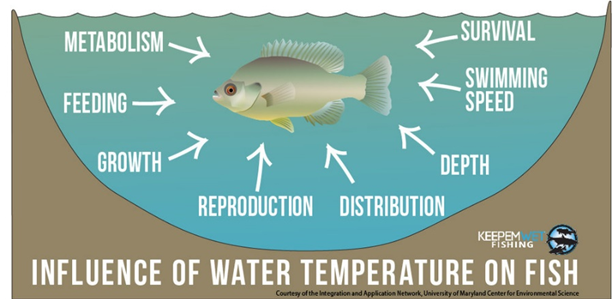
During drought, fish may face warmer water, lower oxygen levels, and fewer hiding places. These conditions can change their daily movement patterns.
Some fish reduce activity during extreme conditions to save energy, while others move long distances to find better water.
- ✦ Energy conservation
Fish may slow movement when food and oxygen become limited.
How changing water levels influence feeding behavior
Food availability is one of the biggest reasons fish change their location. When water levels shift, insects, plants, and smaller animals also move.
How fish respond to changing water levels often becomes clear through feeding patterns. Fish may feed heavily after water rises because new food enters the system.

- ✦ Following prey movement
Predatory fish often move where smaller fish and insects become available.
- ✦ Adjusting feeding times
Fish may change when they feed based on light, temperature, and water conditions.
Fishing examples in U.S. waters
Many American anglers notice that bass, crappie, and catfish change locations after storms or reservoir level changes. Fish that were near deep structures may move toward flooded edges.
Successful fishing often comes from understanding these movements instead of searching for fish in the same spots every day.
- ✦ Adapt your approach
Anglers should adjust locations and techniques when water conditions change.
How water level changes affect fish migration
Fish migration is closely linked with water conditions. Many species move between feeding, shelter, and spawning areas throughout the year.
How fish respond to changing water levels includes both short movements within a lake and longer migrations through rivers and connected waterways.

- ✦ Seasonal movement
Fish often move as seasons change and water conditions shift.
- ✦ River connections
Higher water can open migration paths, while low water can block movement.
Human control of water levels
Dams, reservoirs, and water management systems can change natural water patterns. These changes may affect fish populations by altering habitat timing.
Scientists study fish movement to understand how managed water systems can support healthy aquatic ecosystems.
- ✦ Monitoring fish behavior
Researchers track movement to understand the effects of water management.
How fish adapt to long-term water level changes
Some fish populations adapt over many generations to changing water patterns. They may develop behaviors that help them survive in their local environment.
Long-term changes can still create challenges, especially when water levels change faster than fish can adjust.

- ✦ Behavioral adaptation
Fish can change movement, feeding, and habitat choices.
- ✦ Population changes
Some species increase while others decline depending on habitat conditions.
The role of healthy habitats
Healthy rivers and lakes give fish more options during environmental changes. Plants, deep areas, and connected waterways improve survival chances.
Protecting diverse habitats helps fish respond better when water levels naturally rise or fall.
- ✦ Habitat protection
Conserving aquatic areas supports stronger fish populations.
Frequently Asked Questions about how fish respond to changing water levels

fishingscouty
Contributor