Many anglers in the United States notice that fish can react before they see a lure, boat, or person nearby. The reason is that fish do not depend only on their eyes. They use a highly sensitive network of organs that helps them feel changes in the water around them.
When people ask how do fish sense movement in water, the answer starts with the lateral line system. This natural sensing tool works like an underwater motion detector. It allows fish to notice nearby movements, water currents, and even the wake created by another animal.
From freshwater bass in American lakes to ocean fish along coastal waters, these sensory skills help fish survive. Understanding these abilities can also help anglers choose better techniques and understand fish behavior.
:max_bytes(150000):strip_icc()/a-Anatomy-of-an-aquarium-fish-10-5803b8145f9b5805c27a45a5.jpg "Fish anatomy showing body structures involved in swimming and sensing")
The Lateral Line System: A Fish’s Main Movement Detector
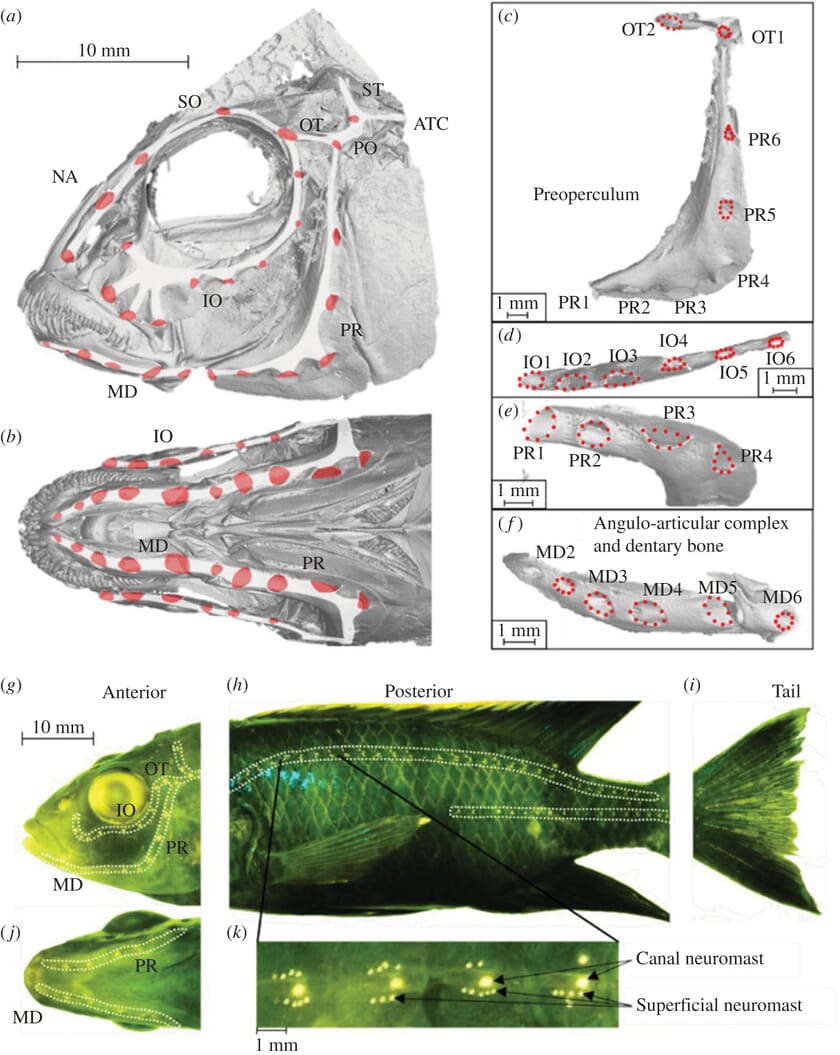
The lateral line system is the main reason fish can sense movement in water so well. It is a row of tiny sensory organs that runs along each side of a fish’s body. These organs detect changes in water pressure caused by moving objects, currents, and nearby animals.
Each sensory unit contains hair-like cells that bend when water moves around them. The fish’s brain then turns these signals into information about distance, direction, and speed. This process happens quickly, allowing fish to react before danger gets close.
- ✦ Detecting nearby movement
The lateral line helps fish notice approaching predators, prey, and other fish even when visibility is poor.
- ✦ Reading water pressure
Small pressure changes tell fish where movement comes from and how strong it is.
- ✦ Navigating dark areas
Fish can move through muddy water, deep areas, and nighttime environments by sensing vibrations.
How the Lateral Line Works Like Underwater Radar
The lateral line does not create images like a camera. Instead, it builds a picture from water movement patterns. A fish can detect the disturbance created by a swimming animal and estimate its location.
This ability is especially useful for predators that hunt in low light. It also helps smaller fish escape because they can sense a threat before making visual contact.
- ✦ Motion signals
Moving fins, waves, and body movements create patterns that sensory cells can detect.
How Fish Feel Vibrations and Water Pressure Changes
Fish live in a world where sound and movement travel differently than they do in air. Water carries vibrations efficiently, so fish can detect signals created by animals, objects, and environmental changes.
A swimming fish creates a small trail of moving water behind it. Other fish can detect this disturbance and use it to understand where another animal has moved. This skill is one reason schools of fish can move together so smoothly.

- ✦ Water wakes
Fish can follow or avoid the water trails left by other moving creatures.
- ✦ Current changes
Sensory organs help fish adjust their swimming when water flow changes.
Why Vibration Detection Matters for Survival
A fish does not need to see a predator to know it is nearby. A sudden pressure wave or vibration can trigger an escape response within moments.
This explains why fish may quickly move away when a boat approaches or when something falls into the water.
- ✦ Escape response
Fast detection gives fish extra time to flee from possible threats.
How Fish Use Hearing to Detect Movement Underwater
Hearing is another important part of understanding how do fish sense movement in water. Fish have inner ear structures that detect sound waves and vibrations traveling through water.
Some fish can detect very low-frequency sounds caused by swimming animals, boats, or natural events. These sounds provide extra information that works together with the lateral line system.

- ✦ Low-frequency sounds
Fish can detect slow vibrations caused by large movements in their surroundings.
- ✦ Direction awareness
Sound information helps fish understand where movement may be coming from.
The Difference Between Fish Hearing and Human Hearing
Humans mainly hear through air vibrations, while fish sense vibrations through water and their bodies. Their sensory systems are adapted for an underwater world where movement signals are always present.
This difference explains why a quiet action above water may still create noticeable signals below the surface.
How Vision Helps Fish Understand Movement
Although fish have excellent movement sensors, vision remains an important tool. Many fish use their eyes to confirm what their other senses detect.
Clear water allows fish to track moving prey, recognize predators, and follow other fish. In cloudy water, they rely more heavily on the lateral line and hearing systems.
- ✦ Tracking prey
Good eyesight helps predators follow fast-moving targets.
- ✦ Recognizing danger
Visual clues help fish identify threats after sensing movement.
Why Fish Combine Multiple Senses
Fish rarely depend on one sense alone. They combine signals from movement sensors, eyes, ears, and smell to create a complete view of their surroundings.
This teamwork between senses makes fish highly adaptable in rivers, lakes, and oceans.
How Fish Sense Movement When Hunting and Avoiding Predators
Predatory fish use movement detection to locate prey hiding nearby. They can sense tiny movements made by smaller fish, insects, and other animals in the water.
Prey fish use the same systems in the opposite way. They detect approaching threats and quickly change direction to escape.
- ✦ Finding food
Movement signals help hunting fish locate prey even when visibility is limited.
- ✦ Avoiding attacks
Early warning signals allow prey fish to react quickly.
What Anglers Can Learn From Fish Movement Detection
Understanding how do fish sense movement in water can improve fishing strategies. Sudden movements, loud impacts, and strong vibrations may alert nearby fish.
Many experienced anglers use slow, natural movements because fish are highly aware of unusual changes in their environment.
- ✦ Move carefully
Reducing unnecessary vibrations can help avoid disturbing nearby fish.
Limits of Fish Movement Detection
Fish have impressive sensory abilities, but their detection systems are not perfect. Water conditions, distance, species, and environmental noise can affect what they sense.
Strong currents, waves, and human activity can create confusing signals. Fish must separate useful information from background movement.
- ✦ Water quality
Cloudy or disturbed water can change how fish use different senses.
- ✦ Species differences
Different fish species have different levels of sensitivity.
How Environment Changes Fish Awareness
A fish living in a fast river experiences different movement patterns than a fish living in a calm lake. Their sensory systems adjust to the world they live in.
This flexibility helps fish survive across many habitats.