Fishing lure rusting how to prevent is a common question among anglers because even quality lures can corrode when exposed to water, salt, and moisture. A rusty hook or damaged split ring can ruin a great day on the water.
After years of handling freshwater and saltwater tackle, I have learned that small habits matter most. The best way to stop corrosion is not a single product. It is a simple routine that removes moisture before rust can begin.
What Causes Fishing Lures to Rust?
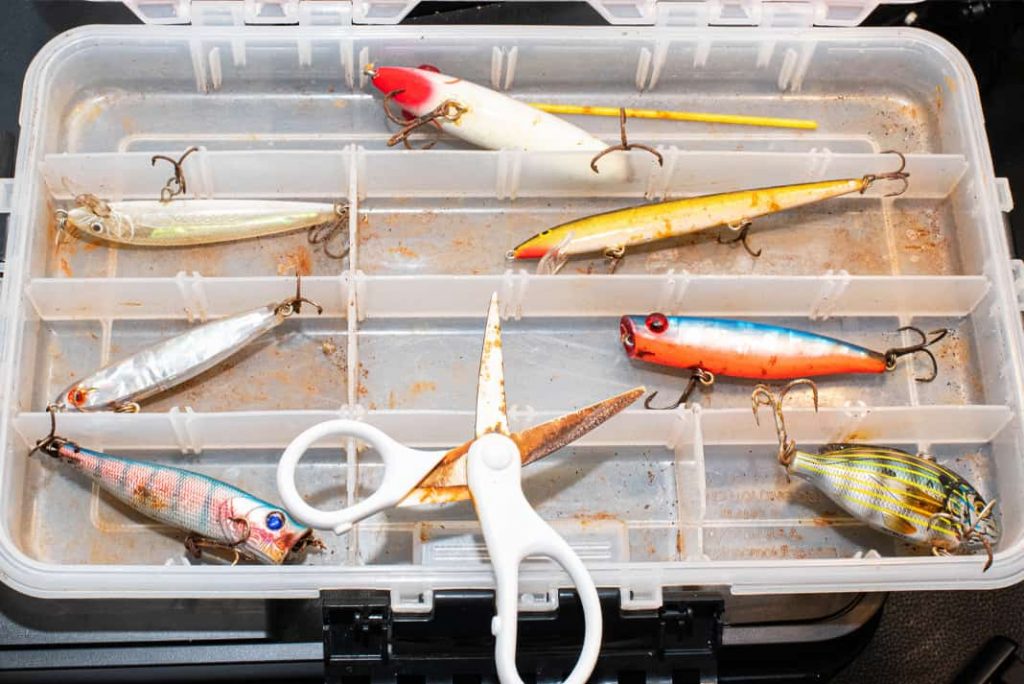
Understanding fishing lure rusting how to prevent starts with knowing why rust forms. Rust happens when iron-based metals react with oxygen and water. Fishing hooks, split rings, and metal blades are often the first parts to show damage.
Saltwater creates a bigger problem because salt helps electricity move through water on metal surfaces. This speeds up corrosion and can weaken lure parts faster than normal freshwater use.
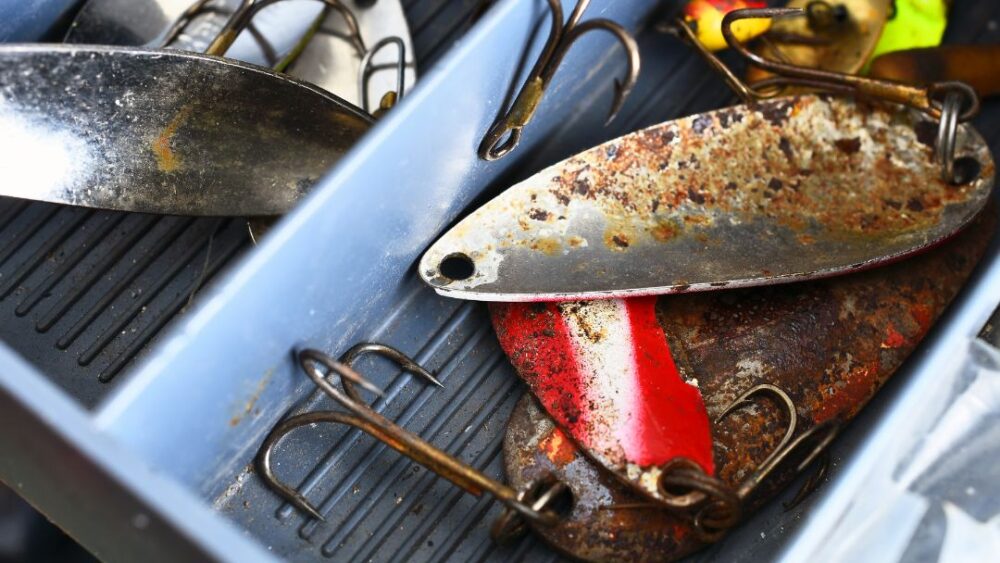
- ✦ Salt exposure
Salt crystals left on hooks and hardware attract moisture and increase corrosion.
- ✦ Wet storage
Putting damp lures into a closed tackle box traps water and creates a rust-friendly space.
- ✦ Damaged coatings
Scratches in paint or protective finishes expose metal underneath.
Common Lure Parts That Rust First
Hooks, split rings, swivels, and metal lips often rust before the main lure body. Checking these small parts helps prevent bigger failures.
How to Clean Fishing Lures After Every Trip
A strong cleaning routine is the foundation of fishing lure rusting how to prevent. Rinse each lure with clean freshwater after use, especially after saltwater fishing in coastal areas of the United States.
Do not place wet lures directly into storage. Let them dry fully before returning them to your tackle box.

- ✦ Step one: Rinse
Wash away salt, dirt, and organic material with fresh water.
- ✦ Step two: Dry
Use a towel and allow air drying before storage.
- ✦ Step three: Inspect
Look for orange spots, rough hooks, or damaged hardware.
Best Storage Methods to Prevent Lure Rust
Good storage is a major part of fishing lure rusting how to prevent. A closed tackle box with wet gear creates the perfect place for corrosion to spread.
Use tackle trays with drainage or airflow when possible. Keep different metal lures separated so rust from one item does not affect others.
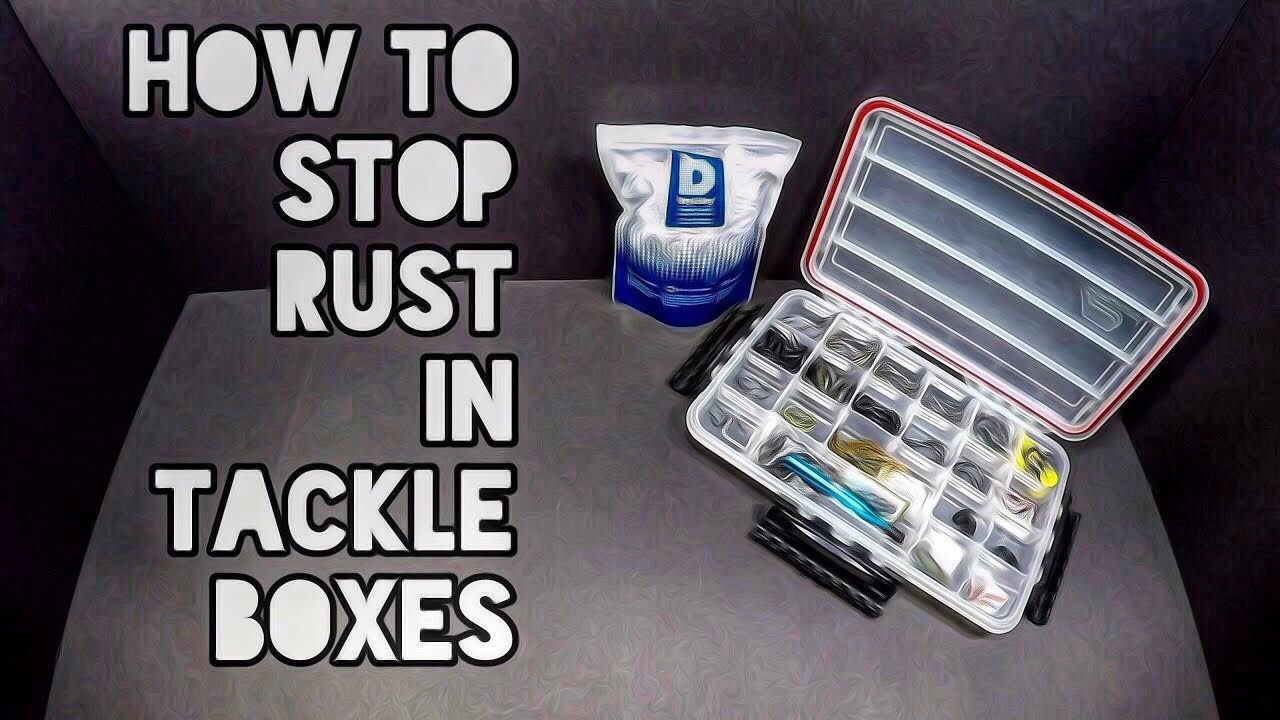
- ✦ Use dry storage
Store lures only after they are completely dry.
- ✦ Add moisture control
Desiccant packs can help reduce humidity inside tackle boxes.
- ✦ Organize smartly
Separate rusty items from clean gear during inspections.
Tackle Box Habits That Protect Lures
Leaving tackle boxes open after a trip helps trapped moisture escape. A few minutes of maintenance can save expensive lures over time.
Protective Products and Coatings for Fishing Lures
Many anglers use protective sprays and corrosion inhibitors as an extra layer of defense. These products can help when combined with proper cleaning and storage.
When learning fishing lure rusting how to prevent, remember that coatings do not replace drying. Moisture trapped under protection can still cause problems.

- ✦ Corrosion protectants
Light protective sprays can shield metal parts from moisture.
- ✦ Hook replacement
Severely rusted hooks should often be replaced for safety and performance.
How to Remove Rust From Fishing Lures Safely
Small rust spots can often be cleaned before they become serious damage. Use gentle methods that do not remove useful finishes or weaken lure parts.
For fishing lure rusting how to prevent and repair, inspect every cleaned lure before using it again. Replace parts that no longer feel strong.

- ✦ Light surface rust
Use gentle cleaning methods and remove loose corrosion carefully.
- ✦ Deep rust damage
Replace weak hooks, rings, or hardware instead of risking failure.
When to Replace Rusty Hooks
If a hook tip feels rough, bends easily, or has deep rust marks, replacement is usually the safest choice.
Saltwater vs Freshwater Lure Rust Prevention
Saltwater anglers need a stricter routine because salt speeds up corrosion. Rinsing gear after every trip is one of the most important steps in fishing lure rusting how to prevent.
Freshwater anglers also need care because lakes and rivers still leave moisture behind. Regular checks keep small rust issues from becoming expensive replacements.
- ✦ Saltwater routine
Rinse immediately, dry completely, and inspect metal parts often.
- ✦ Freshwater routine
Dry lures and avoid storing wet equipment after rainy trips.