Read currents, structure, and cover to find where fish live and feed today.
I’ve spent decades on rivers, lakes, and coastal flats learning how to read water for fishing. This guide pulls together field-tested methods, simple rules, and clear examples so you can spot fish-holding water fast. I explain key signs, show how to use small tools, and share mistakes I made so you can learn quicker and catch more.

Why reading water matters
Knowing how to read water for fishing turns random casts into purposeful ones. Fish choose spots based on food, safety, and energy savings. If you can spot those spots, you catch more fish with less effort.
Reading water helps you pick the right bait and retrieve speed. It helps you avoid empty areas and focus on where fish live. Spend a few minutes scanning the water and you change an average day into a productive one.
What to look for: visual cues when learning how to read water for fishing
Start with simple visual checks. These reveal fish behavior and likely hiding places.
- Surface disturbances and feeding boils
- Look for splashes, rolling fish, or baitfish flicks.
- Active surface action often means fish are actively feeding.
- Shadow lines and color changes
- Darker water or a shadow line can mark a drop or channel.
- Color shifts often point to depth change or different bottom.
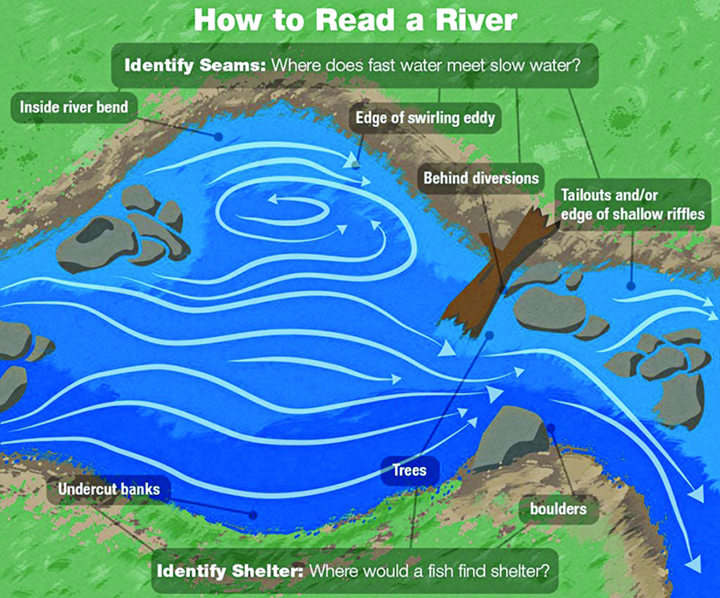
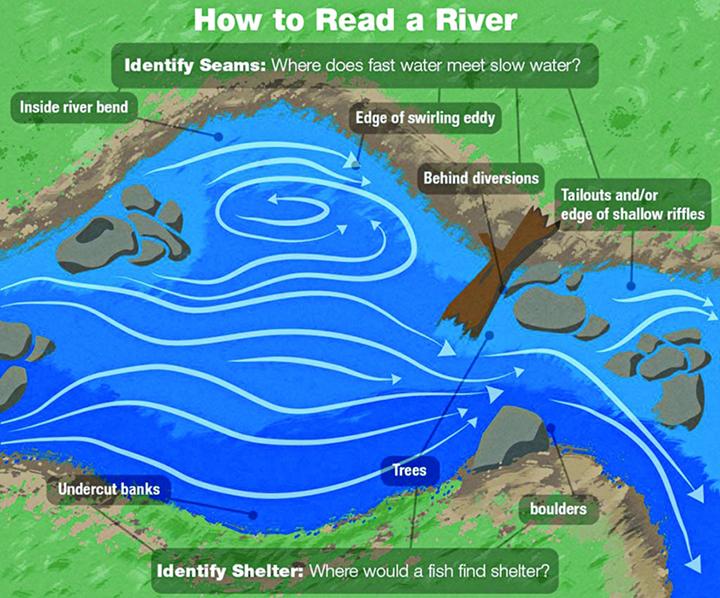
- Current seams and slicks
- Fish like the slow water next to fast water. Check seams.
- Food drifts into the slower zone, and predators wait there.
- Structure outlines and breaks
- Logs, rock piles, points, and ledges hold fish.
- Even subtle bottom bumps can concentrate fish.
- Vegetation edges and mats
- Edges where weeds meet open water are prime ambush zones.
- Floating mats hide bait and give shade for predators.
When you practice these checks, your eyes learn to see patterns. The more you scan, the faster you spot productive water.
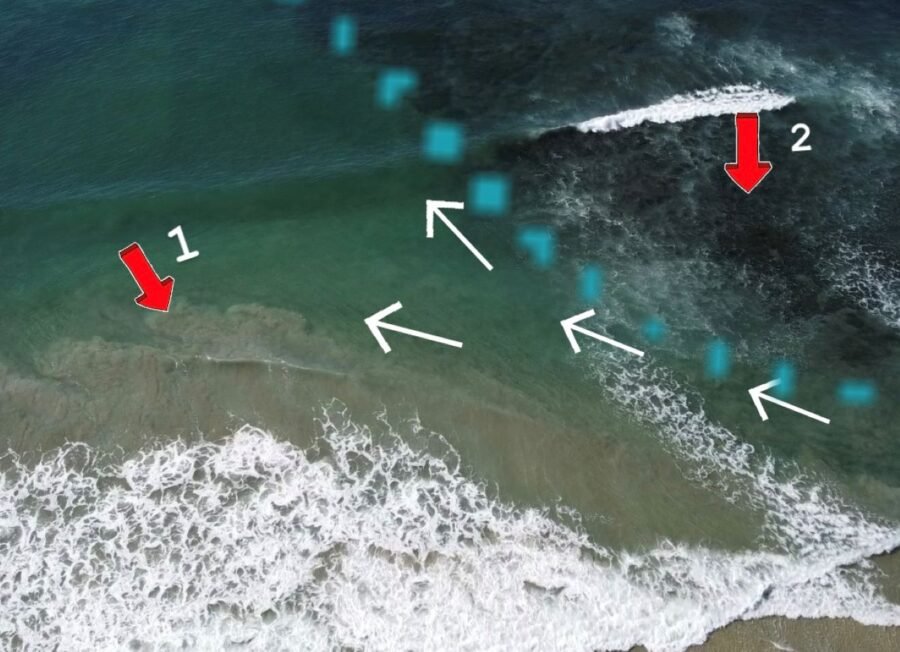
Structure, depth, and bottom changes: core elements of how to read water for fishing
Structure and depth are the most reliable clues. Fish use depth for temperature, cover, and refuge.
- Look for ledges and drop-offs
- A sudden depth change is a feeding lane.
- Fish move along the edge to chase bait.
- Find channels and creek beds
- Channels hold current and oxygen. They are highways for fish.
- Small flats next to channels are excellent staging areas.
- Seek hard bottom vs. soft bottom
- Hard spots like gravel or rock hold insects and baitfish.
- Soft mud usually holds fewer ambush predators.
- Map humps and sunken features
- Humps near deep water are ambush zones.
- Learn to read contour lines on a map before you go.
Use a depth sounder or a simple pole probe on shallow water to confirm what your eyes suggest. The map + real observation combo is powerful.

Current, temperature, and oxygen: scientific cues to read water for fishing
Current, temperature, and oxygen drive fish movement. Learning to read these cues is essential.
- Current tells you where food drifts
- Fish hold in slow water beside fast water to save energy.
- Seams, eddies, and behind structure are common holding spots.
- Temperature affects metabolism
- Cooler water slows fish and concentrates them in warmer bands in cold months.
- Warmer water raises metabolism but can lower oxygen; watch for stressed fish.
- Oxygen levels matter most
- Aerated areas like riffles and choppy shores have higher oxygen.
- Stagnant warm water can push fish to deeper or flowing zones.
A simple thermometer and your senses go far. I carry a small digital thermometer to find the right band of water quickly.
Cover, vegetation, and shoreline features to interpret when you read water for fishing
Cover gives fish shelter and feeding chance. Shoreline shape and vegetation tell you where to cast.
- Edges and drop-offs along vegetation
- Fish sit at the weedline to ambush prey.
- Cast along the edge, not into the thickest weeds.
- Fallen trees and docks
- These create shade and structure that hold baitfish.
- Cast parallel to the cover and retrieve slowly.
- Points and flats
- Points concentrate bait moving along the shore.
- Flats near deeper water are staging areas at dawn and dusk.
- Beach and mud flats
- In shallow flats, watch for tailing fish and feeding wakes.
- Quiet presentation and light tackle often work best.
In clear water, fish use cover more selectively. In stained water, cover patterns still matter but fish rely more on current and scent.

Baits, rigs, and tactics based on how to read water for fishing
Match your gear to the water you read. A small tweak in lure or speed often makes a big difference.
- Fast seams and riffles
- Use small spinners, crankbaits, or jigs fished quickly through the seam.
- Fish expect bait moving with the current.
- Deep drops and ledges
- Downsize lures and use slower retrieves or vertical jigging.
- Use heavier rigs to reach the fish quickly.
- Vegetation edges and mats
- Use weedless rigs, soft plastics, or topwater frogs in heavy cover.
- Pause and twitch to imitate prey in weeds.
- Clear shallow flats
- Use light tackle and natural-colored baits for subtle presentations.
- Sight fishing rewards patience and slow retrieves.
Adapt quickly. If fish ignore a style, change lure size, color, or speed. The water shows you which change to make.
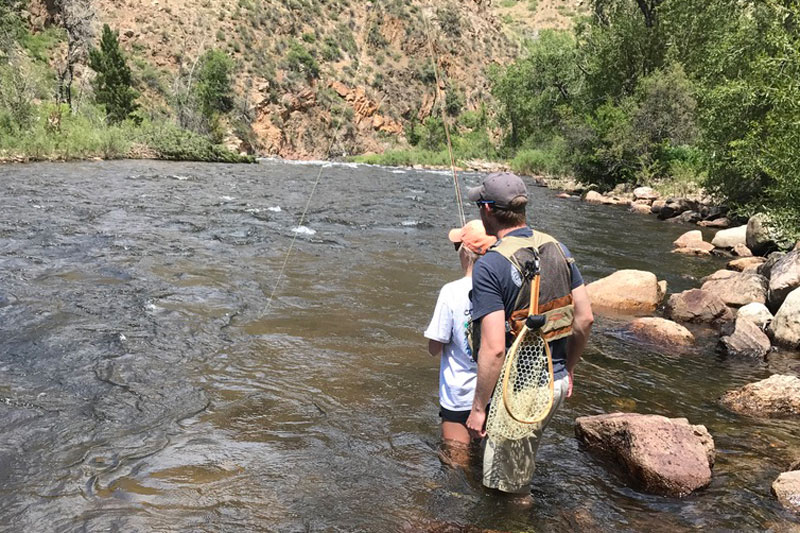
Tools and tech to help read water for fishing
Tools speed up learning how to read water for fishing and confirm your hunches.
- Maps and contour charts
- Study lake contours and river channels before you go.
- Notes on maps help you return to productive spots.
- Side-scan and down imaging
- These find structure and baitfish schools on your first pass.
- They save time and reduce guesswork.
- Depth finder and GPS
- Mark waypoints at productive spots for repeat visits.
- A depth finder shows hidden breaks and humps.
- Simple gear: thermometer, polarized sunglasses, net
- Polarized glasses cut glare and reveal structure.
- A thermometer pins down the temperature bands fish use.
Tech helps, but it does not replace observation. Use tools to confirm what your eyes and experience tell you.

Personal experience: mistakes and lessons from reading water for fishing
I remember fishing a long, slow bank for hours with no bites. A friend showed me the channel edge next to that bank. Ten casts later we caught fish. That taught me two things: look for the flow and trust a second set of eyes.
Common mistakes I made and learned from:
- Focusing on one spot too long
- Fish move. If the water is dead, move and rescan.
- Over-relying on gadgets
- I once ignored visible baitfish while staring at a screen. The fish were visible from shore.
- Wrong speed or bait size
- Match the prey in the water. Small bait for small forage; bigger lures where big baitfish are present.
Practice scanning for five minutes when you arrive. It saves hours of blind casting. Trust patterns you’ve seen before. They repeat.

Quick PAA-style questions about how to read water for fishing
Q: Where do bass hide in a river?
A: Bass hold near slower water beside current, behind structure, and at depth changes.
Q: How does water color affect fish location?
A: Clear water favors deeper or shaded spots; stained water pushes fish to cover and current edges.
Q: What’s the best time to read water?
A: Early morning and late evening show activity, but scan anytime—patterns can be seen all day.
Frequently Asked Questions of how to read water for fishing
How quickly can I learn to read water for fishing?
With focused practice, you can spot basic signs in a few trips. Mastery takes seasons, but simple cues help you catch fish right away.
Do I need expensive gear to read water well?
No. Polarized glasses and a map are the best starters. Electronics help but are not required.
How does weather change reading water for fishing?
Weather alters temperature, light, and current. Fish shift to new zones after fronts; expect different holding spots.
Can I read water at night?
Yes. Look for silhouettes, surface activity, and use sounders or lights. Night fishing relies more on scent and sound.
How often should I change baits after reading water?
Change baits if you get no action after a few casts or if the water suggests different prey. Small adjustments often work best.
Conclusion
Reading water for fishing is a skill anyone can learn. Scan for current, structure, depth, and cover. Use simple tools to confirm what you see. Practice short, focused scans each time you fish and adapt bait and speed to the water you read.
Try a one-hour experiment: pick a new spot, scan for five minutes, choose a few targeted casts, and note the results. Share what you find, subscribe for more tips, or leave a comment with your best water-reading moment.